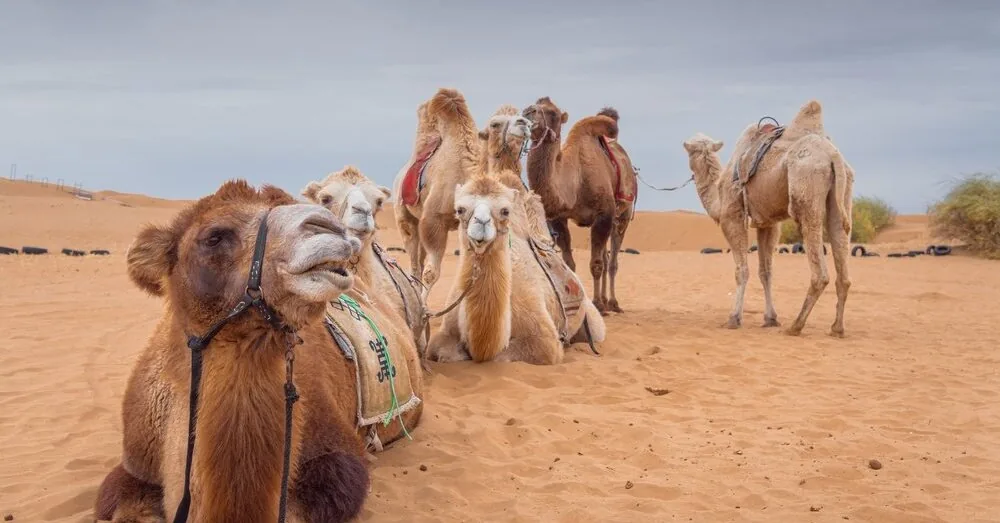
Experts are concerned about temperatures rising to over 50 degrees in Africa and the Middle East – even these animals, known for their ability to survive in heat, are now suffering from the heatwave.
Read more Vilnius beach water checked: here’s where swimming is not recommended
Scientists note that due to the extreme heat prevailing in these regions, camels are facing dehydration, exhaustion, and more frequent illnesses, according to ‘Mirror’.
Farmers in North Africa and the Horn of Africa entrust these animals with transporting salt and other goods across the desert. They exchanged cattle for camels due to the latter’s endurance in heat and ability to survive drought conditions.
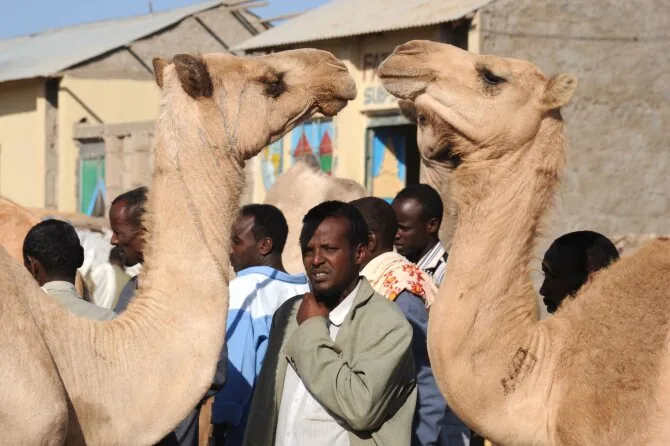
Ali Umer, a camel breeder living in Northeast Ethiopia, said he sees many of his 500 camels suffering from the heat.
“Blisters appear on their feet, their eyes water, and the hot sand burns their skin and damages their fur when they lie down,” he told the BBC.
Read more Countries react to Donald Trump’s tariffs: regret, disappointment and… relief
“Their feet are covered in blisters, their eyes water, and when they sit, the hot sand burns their skin and destroys their fur,” said the 40-year-old, who owns about 500 camels. “In the last month, I lost eight camel calves due to extreme heat; the heat has become much stronger, and conditions – more difficult.”
Experts say that camels can feel quite comfortable at temperatures up to about 40 degrees and are able to allow their bodies to regulate temperature within a range of several degrees. Their fur helps protect them from the hottest sun rays, and their ability not to sweat excessively has played a crucial role in their survival in harsh conditions.
Dr. Mohammed Bengoumi, a scientist at the UN Food and Agriculture Organization, added: “However, camels can also experience heat stress when temperatures exceed their comfortable level. In many parts of the Sahara, summer temperatures now often exceed 50 degrees, which increases the risk of severe heat stress – especially when there is a lack of vegetation and water and nowhere to hide from the sun.”
Many camel breeders in Ethiopia are moving or have already moved their animals from the northern part of the country to the south, where there is more water and vegetation. M. Bengoumi emphasized that this relocation is not temporary and, due to drought and extreme heat, could become a permanent change for breeders.