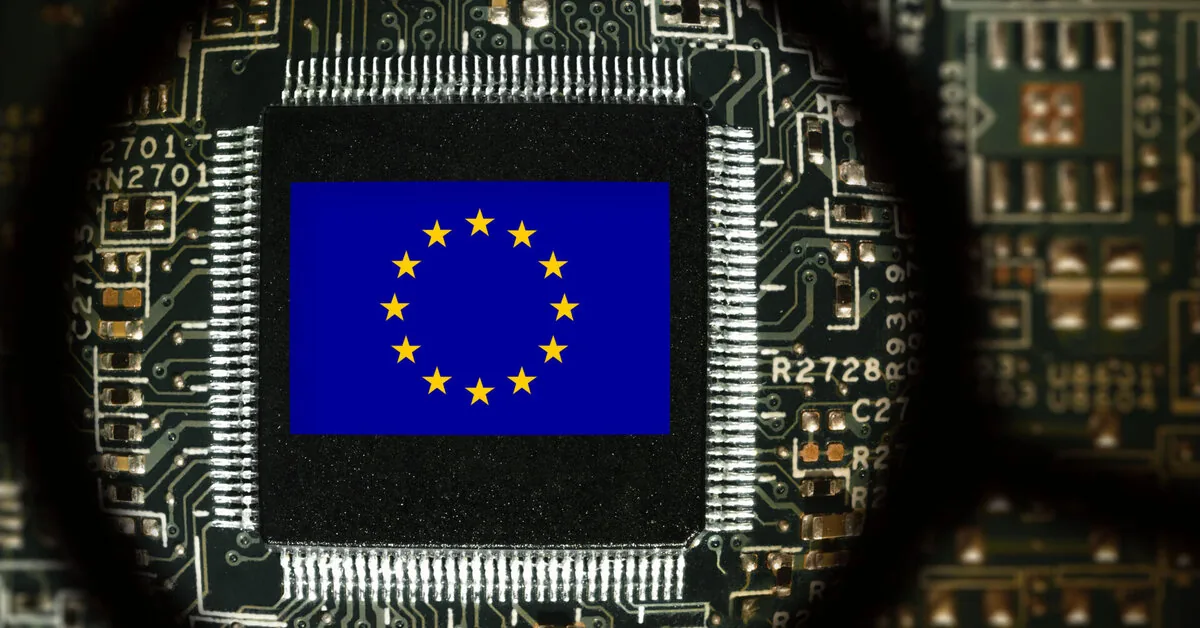
The EU technological sovereignty package is one of many Brussels measures aimed at reducing dependence on foreign companies and encouraging local production, but there is a risk that it will open a new front in transatlantic tensions.
Read more Man detained in the capital assaulted an officer
On Wednesday, the long-awaited new rules package on chips, cloud computing, and artificial intelligence (AI) will be presented, which is part of the EU’s efforts to “regain its place in global geo-economic power competitions,” according to a draft strategy seen by the AFP news agency.
Particular concern is how much the EU depends on US cloud service providers, who occupy about 70% of the European market.
Since President Donald Trump returned to the White House last year, Europeans have worried that critical digital infrastructure could be stopped by a US “off button” if tensions ever reached a peak.
Top EU officials do not directly name their target as the US, but US technology dominates everywhere – from cloud computing to social networks and e-commerce.
“We need to develop our capabilities. We cannot allow anyone to try to influence our decisions, our values, our well-functioning economy and services,” said EU Competition Commissioner Teresa Ribera this month.
EU officials often point to Washington’s sanctions on International Criminal Court (ICC) judges, which Trump imposed in 2025, to illustrate US corporate influence. Judge Nicolas Guillou recounted how he lost access to his “Visa” card because it is a US system.
However, US Ambassador to the EU Andrew Puzder warned against any protectionist steps, and US companies urged Europe not to alienate them.
“Europe will not be able to engage in the AI economy by crushing others,” Puzder told AFP last month when asked about these plans.
Broad package
Wednesday’s package will include the “Cloud and AI Development Act,” aimed at accelerating the deployment of data center infrastructure, a “Chips Act” proposal aimed at strengthening semiconductor supply security by reducing dependence on foreign suppliers, and a call for authorities to use more open-source software solutions to gain greater control and flexibility and avoid dependence.
EU legislator Oliver Schenk told AFP that this package “is not intended to oppose our trading partners or close markets,” but added: “Europe must avoid becoming structurally dependent on any single external actor” in AI, cloud, and chip areas.
The strategy draft, which may still change before publication, states that governments will be expected to conduct cloud and AI “sovereignty risk assessments” to “improve resilience” and find European alternatives.
“Europe must ensure that public investments in AI and cloud infrastructure strengthen European innovation capacities, resilience, and security,” said O. Schenk.
According to the second draft document on chips, the European Commission (EC) wants to have the right to intervene in a crisis by forcing “manufacturers to prioritize orders for crisis-relevant products, regardless of existing contracts.”
It also proposes joint purchases, meaning the EU would act as a “central buyer for several member states facing a major shortage.”
“There is no off button”
Aaron Cooper, a representative of the technology industry group Business Software Alliance, sought to reassure Europeans who fear that any US administration could take action to harm the bloc during tensions, following previous disputes including over tariffs.
“There is no such thing as an off button,” Cooper told AFP, adding that companies “want to comply with laws everywhere they do business.”
US technology companies have sought to change the direction of the discussion by arguing that Europeans will manage their own data using US services.
“Digital sovereignty is about control, not just borders,” said Ana Paula Assis, Chairwoman of IBM Europe, Middle East, Africa and Asia Pacific, adding that the company helps its clients “maintain control over their entire IT infrastructure.”
The EU says this package will encourage innovation and help Europe catch up with the US and China in the AI race.
However, Ben Brake, CEO of DOT Europe, whose members include Amazon and Apple, said that “retaliatory actions against US corporations in response to trade disputes will neither encourage innovation nor strengthen Europe’s competitiveness.”
Read more Ukraine strike in Southern Russia: oil tanker caught fire