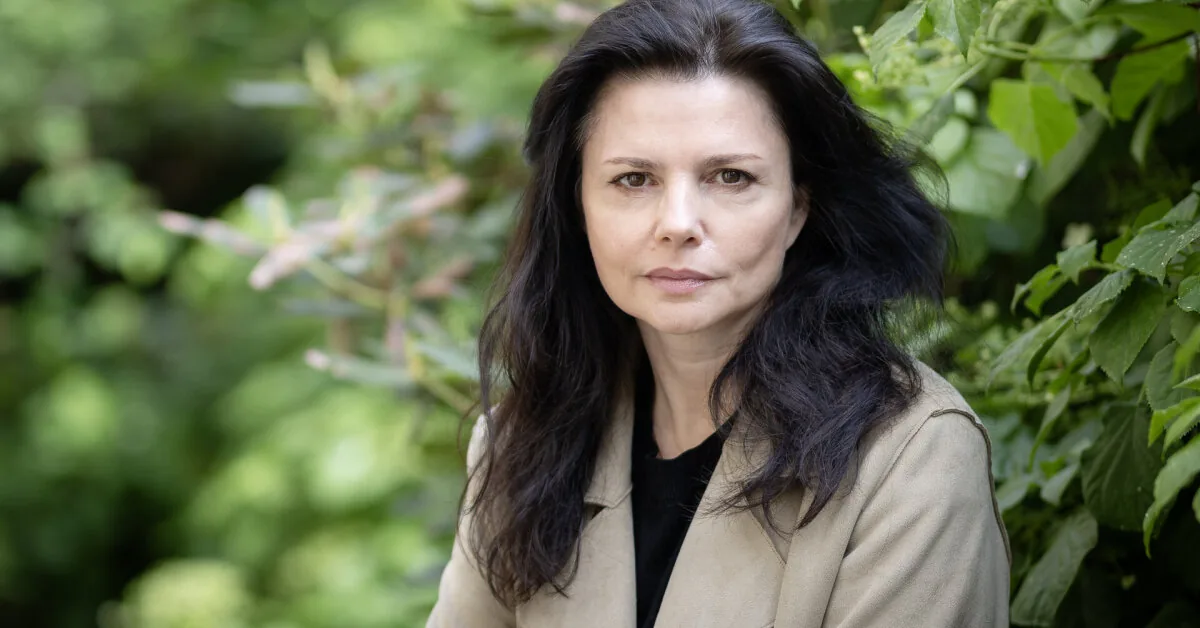
Over the past five years, as many as two dozen contemporary Ukrainian literary works translated by D. Rinkevičienė have appeared in Lithuanian, along with just as many essays and journalistic texts by various Ukrainian authors in our cultural press.
Read more State Forest Service sounds the alarm: Lithuanian spruces are dying
The novel “The Age of Red Ants” by Tania Pjankova, translated by her (published by “Alma littera”), was named the best translated fiction book of 2025 in the 15min annual book awards and the Lithuanian Literary Translators’ Union’s translated book competition. And last year, at the Lithuanian Publishers Association awards, D. Rinkevičienė was honored in the Most Inventive Translator category “for diligence and the relevance of translations.”
Calling the translation of books a kind of debt to her own Ukrainian side of the family, D. Rinkevičienė shares thoughts in an interview about the paradoxically discovered Ukrainian culture during the war, waves and ebbs of Ukrainian translations, the constantly growing number of new books she wants to translate, and the still unfilled gaps in translations of Ukrainian literary classics.
– Donata, let’s admit that before the large-scale war, Ukrainian literature, art, and history mattered little to us. We had heard of Taras Shevchenko at most, and that only because he was somehow connected to Vilnius. Some might have read Serhiy Zhadan or Yuriy Andrukhovych, Andriy Kurkov – and not much more. So it’s interesting how it happened that you know the Ukrainian language?
– It is related to family history – my paternal grandparents were Ukrainians, though they moved to live in Georgia. But I never spoke Ukrainian, only often heard others speaking it. My father studied in Odesa, so he had many friends in Ukraine. He maintained contact with some of them until his death: they would visit us, and we would go to Kyiv or Odesa.
Everything in me changed in 2014 in Ukraine, with the start of the war in Donbas, the annexation of Crimea, and also my father’s illness and death. This prompted me to turn to Ukraine and repay a kind of debt to my Ukrainian side. Then I started learning the language independently, listening to podcasts, YouTube shows, reading books, watching films and series. That’s how I began to understand what was being said.
Everything in me changed in 2014 in Ukraine, with the start of the war in Donbas, the annexation of Crimea, and also my father’s illness and death. This prompted me to turn to Ukraine and repay a kind of debt to my Ukrainian side.
But that was not enough – I wanted to speak myself. So I found a few teachers who helped break the language barrier. With them, we delved into Ukrainian folklore, read classics, and I watched a lot of classic films. Eventually, I discovered contemporary Ukrainian literature. While reading, I kept thinking – what treasures these are, how great it would be if others could read them too. That’s how I started translating. My first reader was my mother.
The greatest encouragement to translate and offer to publishers came from a family friend, translator Irena Aleksaitė. I sent her an excerpt from Andriy Lyubka’s book “MUR: a small Ukrainian novel.” Respected Irena corrected some things, gave valuable advice, and most importantly – encouragement to continue translating. Then I sent this excerpt to “Šiaurės Atėnai” and they immediately agreed to publish it.
That was a huge joy for me. I came from acting, didn’t know how publishing or cultural press worked, and didn’t know writers or publishers. But that first excerpt became a great incentive and push to translate more. That’s how I took on Andriy Lyubka’s novel “Carbide,” which appeared in Lithuanian in 2021. It was the first book I translated and published.
– Can it be said that the war was the reason you gradually became a very active translator of Ukrainian literature?
While reading, I kept thinking – what treasures these are, how great it would be if others could read them too. That’s how I started translating. My first reader was my mother.
– At first, I translated for my own pleasure and joy, and so that my relatives could read my discoveries. After “Carbide,” I translated Kateryna Yehorushkina’s children’s book “The Brave Tales of the Nutcrackers” and Yaroslava Lytvyn’s novel “The Years of Klaus Otto Bach’s Fall.” The latter book had not been published when the Russians attacked Ukraine and the war began. Of course, that changed everything. I started translating completely different books, translating a lot, and offering them to publishers. For me, it was and still is a kind of solidarity with Ukrainians and support for them.
Paradoxically – during the war, we discovered Ukrainians, their culture, art, and history. They became important and interesting to us. Then you could clearly see the publishers’ need to publish Ukrainian books and readers’ desire to buy and read those books.
It was not only intellectual interest but also a desire to support Ukrainians. Because at the start of the war, Ukrainian writers, publishers, like many people, found themselves in complete uncertainty. So translations – not only into Lithuanian but also other languages – were an important support.
– What does it mean for a translator to constantly live with very difficult, complex, dramatic, painful texts? After all, probably most of the works you have translated over the past six years are in one way or another related to the current situation in Ukraine?
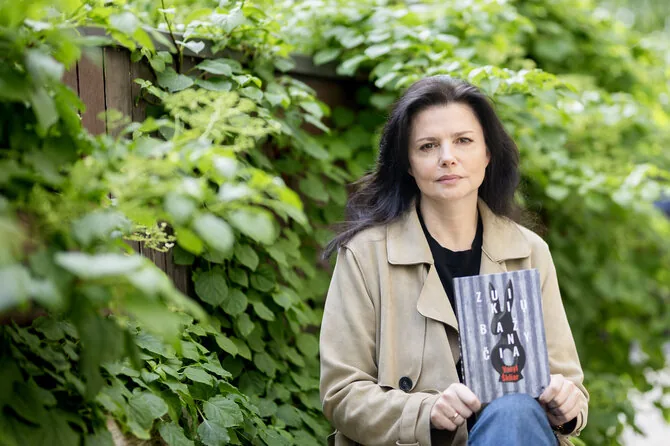
– Emotionally, it affects very strongly. Sometimes you translate a text and then need to take a break – not because you are physically tired of sitting at the computer, but because of the flood of strong emotions. Sometimes you can’t return to the text the same day; you need to step back. It’s really hard.
Especially many strong feelings are caused by essays, when authors write about fallen comrades in arms, family members, friends, and acquaintances. I find their photos, and it becomes even sadder. I take all this very deeply to heart.
Of course, my moods are felt and seen by family members – I share with them, tell them, because I simply cannot keep it inside. You could say these translations become a collective family effort – without their support, I could hardly endure these translations.
– How do you choose what to translate?
– I focus on contemporary prose and constantly read, sometimes several Ukrainian books at once. Of course, because of this, unread books by Lithuanian authors and translated literature mercilessly pile up at home. I simply don’t have time for all that now. I hope to catch up in the summer.
You could say these translations become a collective family effort – without their support, I could hardly endure these translations.
When I pick up the great Ukrainian classics, I think that we have translated almost nothing, but I don’t take on classics translations myself yet; I feel I still need to grow into that. Maybe in about ten years I will dare. But now I am more interested in what has been written in Ukraine over the past several years and what is being written now.
I constantly follow several dozen Ukrainian publishers, see what new they release, and also read reviews of new editions. If something interests me, I buy e-books, and if not – I order paper books from Ukraine. This pile is also growing relentlessly.
– A few years ago, I read that since the annexation of Crimea and the start of fighting in eastern Ukrainian territories in 2014, there was a huge wave of so-called “veteran prose” – hundreds of books by soldiers, journalists, and writers related to those events and people’s experiences appeared. What place does war literature occupy in Ukrainian society today?
Read more In Nadal’s footsteps: 17-year-old Frenchman continues to shake the tennis world in Paris
– Even today, an enormous number of books about the war are published, but you need to select the best, because, as everywhere, there are quite mediocre ones and true masterpieces. However, I try to read almost everything because I want to have a general picture of contemporary Ukrainian literature. And not necessarily only about the war; I am also interested in books on other topics, what matters to Ukrainians themselves.
Even today, an enormous number of books about the war are published, but you need to select the best, because, as everywhere, there are quite mediocre ones and true masterpieces.
For example, I just handed over to a publisher an excellent thriller by Ilarion Pavliuk, “I See You Are Interested in Darkness,” published before the war, and it is still among the bestsellers in Ukraine. I try to translate the best, most interesting, popular, and literarily high-quality books.
Interestingly, literature in Ukraine is experiencing a huge boom: since the start of the war, the number of publishers has not decreased but increased, more bookstores have opened, many more books are bought than before, and sales of electronic editions are breaking all-time records. Unexpectedly: there is a war in the country, yet people are returning to reading books…
On social networks, I follow several Ukrainian writers and see the crowds of people coming to their meetings – the halls are simply bursting. Moreover, these meetings are usually paid, and there are no free seats. Often, writers even hold additional meetings. And people stand in huge lines for several hours to buy books by their favorite authors or get autographs.
– And how about in Lithuania, has interest in Ukrainian culture waned?
I try to translate the best, most interesting, popular, and literarily high-quality books.
– At the start of the war, the demand for Ukrainian books grew very strongly, later we observed some ebb, and now it seems that attention to Ukrainian literature is returning.
Before offering a work to publishers, I often have to translate a significant part of it, sometimes even the entire text. Then publishers read, evaluate, and decide whether to publish or not. And that is understandable: no one wants to buy a pig in a poke. This is not a book written in English, which publishers themselves can read and look for a translator. In this sense, Ukrainian translations are perhaps a bit more difficult, but also somewhat easier because the demand is still quite large.
For example, when I translated Vasyl Shkliar’s novel “The Church of the Hares,” I immediately sent it to two publishers, and both were interested. So I had to choose the one that was first. And now I have been waiting for a response from publishers for several weeks regarding the excellent novel “Beyond Perekop is the Land” by Anastasia Levkova about the loss of Crimea. I am also waiting for a response about the novel “Felix Austria” by Sofiya Andrukhovych, daughter of writer Yuriy Andrukhovych.
Over the past five years, our understanding of Ukrainian literature, culture, and history has really grown significantly. More translators from Ukrainian have appeared. Our poets – Antanas A. Jonynas, Donatas Petrošius, Marius Burokas, Benediktas Januševičius, Vytas Dekšnys, and others – who perfectly translate Ukrainian poetry, are extremely pleasing. Thanks to their efforts, we now read poems by Artur Dron, Maksym Kryvtsov who died at the front, Halyna Kruk, Vasyl Machno, Maryana Kijanovska, and others.
However, recently in Lithuania, I notice a tendency to publish lighter content books, for example, “something about love.” But I more often offer serious, heavy books about the war… But I perfectly understand that books of various content are needed.
Recently, I notice a tendency to publish lighter content books, for example, “something about love.” But I more often offer serious, heavy books about the war…
So it’s not that publishers are waiting with open arms for translations of Ukrainian books, but it’s also not that they slam the door as soon as you offer something. You just need to constantly translate this literature and actively offer it. By the way, there are publishers who themselves ask – “what can you offer?” Then I make a list and send it for their selection.
As a translator, I want everything good, beautiful, and moving that I read to appear in Lithuanian. And publishers, of course, evaluate and calculate – publishing costs are huge today, so you have to think not only about how to publish a book but also how to sell it.
– Does a program supporting translations of Ukrainian literature exist in Ukraine itself?
– Yes, the “Ukrainian Book Institute” has been very actively supporting translations of Ukrainian books since 2016. Previously, Lithuanian publishers made little use of this opportunity, but now Lithuanian translations are increasingly among the supported books. I am currently translating two books without a publisher yet, hoping that with support these books will definitely be published.
Looking at which languages Ukrainian literature is translated into today, you would see almost the whole world. However, this year’s list surprised me with a huge amount of translated Ukrainian classics. I hope that sooner or later our translators will also start filling this gap.
Looking at which languages Ukrainian literature is translated into today, you would see almost the whole world.
Yes, we have translated Taras Shevchenko, Ivan Franko, Lesya Ukrainka, and others, but I would like to mention the authors of “The Executed Renaissance” (Ukr. Розстріляне відродження). This was a flourishing generation of Ukrainian writers and artists in the 1920s–1930s, brutally killed, imprisoned, or silenced by the Soviet authorities during Stalinist terror.
– Have you translated books that have not yet been published?
– I am currently translating two books – the aforementioned “Felix Austria” by Sofiya Andrukhovych and “Beyond Perekop is the Land” by Anastasia Levkova. I have also started translating four more books: Andriy Semjankiv’s medical thriller “Dances with Bones,” writer Serhiy Martyniuk’s military thriller “Kushmardzhak,” Lyubko Deresh’s novel “The Gaze of the Medusa” about a soldier trying to return to civilian life, and Oleksandr Mykhed’s essay book “The Call to Job.” I believe these books will eventually find their publishers.
– How do you manage to do everything?
– I do almost nothing else but read and translate. All day, when I am home alone and before my family returns, I read, translate, edit. And so day after day. Other translators, like Marius Burokas or Vytas Dekšnys, also engage in their own creative work, participate in events, festivals, readings. But my daily life is a desk and a big family. However, I really don’t try to complain, no, I am completely satisfied with this life.
Four more books translated by me should be published this year – Sofiya Andrukhovych’s novel “Katananka” about Kyiv after the war, published by “Hieronymus,” Artur Dron’s memoirs “Hemingway Knows Nothing,” published by the Lithuanian Writers’ Union publishing house, Yulia Iliukha’s book for teenagers “Complete Zero” by “Terra Publica,” and Ilarion Pavliuk’s thriller “I See You Are Interested in Darkness” by “Alma Littera.” Some of these books waited two or even three years for a publisher, others went straight to editors after translation. So the lives of books are different.
Read more Israel severs all ties with the UN Secretary-General