
UN Human Rights Office representative Tamim Al-Kheetan did not call the strikes on Wildberries warehouses a war crime. He only explained the general rule of international humanitarian law: if a strike on civilians or a civilian object were found to be intentional, such an act could be considered a war crime.
However, in this specific case, the UN did not have the opportunity to independently verify either the information provided by Russia or what the target of the strike was and whether a civilian object was intentionally attacked. Therefore, the UN representative did not provide any final legal conclusions.

However, disinformation distributors presented this conditional explanation as if the UN had already assessed a specific Ukrainian strike and recognized that it could be a war crime.
Here is a translation of an excerpt from the press conference. In it, the spokesperson for the UN High Commissioner for Human Rights Office and the head of the UN Human Rights Monitoring Mission in Ukraine, Danielle Bell, discussed the latest military actions and their impact on civilians.
Also spoke about Ukraine
UN Human Rights Office representative Thameenas Al Kheetanas spoke about the increased scale of long-range strikes in recent days and their impact on civilians in Ukraine and Russia.
He mentioned attacks in Kyiv, Zaporizhzhia, Kharkiv region, the Black Sea, and strikes on Wildberries logistics centers, but did not individually recognize any specific incident as a war crime.
“The war in Ukraine is having an increasing impact on the civilian population every day. The scale and intensity of long-range strikes, which affect residential buildings and critical civilian infrastructure, are horrifying. In recent days, many attacks have been carried out, resulting in civilian casualties in both Ukraine and Russia.
Civilians and civilian infrastructure are strictly protected by international humanitarian law, and any intentional attack of this nature is a war crime.
On Sunday, Kyiv was attacked for the seventh time in a month. It was reportedly the largest missile attack on the capital since the start of the full-scale invasion. At least 35 ballistic and hypersonic cruise missiles were launched into the city. Authorities reported that one civilian was killed, 20 more people were injured, and destruction was recorded in five districts.
On the same day, gliding aerial bombs struck residential areas of Zaporizhzhia. Part of a five-story residential building was reportedly destroyed. According to authorities, three civilians, including a girl, were killed, and 41 people, including seven children, were injured.
It is also reported that four civilians were killed and 20 more were injured in a strike on the Nova Poshta postal terminal in the settlement of Korotych near Kharkiv.
Recent attacks on civilian vessels in the Black Sea have further increased risks to shipping. In the latest incident, which occurred on Sunday, a merchant vessel sailing under the flag of Guinea-Bissau was attacked with cruise missiles shortly after departing from a port near Odesa. According to available data, 10 people were killed, including at least eight crew members, and seven were injured.
It is also reported that Ukrainian long-range drone strikes continue to cause civilian casualties and damage logistics infrastructure belonging to a private company in Russia. On the night of July 17-18, Russian authorities reported attacks, including strikes on Wildberries logistics centers in the Moscow and Tambov regions. According to their data, eight civilians were killed and 86 were injured,” – said Thameenas Al Kheetanas, who later handed the floor to Danielle Bell.

After Tamim Al-Kheetan’s statement, Danielle Bell, head of the UN Human Rights Monitoring Mission in Ukraine, who took the floor, also did not specifically address Wildberries warehouses and the legal assessment of their attacks. The majority of her statement consisted of information about the increasing number of civilian casualties in Ukraine and the growing frequency of strikes on residential areas.
“The attacks just mentioned in Kyiv, Odesa, and Zaporizhzhia are not isolated incidents. They are occurring with increasing frequency and claiming more and more civilian lives,” said D.Bell.
According to her, in the first half of 2026, the number of civilian casualties was 37% higher than in the same period a year ago and almost double the figures recorded by the UN in 2024.
The head of the mission explained that this situation is mainly due to two reasons: the use of ballistic missiles and long-range drones, and attacks by short-range drones and gliding aerial bombs near the front line.
“Long-range strikes are increasingly affecting densely populated urban areas far from the front line,” she stated.
D.Bell also paid much attention to the threat posed by FPV drones to civilians near the front line. According to her, in the first six months of 2026, civilian deaths and injuries due to short-range drones increased by 65%.
Such strikes, according to the UN representative, change people’s daily lives, disrupt public transport, medical facilities, and schools, and complicate the delivery of humanitarian aid and infrastructure repairs.
“These trends show that the threat to civilians is not only increasing but also changing. Civilians across Ukraine – both in cities and near the front line – face new and growing risks, and even the simplest daily actions are becoming increasingly dangerous,” D.Bell summarized.
Thus, this part of the statement also shows that UN representatives discussed the general situation of civilians and the consequences of military actions, mainly in Ukraine. D.Bell did not provide any legal assessment of the strikes on Wildberries warehouses and did not call them a war crime.
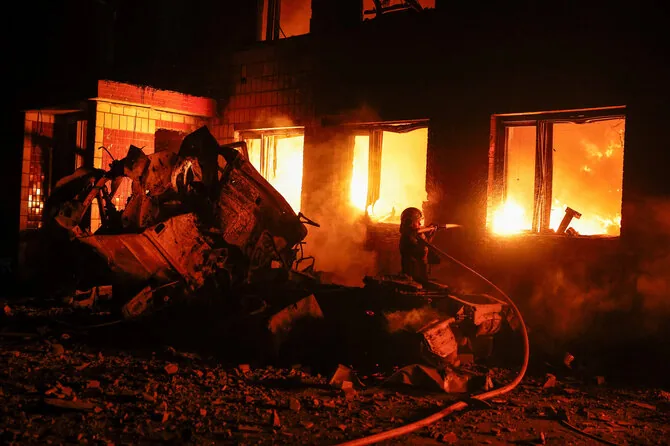
What’s happening?
Ukrainian drone strikes on Wildberries warehouses have become one of the most intense attacks against Russian civilian and economic infrastructure since the start of the full-scale war in recent weeks.
On July 18, drones struck the company’s warehouses in Elektrostal, Moscow region, and Kotovsk, Tambov region. Eight night shift workers were killed in the attacks, and more than 70 people were injured.
Russian analysts estimated the total damage at up to 100 billion rubles, or approximately 1.3 billion US dollars. If these figures are confirmed, it would be one of the largest economic damages inflicted on Russian commercial infrastructure since the start of the war.
Ukrainian President Volodymyr Zelenskyy stated that these strikes were a response to Russian attacks on Ukrainian civilian infrastructure. He likely referred to previous deadly strikes on the facilities of the Ukrainian postal and logistics company Nova Poshta.
According to V.Zelenskyy, Wildberries warehouses also stored components for the production of sanctioned drones and navigation systems.
On July 22, two more attacks were carried out – drones struck Wildberries warehouses in Krasnodar and Nevinnomyssk, in southern Russia.
The company’s founder, Tatyana Kim, reported that at least one person was killed and several others were injured in the strikes. According to her, after the attacks, Wildberries logistics centers in both cities were evacuated.
Krasnodar Krai Governor Veniamin Kondratyev, in turn, reported ten people injured in an attack on a “storage facility,” but did not directly mention Wildberries.
The economic impact of the attacks is already being felt in the markets. On July 22, shares of the competing company Ozon fell by more than 8% on the Moscow Exchange, as investors feared that its facilities could also become targets.
Wildberries changed the terms of its contracts with sellers a month before the attacks and waived its obligation to compensate for losses incurred during drone attacks.
Now, instead of direct payments, the company offers deferred payment loans, storage discounts, and assistance with relocating goods.
15min verdict: lacks context. The claim that the United Nations recognized the strikes on Wildberries warehouses as a possible war crime is misleading.
UN Human Rights Office representative Thameenas Al Kheetanas did not provide a specific legal assessment of these attacks. He only reiterated the general principle of international humanitarian law: intentional attacks on civilians or civilian objects constitute a war crime.
However, the UN representative did not declare that Wildberries warehouses were deliberately chosen as civilian targets. He also emphasized that the information about the attacks was based on reports from Russian authorities. The UN did not have the opportunity to independently determine what exactly was stored in the warehouses, what their purpose was, what object was targeted by the strike, and whether the attack was intentionally carried out against civilians.
Danielle Bell, head of the UN Human Rights Monitoring Mission in Ukraine, also did not assess the strikes on Wildberries centers or call them a war crime in her statement. She spoke about the general increase in civilian casualties and the growing intensity of strikes on residential areas in Ukraine.
The publication was prepared by 15min in cooperation with Meta, which aims to curb the spread of misleading news on social networks. More about the program and its rules – here
Read more A military aircraft that crashed near Moscow was Russia’s pride: what is known about it?