







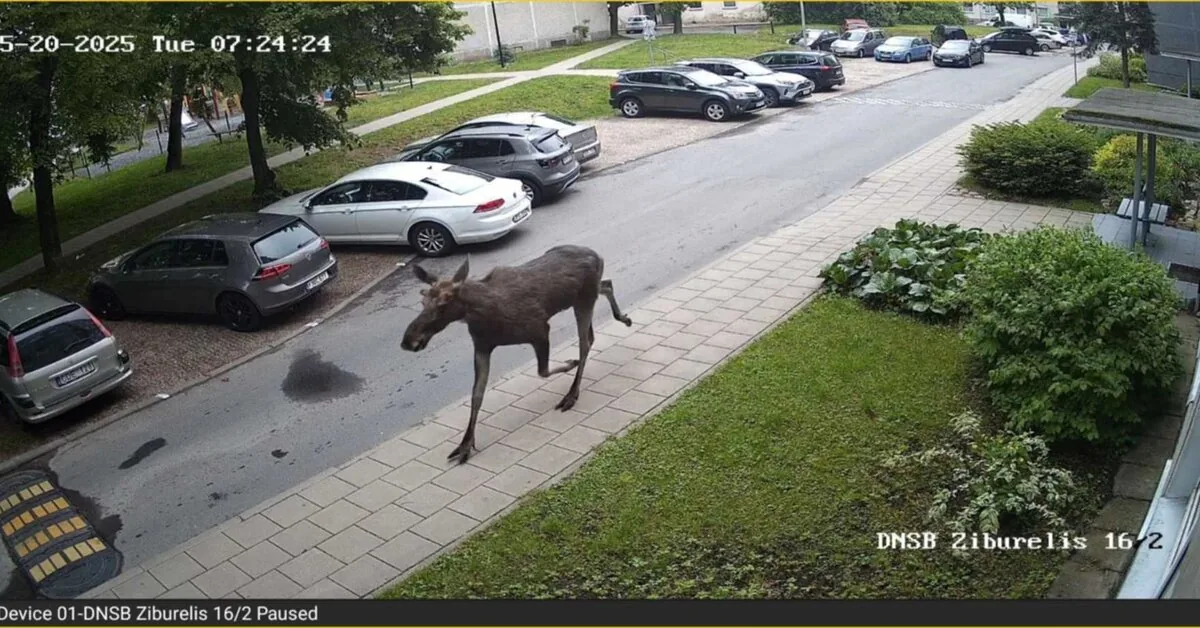
Environmentalists remind the media that the rutting season for deer and moose is currently underway, so animals may behave unusually, be more active and bolder, and not be scared away by people. Therefore, when encountering a member of the deer family, especially in the city, it is important to keep a safe distance, act cautiously, and not approach or scare it away.
Read more „Tesla Semi“ arrives in Europe: where will it travel first?
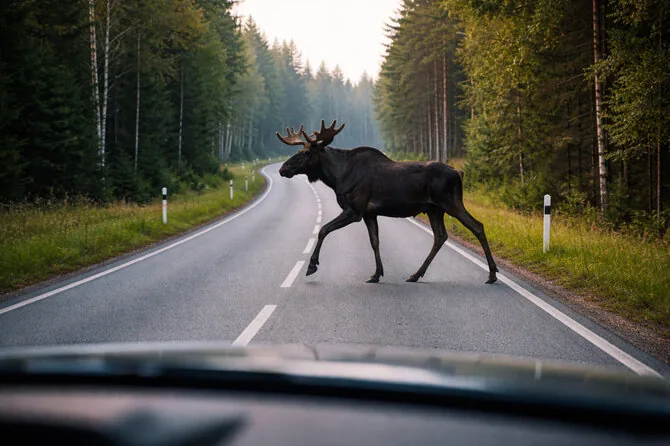
During the rutting season of red deer and moose, drivers should also remain cautious. Special attention should be paid to roads near forests and where warning signs indicate that wild animals may cross the road.
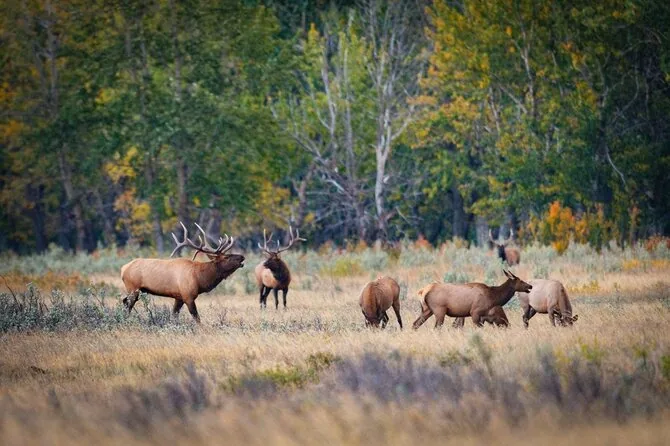
Wild animals in cities – a common phenomenon
Urbanization brings human residential areas closer to wild animal habitats, so roe deer, foxes, moose, and other wild animals are becoming increasingly common within city limits.
These animals often search for food, but feeding or trying to tame them poses a danger. Fed animals may lose their self-preservation instinct, get used to visiting settlements where they face cars, pets, or other dangers.
Foxes, often looking for food, may be attracted to household waste containers, and roe deer that have wandered into cities are also frequently encountered.
It is important to remember that wild animals should not be fed during the warm season. It can harm them.
If you notice a wild animal in your yard or park, the most important thing is to observe it from a distance and not interfere. If the animal appears healthy and active, it does not need help – it will find its way back to nature on its own.
Environmental Protection Department officers remind that even with good intentions, inappropriate human actions can cause additional stress to the animal, worsen its condition, or separate a young animal from its parents.
First, make sure the animal really needs help
A single wild animal or its young spotted in nature is not necessarily abandoned or injured. The parents of the young are often nearby, searching for food and will return later. Therefore, if you find a healthy, active animal, it is best not to touch it, catch it, and leave as soon as possible.
You should be concerned if there are clear injuries, the animal is very weak, lethargic, immobile, limping, unable to fly or move, breathing heavily, or behaving unusually. A young animal may also need help if its dead mother is found nearby.
If you are unsure whether a wild animal really needs human help, it is recommended to first consult specialists at the Lithuanian University of Health Sciences Wild Animal Care Center by phone +370 605 72837 (24/7). Specialists will assess the situation and advise on how to proceed.
If you are sure that the wild animal is injured, sick, and needs urgent help, report it to emergency services by calling 112.
Read more A woman disappeared in Raseiniai district, police ask for public help
It is important to know that only veterinary doctors can treat animals or perform other veterinary procedures.
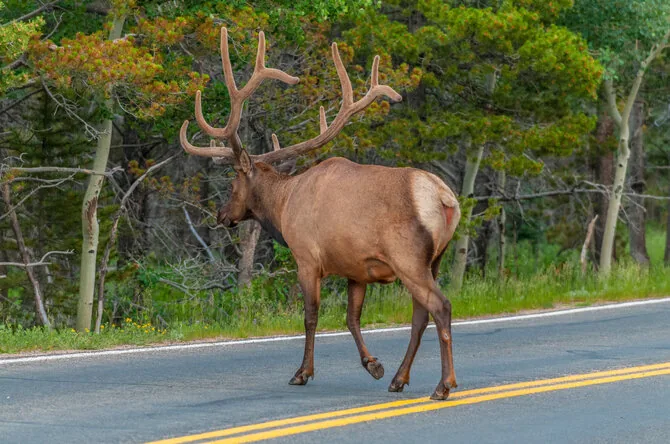
Why you should not take a wild animal home
Even with good intentions, a person without the necessary knowledge can harm a wild animal more than help it. Catching, transporting, and contact with a wild animal can cause great stress, and improper feeding, watering, or housing conditions can worsen its health.
It is especially important not to rush to “rescue” young animals found alone. The absence of an adult animal nearby does not mean the young is abandoned. For example, females of some species leave their young in a safe place for a while and return to feed them.
Taking a healthy wild animal from its natural environment without a necessary reason disrupts its natural life. Therefore, the decision on whether the animal really needs human help and how it should be provided is best made in consultation with wild animal specialists.
It is important to take care of your own safety
An injured, sick, or frightened wild animal may behave unpredictably. Trying to defend itself, it may bite, scratch, bite, or otherwise injure a person. Therefore, you should not try to catch or handle the animal with bare hands on your own.
If it is necessary to move the animal briefly, for example, off the roadway due to immediate danger, first assess whether it can be done safely and avoid direct contact.
If you hit a wild animal with your car or notice a wild animal already hit on the road, report it to emergency services by calling 112.
Responsibility
Taking wild animals from their natural environment is not an appropriate way to help them. Administrative responsibility may be applied for disturbing, catching, or taking young wild animals from the environment without a necessary reason.
Recovered wild animals, except for exceptions provided by law, must be returned to the habitats from which they were taken or to habitats typical for them.
Intentional catching, disturbing, or taking wild animals from the environment carries a fine for individuals ranging from 150 to 750 euros.
More information on how to behave when encountering wild animals can be found in the Environmental Protection Department’s memo “Wild Animals.”
Read more LEA leader: we must prepare to pay more this heating season