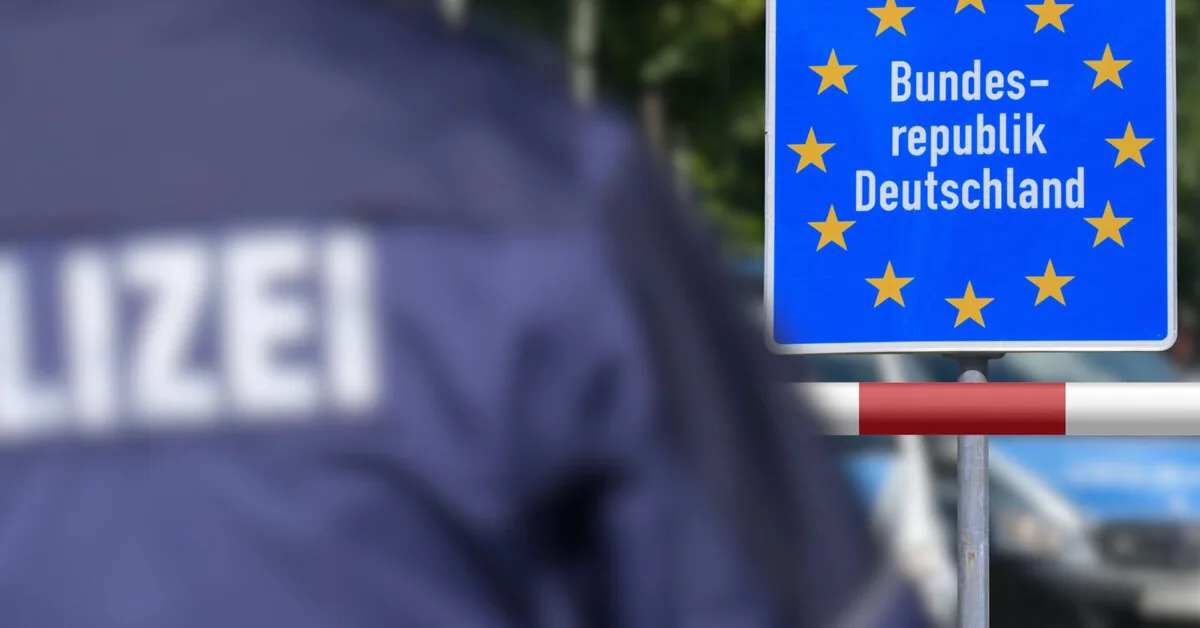
The European Commission (EC) indicated that the new external digital border control system of the bloc and the soon-to-be-enforced migration pact, which tightens inspection procedures, have reduced the need for internal controls.
Read more Perfect Milda’s goulash for the whole family: it will be even tastier the next day
“Under these conditions, member states may seek to gradually abolish controls at internal borders,” said EU Migration Commissioner Magnus Brunner.
Free movement must be ensured within the EU Schengen area, and countries may introduce checks at the border with other members only if they believe there is a threat to public order or internal security.
Such measures should be exceptional and temporary – essentially lasting no longer than two years.
However, feeling political pressure to strictly combat migration, many capitals increasingly use this exception to send officers to check arrivals and departures.
Germany has applied some control at parts of its border almost continuously since 2015.
Read more Clear exact date when the «NBA Europe» project will start
When checks last longer than 12 months, the EC must review their justification.
On Tuesday, it issued opinions to Austria, Denmark, France, Germany, Italy, the Netherlands, Slovenia, Sweden, and Norway.
The latter is not an EU member but belongs to the Schengen area.
The EC found that overall the checks were introduced “due to genuine and legitimate concerns related to security threats and the migration situation.”
However, it proposed gradually replacing them with “non-systematic police checks,” “mobile biometric identification,” and “vehicle tracking technologies.”
According to the EU border agency, during the first four months of 2026, the number of illegal border crossings detected by officers into the EU decreased by 40 percent compared to the same period last year.
The bloc’s new automated system, replacing passport stamps with digital registration and the collection of facial images and fingerprints, started operating in April, causing long queues at some airports.
Read more Marco Rubio: Mojtaba Khamenei is alive and increasingly involved in Iranian affairs