In a new vaccine study for adults at high risk of melanoma recurrence, it was possible to remain cancer-free for longer. The results offer hope for future cancer vaccines, writes “Everydayhealth”.
Read more 5 plants in the garden that can become uncontrollable
In a late-stage clinical trial, personalized cancer vaccines developed using mRNA technology helped reduce the risk of high-risk melanoma recurrence or spread after surgery, according to results announced by drug manufacturers Moderna and Merck. Study participants will continue to be monitored to determine whether this treatment also helps people live longer.
However, the entire study has not yet been published in a peer-reviewed scientific journal. The companies producing and testing the vaccines say they will provide more information at an upcoming medical congress.
“Although we do not yet know any details, the report of improved disease-free and metastasis-free survival in a phase 3 cancer vaccine trial is extremely encouraging,” says Jeffrey Ishizuka, MD, Associate Professor of Internal Medicine at Yale School of Medicine and oncologist treating patients with melanoma—the most dangerous form of skin cancer.
Cancer vaccines have long been considered a very promising treatment direction, but there have been many challenges in this field. Some drugs appeared effective in early trials but failed in later stages, says Dr. Ishizuka, who was not involved in the development of the new vaccine.
“This level of success using this type of personalized mRNA vaccine is a real breakthrough,” he says.
“We have dreamed about cancer vaccines in this field for a long time,” says Zihai Li, MD, PhD, founder and director of the Pelotonia Immuno-Oncology Institute at Ohio State University.
According to him, this could potentially fundamentally change the situation.

Helped protect against melanoma recurrence or spread
The discussed study involved 1100 adults with stage 2–4 melanoma whose tumors were completely removed surgically. For about one year, participants received a personalized version of the mRNA vaccine called intismeran together with Keytruda (pembrolizumab) or Keytruda alone.
The FDA-approved drug Keytruda helps the immune system recognize and attack cancer by blocking PD-1—a protein that can act as a “brake” on immune cells.
In an interim analysis of the study, the combination of intismeran and Keytruda achieved both primary study goals:
- significantly extended the time patients remained free of melanoma recurrence;
- extended the time patients remained free of cancer spread to distant parts of the body, i.e., metastasis-free.
The companies have not yet released specific percentages of risk reduction. According to the drug manufacturers, no new safety issues related to the treatment have been identified.
Optimism is also supported by a previous, smaller study. After five years of follow-up, a phase 2 trial showed that adding intismeran to Keytruda, compared to Keytruda alone, reduced the risk of melanoma recurrence or death by 49%, and the risk of distant metastases or death by 59%.
How does the personalized cancer vaccine work?
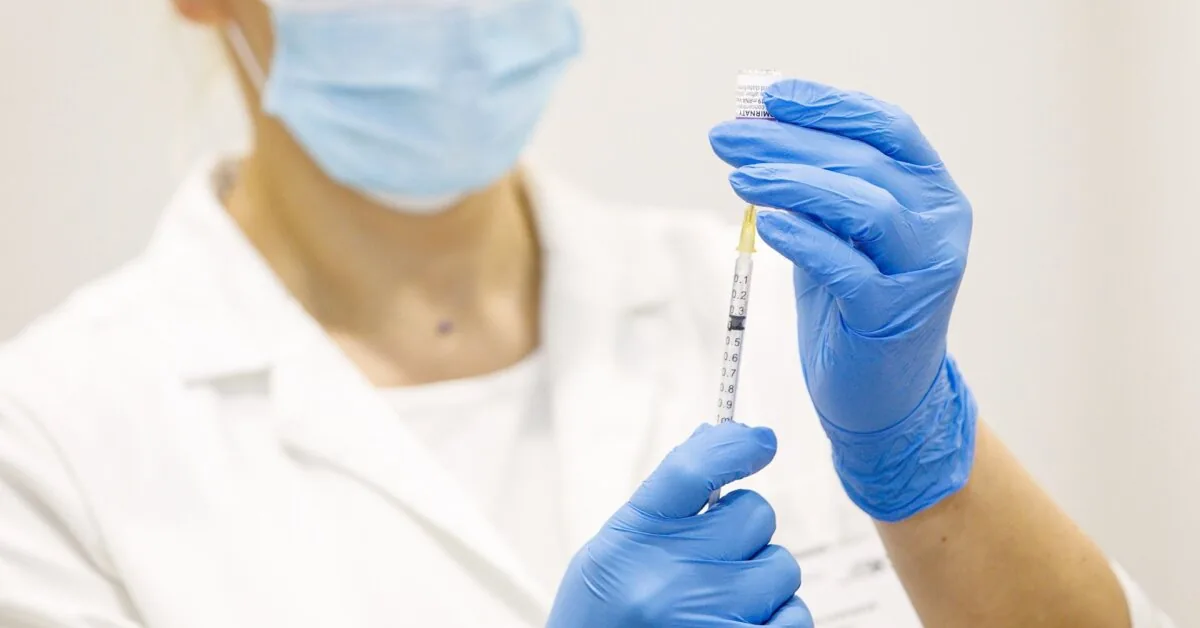
Unlike a conventional vaccine, which can be of uniform composition and produced for millions of people, each dose of intismeran is made for a specific person based on the genetic characteristics of their cancer.
“The idea of the vaccine is to take the tumor growing in a specific patient’s body, identify unique features of that cancer through DNA sequencing, and create a vaccine tailored to that tumor that stimulates the patient’s immune system to recognize the cancer as foreign and attack it,” explains Pauline Funchain, MD, oncologist and Deputy Director of the Cancer Research Training and Education Program at Stanford Cancer Institute. She is not involved in the development of intismeran.
Scientists analyze tissues removed during surgery and select up to 34 abnormal proteins called neoantigens that arise due to tumor mutations. Then an individual mRNA strand is created encoding instructions for the immune system to target these cancer proteins specifically.
Another goal is to form immune memory. If microscopic melanoma cells remain in the body after surgery, hiding in other parts of the body or starting to grow again after months or years, the immune system is already “trained” to know what to look for.
Keytruda complements the action of the mRNA vaccine by helping the immune system overcome PD-1 protein-induced suppression and attack cancer cells.
Uses the same core technology as mRNA COVID vaccines but with a crucial difference

Messenger ribonucleic acid, or mRNA, is a type of genetic material naturally produced by the body. mRNA molecules act as instructions—they tell cells how to make proteins needed for normal metabolic functions.
mRNA vaccines became widely known during the COVID-19 pandemic. Using this technology, single-stranded mRNA molecules deliver temporary genetic instructions that prompt the body to produce certain proteins that the immune system later learns to recognize as dangerous.
“The personalized vaccine is designed to stimulate the immune system to attack specific targets. It is delivered in a lipid particle—similar to a soap bubble—so that when injected, it can enter cells and be expressed there,” explains Dr. Ishizuka.
The crucial difference is what instructions are given to the immune system. The COVID-19 vaccine taught the immune system to recognize a viral protein, while this cancer vaccine provides instructions based on mutations present in a specific person’s tumor.
One reason this method may be more effective than previous cancer vaccines is that it is not based on the “one vaccine fits all” principle. Many earlier vaccines targeted the same cancer markers for all patients, whereas this vaccine is created according to the unique mutations of each person’s tumor.
The study focused mainly on people at high risk of melanoma recurrence
Melanoma is one of the most dangerous forms of skin cancer. It develops when pigment-producing cells begin to multiply uncontrollably. It is projected that in 2026, about 112,000 new melanoma cases will be diagnosed in the United States, and more than 8,500 people will die from this disease.
The prognosis for melanoma can vary greatly depending on how advanced the disease is.
“People with stage 2B–4 melanoma whose tumors were all surgically removed could be included in this study,” says Funchain. “After surgery, the risk of melanoma recurrence in these stages ranges from about 30% to well over 75%, depending on the stage of the disease.”
For patients whose disease does recur after melanoma removal, it usually happens within the first two years. Moreover, most recurrence cases involve not just a local tumor but metastatic disease, which carries a higher risk of death.
Could this pave the way for mRNA vaccines for other cancer types?
“I think these results are very important proof of concept effectiveness—for cancer vaccines, personalized vaccines, and mRNA technology itself,” says Dr. Ishizuka.
Historically, melanoma has been one of the key areas where cancer immunotherapy has been tested. According to Funchain, the first three modern immunotherapy treatments approved between 2011 and 2014 were specifically for melanoma. Later, pharmaceutical companies developed similar drugs for many other cancer types.
“It is likely we will see a similar trend with mRNA vaccines for other cancer types, especially because mRNA-based therapies can inherently be adapted quite quickly,” she says.
It is not yet clear when the vaccine might become available to patients. However, a preliminary target date is 2027.
Read more See what remains of the «Antonov-3» when the engine stopped at 600 m altitude