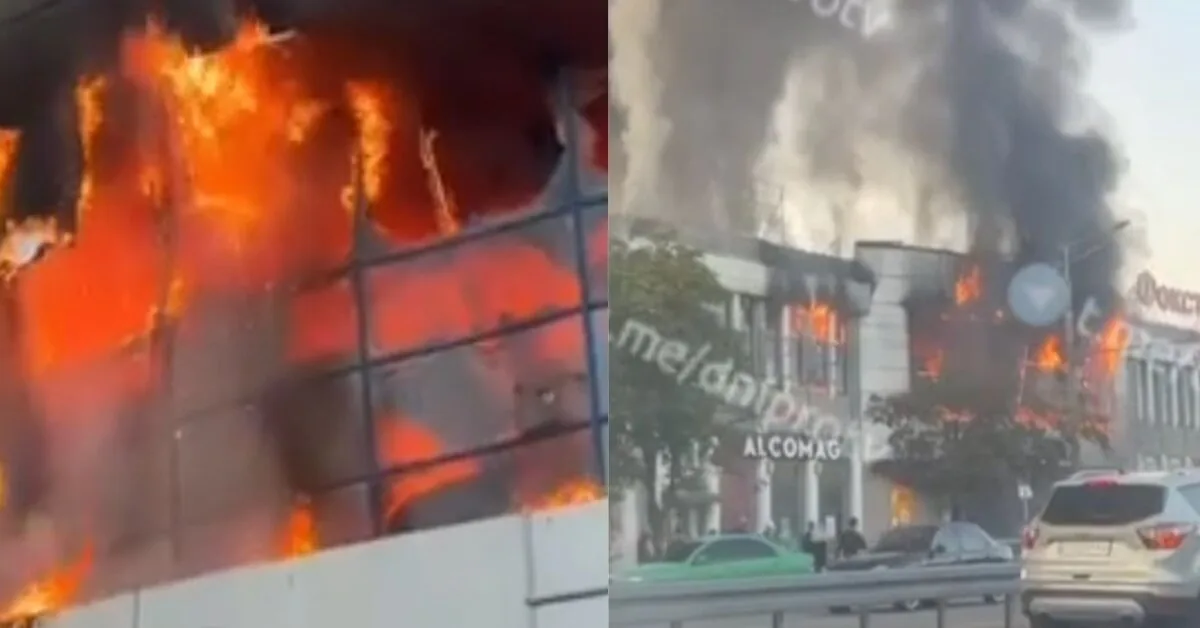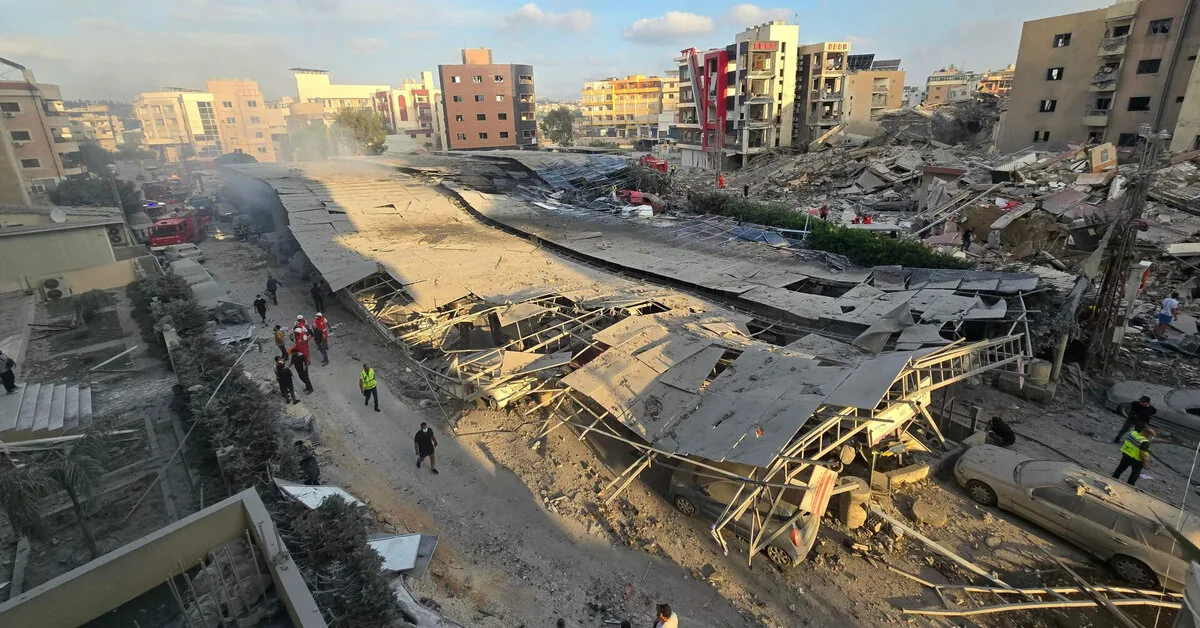
As Israel strengthens its offensive in Lebanon, including intense bombing and the deepest ground invasion in the past two decades, the threat to a ceasefire in a broader Middle East war between the US and Iran has emerged.
Read more Loud addition: «Kauno Žalgiris» – a forward who has already shone in Lithuania
Hezbollah involved Lebanon in the conflict on March 2 by launching rockets into Israel in retaliation for the killing of Iran’s top leader by Israel together with the US. At the same time, Tehran demanded that Lebanon be included in any peace agreement with Washington.
Night clashes occurred after Lebanon reported that the Iran-backed Hezbollah accepted a US proposal for a “mutual cessation of attacks,” with D. Trump stating that he convinced the warring parties to de-escalate the situation.
Under this agreement, Israeli strikes in Dahieh, a southern suburb of Beirut, were to be stopped in exchange for Hezbollah refraining from attacks against Israel, according to a statement from the Lebanese embassy in Washington.
However, Israeli Prime Minister Benjamin Netanyahu appears to have cast doubt on any ceasefire, and a Monday report by the US news portal Axios stated that D. Trump called him a “damn madman” and accused him of threatening peace talks with Iran.
“No soldiers will go to Beirut, and all soldiers who were already on the way have been turned back,” D. Trump wrote on his social network Truth Social after what he called a very productive conversation with B. Netanyahu.
“Also, through high-ranking representatives, I had a very good conversation with Hezbollah, and they agreed that all shelling will stop – that Israel will not attack them, and they will not attack Israel,” he added.
Later, B. Netanyahu stated that he told D. Trump “that if Hezbollah does not stop attacking our cities and citizens, Israel will strike terrorist targets in Beirut.”
But D. Trump further increased his pressure to seek a ceasefire, writing on Truth Social that “hopefully” the fighting between Israel and Hezbollah will stop “forever.”
Exchange of strikes
These reports came on the eve of the fourth round of direct Israel-Lebanon talks organized by the US, scheduled for Tuesday and Wednesday. Last week, military delegations held security talks.
However, Hezbollah took responsibility for a series of attacks on Israeli targets, mostly in southern Lebanon, even after D. Trump’s announcement.
Hezbollah also claimed responsibility for a rocket attack on an Israeli tank on Tuesday morning in Hadatha, southern Lebanon, stating on the Telegram platform that it is fighting against the “advance of Israeli forces.”
Lebanon’s state National News Agency (NNA) reported late Monday on Israeli strikes in several locations in the south of the country, including the villages of Marwaniyeh, Sidiki, Jatara, and Mansourieh, also noting that the town of Debbine was shaken by a “very violent explosion.”
Meanwhile, the Israeli army reported on Tuesday that it intercepted two shells from Lebanon, with no casualties.
Tehran says that a ceasefire in Lebanon remains a key condition for any agreement with Washington.
Near the border village of Klayya, where some residents still stayed despite Israeli evacuation orders, priest Antonios Farah told AFP news agency that a strike on a car killed a man, his son, and his student daughter as he was taking them home after exams in Beirut.
Lebanon’s Ministry of Health reported that at least 3,433 people have died in Israeli attacks since March 2.
The Israeli army reported that two of its soldiers were killed in southern Lebanon, raising the number of Israeli soldiers killed since early March to 27.
Fleeing families
United Nations (UN) Secretary-General Antonio Guterres’ spokesperson Stephane Dujarric urged all parties to “respect the cessation of hostilities.”
In a report to the UN Security Council, seen by AFP, A. Guterres said that after the current mission’s mandate ends at the end of the year, it will be necessary to maintain peacekeepers in Lebanon.
The Israeli army urged residents of southern Beirut, Hezbollah’s stronghold, which has largely avoided heavy attacks since April, to evacuate.
AFP journalists said they observed families fleeing from densely populated southern suburbs.
The ceasefire intended to stop fighting in Lebanon began on April 17 but was not observed.
Both Israel and Hezbollah accuse each other daily of violating the ceasefire, justifying their attacks and blaming the other side for alleged violations.