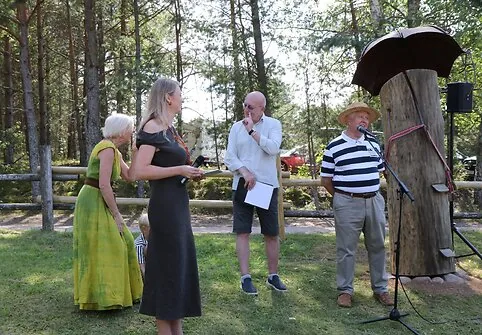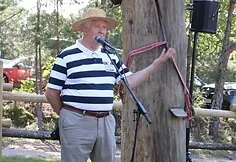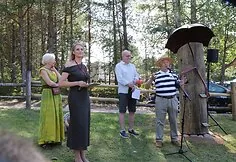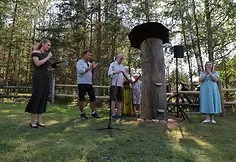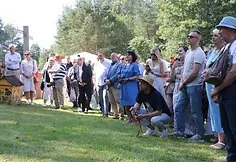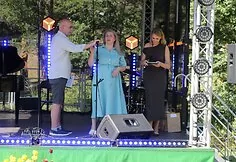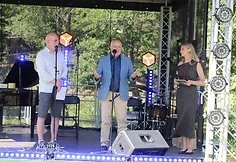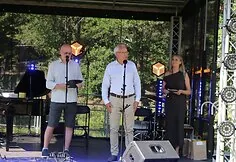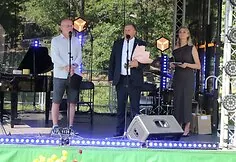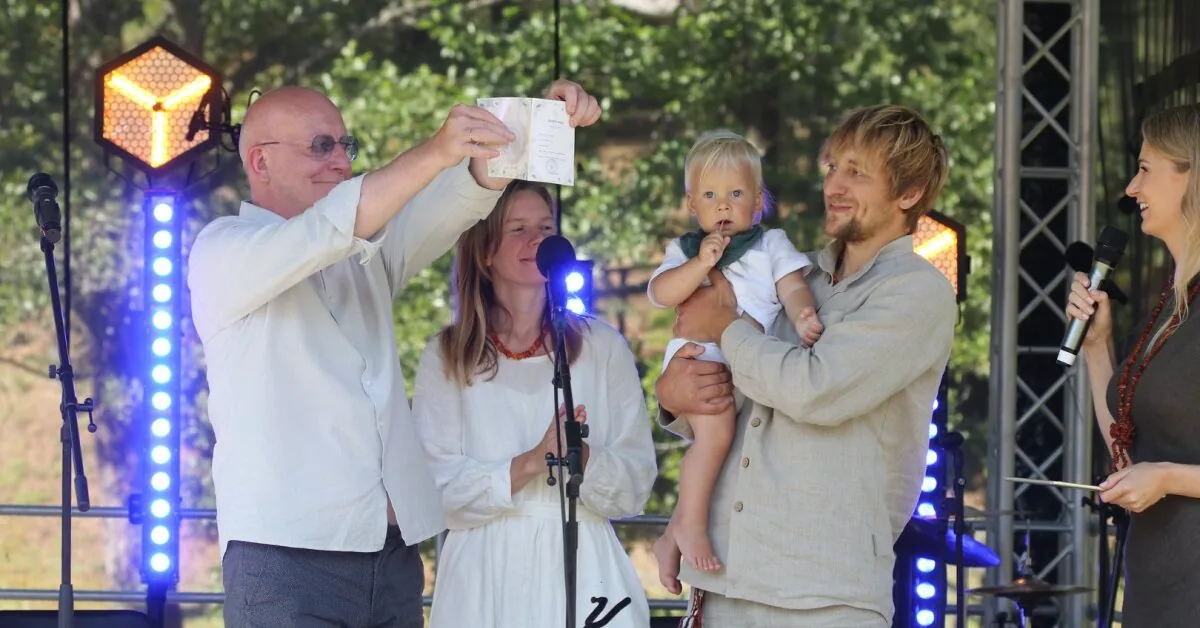
On August 15th, Stripeikiai became perhaps the smallest but definitely buzzing republic in Lithuania for one day. The newly born Bee Republic’s ambassador A. Valinskas was solemnly presented with the Republic’s seal by Danutė Indrašienė, the chairwoman of the Stripeikiai region community, and the first citizen of the Bee Republic, Ramojus, also received a personalized passport. Thus, the Bee Republic acquired what no true state can do without: its ambassador, a seal, and its first citizen, according to the community’s press release.
Read more Tomato grower about this year’s challenges and what was the biggest problem: I cannot complain
Danutė Indrašienė, chairwoman of the Stripeikiai region community, says that the Bee Republic was born with a smile, but it is not just a fun festival intrigue. It is an invitation to protect a place where beekeeping tradition is alive not in museum showcases but in people’s lives.
“Bees teach what people really need today: to work together, care for their environment, be needed by the community, and understand that no great work is done by one person alone. Citizens of the Bee Republic may be different, but they all share one common interest – that the bees buzz, honey flows, traditions live on, and Stripeikiai does not lose its special voice,” says D. Indrašienė.
Symbolic Beehive in Memory of Zita Kelmickaitė
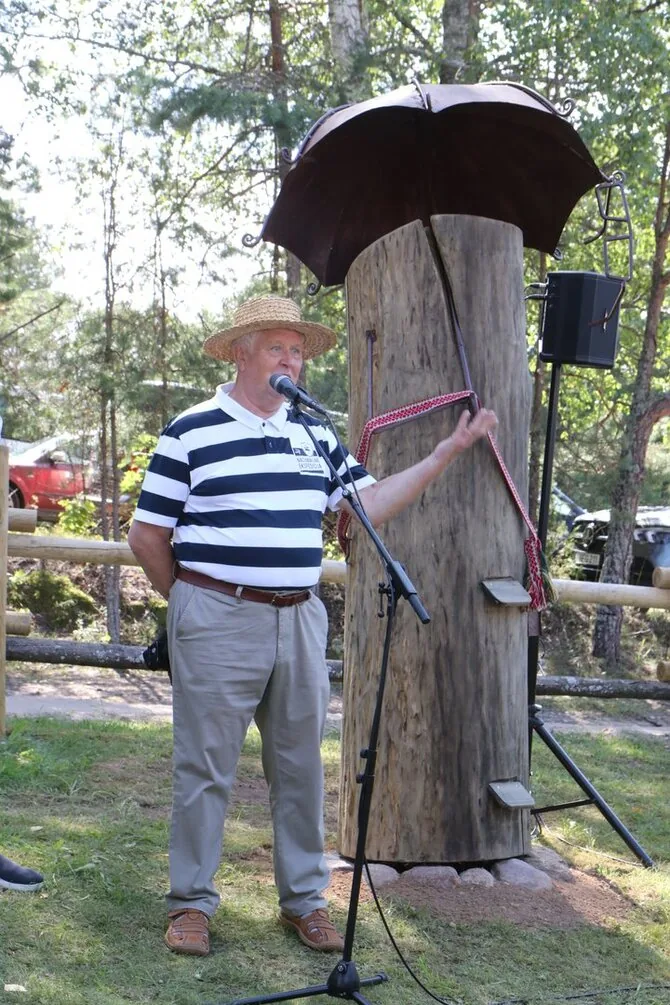
The symbol of the Bee Republic is a tree stump beehive created by the Aukštaitija artist, sculptor, founder of “Flying Forge,” and pilot Raimondas Žievys. The community decided to dedicate the living beehive, which will soon be home to a bee family, to the memory of Z. Kelmickaitė.
At the opening of the festival, her friend – writer, naturalist, and photographer Selemonas Paltanavičius – spoke about the musicologist, ethnoculture promoter, and program host’s connection with nature, bees, and Stripeikiai.
Read more In Troškūnai, famous for cultural events – calm, the parish priest insists he forbids nothing
“It is symbolic that bees will live in the beehive dedicated to Zita’s memory. After all, Zita knew how to notice what others might pass by unnoticed – a person, a custom, a word, an object, a story. And bees also have their own world, where every task has meaning, and community has great power,” said S. Paltanavičius.
One of the most distinctive moments of the Medkopis festival was the blessing of the first citizen of the Bee Republic, Ramojus, according to ancient Baltic customs. The ceremony was led by Gailė Vanagienė, the priestess of the ancient Baltic religious community “Romuva,” ethnologist, and member of the Lithuanian Ethnic Culture Protection Council. She brought back the spirit of ancient traditions, the meanings of the ritual, and respect for bees, which have long been considered intermediaries between humans and nature. The citizen’s family was not only entrusted to the protection of the gods but also had to take an oath – the passport was handed to Ramojus by the Bee Republic ambassador A. Valinskas.
To Stripeikiai – Not Just for Honey
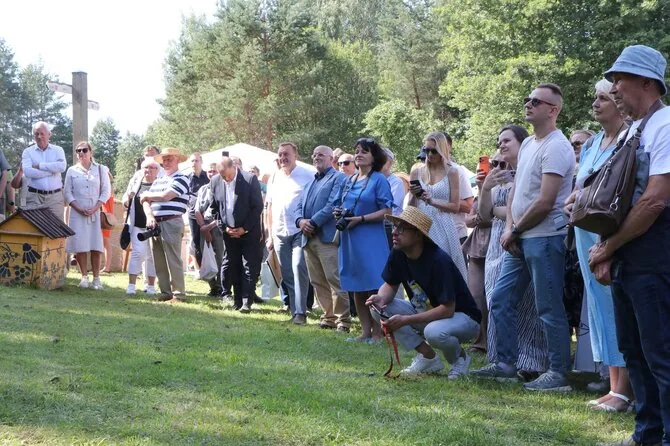
Between 5,000 and 10,000 people visit the Medkopis festival every year. This year, the festival was record-breaking in the variety of lectures, educational activities, and entertainment offered, and the celebration of the 35th anniversary of Lithuania’s national parks was also part of the event.
The festival featured everything from presidential honey spinning and tasting to a scientific program where bees were reviewed as a complex, science-based living world by lecturer Dr. Laima Blažytė-Čereškienė and legendary beekeeper and scientist Dr. Algirdas Amšiejus. The festival was also rich in music – from the buzzing of bees, sutartinės (traditional Lithuanian multipart songs), to performances by Gediminas Gelgotas with the ensemble “Niko” and the group “Baltos Varnos,” which concluded the Medkopis celebration.
Read more Not just because of faith: researcher revealed why priests were actually forbidden to marry