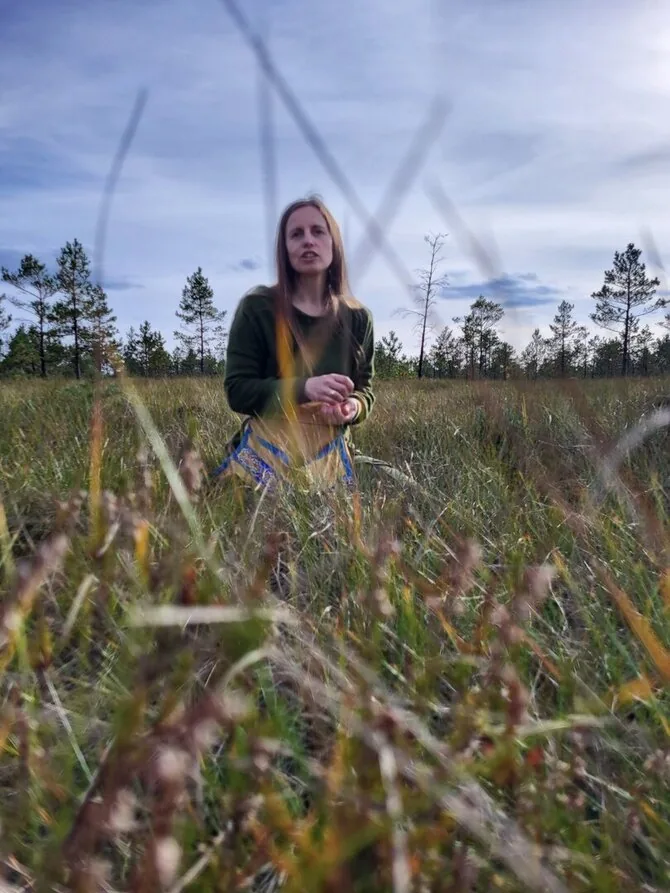
“Water in Dzūkija’s oral culture is associated with all three levels of the world – the sky, the earth, and the underworld. It is one of the most important sources of human life and creative energy,” says Dalia Blažulionytė, cultural heritage specialist at the Dzūkija National Park and Čepkeliai State Nature Reserve Directorate.
Read more «Žalgiris» center who popularized Dončić’s quote talked about another side of his life
On the first weekend of June – June 6–7 – tribute will be paid to water at the traditional Varėna summer tourism opening festival “Dive into summer with the rhythm of nature.” D. Blažulionytė, together with naturalist Dr. Mindaugas Lapelis, will talk here about water in Dzūkija culture.
Preservers of Dzūkija’s intangible cultural heritage have still managed to find people in the villages of this region who tell water stories live, from their own memories. “Certainly, certainly, when rain was awaited, Dzūkai would go near the river. Usually, this was done by widows or unmarried girls. I have recorded stories from people who believed that rain would come if the riverbed was plowed.
Widows in traditional culture were considered persons of borderline status, they were associated with the otherworld, and water was perceived as a medium connecting life and worlds. It was precisely widows who took the plow and usually three women with it would walk along the river three times. They said: if you need to return back, then don’t plow anymore, bring the plow back. I found mentions that it is not necessaryi to plow the river, a dried-up old riverbed also works. After all, the most important thing is to plow the riverbed, symbolically repeat the agricultural act that would awaken the vital power of water. If you plow, it means you give a signal to the sky that there is disorder on the earth. And then, after three days, it starts to rain,” says Dalia.
For many years in Dzūkija, she has been searching for healing springs – Dzūkai call healing spring water “pamačnų.” They say it should be drawn before sunrise. The most important thing is to believe that such water really has healing powers.
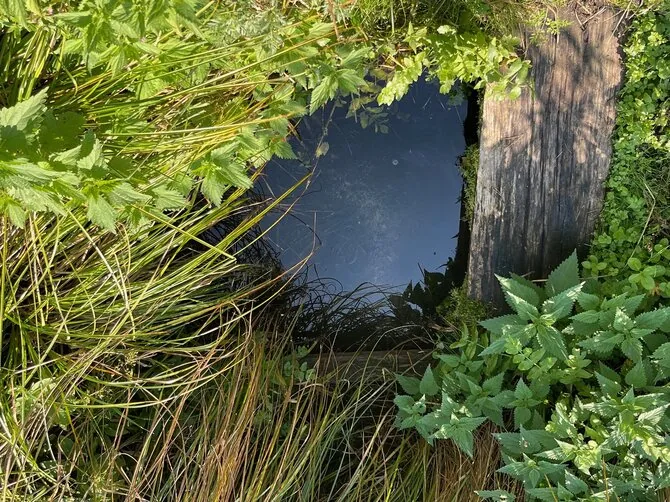
Spring water, D. Blažulionytė says, was important from birth to death. Approaching the threshold of death, people would ask for a cup of water – there was such a spring on Gudo Island, in Mardasava the dying asked to bring water from it. And relatives would carry it. It was believed that water helps the soul to cleanse and separate from the body.
Water was equally important for birth – in Dzūkija there was a long-standing belief that children come from water. Children were told that the midwife grandmother draws the baby from the spring or stream with a fisherman’s dipper or ladle. Because of this, only children from single-child families would go to the water to look for a brother or sister, and children from large families would break ladles so that the grandmother would not bring more children home. Children from Žiūrų village believed that babies are found in the foam of the Ūla River and would go to poke the foam to look for children.
“The belief in children’s origin from water is related to the fact that the baby grows in water in the womb and is born when that water flows out. This explanation is extended by the later belief in storks. After all, they catch frogs in the puddles, and in the mythical consciousness children before birth can inhabit water like frogs or fish,” says the ethnologist, adding that water symbolizes fertility. To awaken it, in Kapiniškiai village children would throw bread crumbs into the Skroblus stream, believing that this way they would soon have a brother or sister.
Lake water, Dalia says, also has its peculiarities; it is often associated with the afterlife and drowners. Some lakes were considered alive and dangerous. It was told about Gilšė Lake that there is a sunken manor at its bottom, and people keep pulling out old pots or iron tools from it. Other lakes, according to Dzūkai, took a sacrifice every year. One can only guess how many there were, if there are more than three hundred lakes in Dzūkija.
Read more Government – for the unification of the duration of maternity benefits
“It is often told that lakes in Dzūkija are connected by underground springs. And if an ox with cows drowns in some bottomless place, it may emerge in Daugai Lake, into which everything from bottomless lakes or spring eyes flows,” local stories are told by D. Blažulionytė.
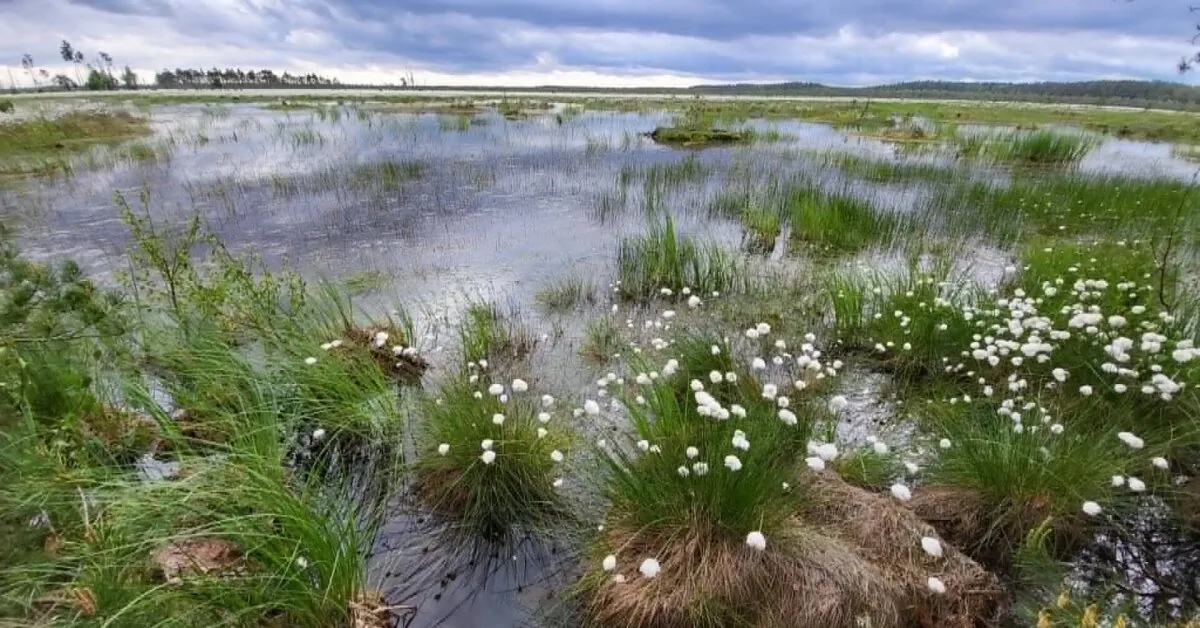
Even swamps did not seem frightening to Dzūkai. Kazimieras Nasvytis, a doctor who lived in Marcinkonys, noticed that local people rarely suffer from skin diseases. After studying the properties of swamp water, he himself believed in its healing power. “After the Assumption Day, you go to the swamp, and everything will be fine,” he used to say.

And where there is water and fog, Dzūkai’s imagination believed that fairies lived. In the mists of swampy places, people still sometimes see them. “Fog for Dzūkai is not just a natural phenomenon – the mist fell, mushrooms buzzed,” smiles the ethnologist, adding that Dzūkai’s relationship with water was not only mystical but also practical. Rivers fed people. The Merkys basin was famous for salmon and graylings, and the riverside Dzūkai made a living by fishing and soul fishing. The Nemunas was the great road on which souls, wood, and people floated. To safely pass dangerous river stones and rapids, so that the water would be gracious, soul fishermen made sacrifices. Fishermen kissed the first caught fish and released it back, thanking the water for its generosity.
Dzūkai, who lived in harmony with water, knew: if you cross water with dirty feet, look out, you might disappear. Today, those living near rivers, lakes, and springs also protect the water, ask visiting strangers not to pollute, to pick up trash, and to enjoy water responsibly. This is also the main pledge of the Varėna summer festival.
The summer festival “Dive into nature with the rhythm of nature” is moving this year to the water-surrounded Varėna Songs Valley. The festival organizers have prepared many water activities for guests, inviting them to take part slowly, unhurriedly, and enjoy the natural beauty of the Varėna surroundings: participants are invited on excursions to Dzūkija National Park, culinary routes, hikes, educational activities, and experiences are organized.
For the festival weekend, not only calm but also fun activities are prepared – saunas with sauna masters, paddleboarding, a kayak marathon, and an evening concert featuring FC Baseball, “Ministry of Echology,” Giedrė Kilčiauskienė.
Varėna summer festival “Dive into summer with the rhythm of nature” – June 6–7. The full program is here.