Fearing risks due to the completion of important infrastructure projects, businesses are calling for a change in the outdated price indexing system that would help avoid problems for both contractors and the state.
Shock therapy for the road sector
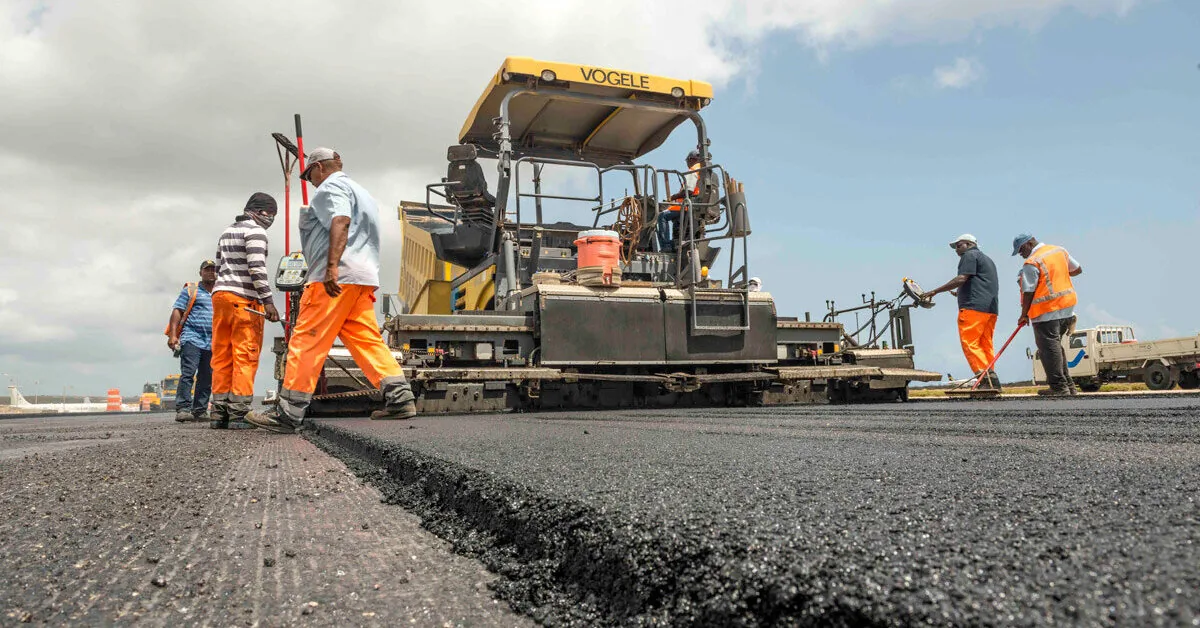
“The rates for paving works have increased from 13 to 23 percent from January to April this year. The installation of thick asphalt concrete layers on highways and regional roads has become the most expensive. For example, when repairing a section of the A8 highway, the cost of installing just the top asphalt concrete layer increased by more than 226 thousand euros,” says the association’s head Šarūnas Frolenko.
The biggest price increase is recorded in the bitumen market. According to data from the “Lithuanian Roads” association, the price of bitumen 50/70 increased by almost 35 percent from December 2025 to April 2026, and modified bitumen PMB 25/55-60 by more than 40 percent. During the same period, diesel prices rose by almost a quarter, and natural gas by more than 44 percent.
Other materials necessary for road construction have also become more expensive. Granite crushed stone rose by almost 15 percent, dolomite crushed stone by nearly 7 percent. Due to these changes, the costs of producing asphalt concrete mixtures and installing road surfaces are increasing.
Evaluating the work per kilometer, the paving costs of the same project increased by more than 17 percent from January to April. According to Aldas Rusevičius, head of “Kauno Tiltai,” the current rate of price growth in the market stands out for its speed, with the prices of key materials rising by tens of percent in less than half a year.
“The market situation is such that works have to be carried out under completely different economic conditions than those calculated in the initial proposals, increasing the risk to project continuity and investment planning. Such sudden changes in energy prices particularly affect the cost of asphalt concrete production and transportation costs, and thus the final project costs,” says A. Rusevičius.
The window for indexing opportunities opens too late
The current price recalculation mechanism allows this to be done no more often than every six months (if the price change does not reach 15 percent), and the first recalculation is possible only six months after the contract comes into effect. Artūras Prichodka, head of “Eurovia Lietuva,” is convinced that such a price indexing system no longer reflects the real market situation.
“Contractors achieve real indexing application only about ten months after the proposal submission deadline. During this time, material and energy prices can change significantly, and the works are often almost completed,” he says.
The situation is especially difficult in shorter-term projects. For example, in the eight-month repair project of the A11 Šiauliai–Palanga highway, the opportunity to apply for indexing will arise only when about 90 percent of the work has already been completed.
Read more Two works attributed to Caravaggio will be exhibited simultaneously in Vilnius
“Such a system does not ensure either effective risk distribution or fair competitive conditions in the market. Contractors are forced to bear unpredictable raw material price fluctuations that they cannot objectively control,” says A. Prichodka.
Appealed to the Public Procurement Office
The “Lithuanian Roads” association proposes changing the indexing model and abandoning the fixed six-month waiting period. It is proposed that price recalculation be possible at any time when the price index changes by 4 percent or more compared to the month of proposal submission.
It is also proposed to set a clear deadline by which the parties must agree on the price recalculation within 10 working days from the submission of the request.
“In our assessment, such a model would better reflect real market changes and ensure more stable implementation of strategic road infrastructure projects. Moreover, the adjustments would also benefit the state by reducing the risk of project delays and disputes. This is especially relevant when discussing the country’s defense needs, as good road conditions are critically important for ensuring proper military mobility,” adds Š. Frolenko.
“Lithuanian Roads” has also appealed to the Public Procurement Office (PPO) with a request to assess whether, due to the current market situation, contracting authorities can change the indexing system and price of public procurement contracts.
“The association seeks to draw the PPO’s attention to the exceptional situation in the road construction and repair sector, where due to the war in Iran and the resulting oil market fluctuations, the costs of raw materials, materials, asphalt production, transportation, and work execution necessary for road works have significantly increased,” the letter states.
It is noted that in practice, a situation has arisen where after the submission of proposals and contract conclusion, the prices of key resources necessary for road construction have increased so much that this has had a fundamental impact on the cost of works performed by contractors and the economic balance of contracts.
Read more European Commission and INVL intend to create a private equity fund in Moldova