The last working day for all commission members is June 1st.
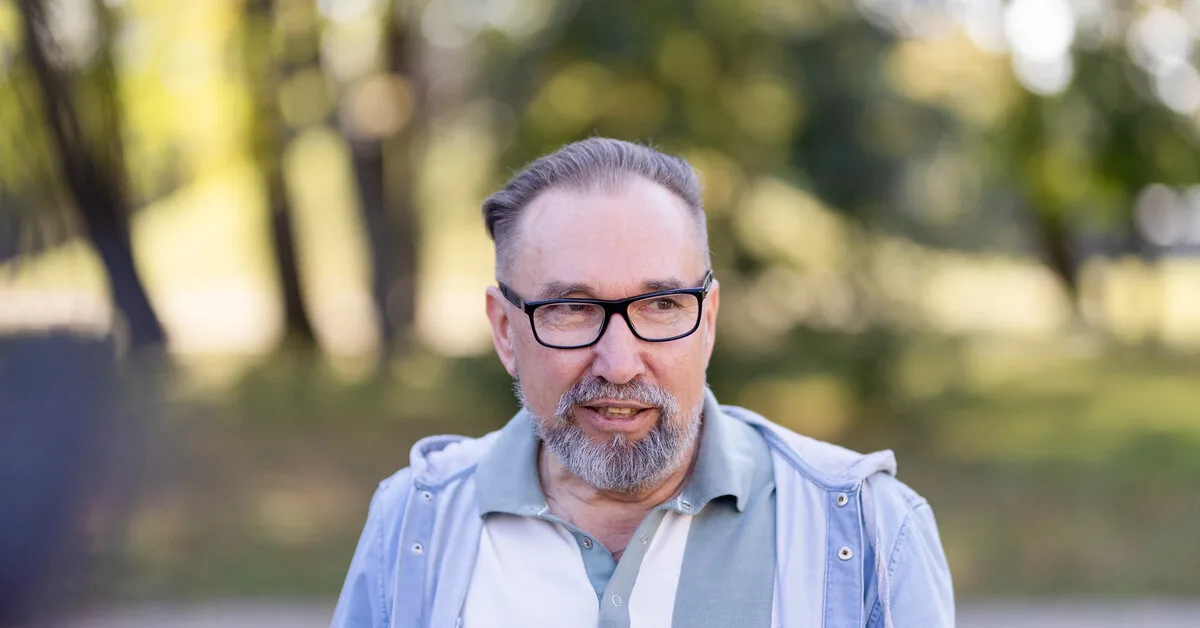
“In accordance with the current de-Sovietization law, this (forming a new commission – BNS) should be done, because laws in Lithuania apply to everyone, both the Seimas and ordinary citizens, and there should be no exceptions,” V. Karčiauskas told BNS.
Read more National Film Awards «Silver Cranes» to be Presented in Vilnius
According to him, not forming the commission would mean a legal loophole.
“The Seimas should adhere to the laws it has passed itself. And the path taken (we will see – BNS) will show who will win in the Lithuanian Social Democratic Party: whether the European-vision Social Democrats or the communists and Stalinists,” said the commission chairman.
“Still, I believe that the Social Democrats will form a new commission, they will not leave a void, because a void means only one thing: that Moscow has finally achieved its goal – the graves of their soldiers, as liberators’ graves, will remain in the very centers of towns. This was the main reason why we were forced to resign,” he said.
Still, V. Karčiauskas emphasized that he does not know the real plans regarding the commission’s future, as there was no communication between it and the parliament.
“We are not someone’s subdivision, our founder and our composition were approved by the Seimas. The Seimas can also dismiss us. But there were no other contacts. The Seimas simply ignored us,” said V. Karčiauskas.
According to him, there was no contact even as the term was ending.
“We were not forgotten; this is a consciously chosen position,” the commission chairman stated.
BNS wrote that the ban on the propaganda of totalitarian, authoritarian regimes and their ideologies came into force in the country in May 2023. According to it, symbols of totalitarianism and authoritarianism must be removed from public spaces – monuments, names of streets, squares, and other public objects, and other symbols.
An expert institution was established as the Interinstitutional Commission for the Assessment of Compliance of Public Objects with the Ban on Propaganda of Totalitarian, Authoritarian Regimes and Their Ideologies. Its members were appointed by the Seimas.
Some of the commission’s recommendations caused public resonance, and some municipalities refuse to implement instructions to remove certain names. Therefore, last June, the Social Democrats registered a project to abolish the mentioned commission and transfer decisions on renaming streets, squares, removing Soviet monuments or memorial plaques to municipalities.
This proposal was approved in the Seimas after submission and the Government’s opinion was requested.
Interpreting this as a vote of no confidence, all members of the De-Sovietization Commission resigned last June.
“However, such a procedure is not provided for in the commission’s legal acts. Alongside the resignation letter, we wrote a letter to the Seimas requesting that proper procedures be carried out and that we be officially dismissed based on our resignation. Unfortunately, such procedures did not take place, and despite the fact that we did not hold sessions, we formally remained members of the commission appointed by the Seimas until the end of the term,” explained V. Karčiauskas.
The commission consisted of its chairman V. Karčiauskas and eight members: historian and heritage conservator Donata Armakauskaitė, historian Marius Ėmužis, historian Valdemaras Klumbys, heritage conservator Rita Kuncevičienė, historian and educator Mindaugas Nefas, head of the Secretariat of the International Commission for the Evaluation of Nazi and Soviet Occupation Regimes Crimes in Lithuania Ronaldas Račinskas, Vladas Sungaila delegated by the Union of Political Prisoners and Deportees, and architect Marius Pranas Šaliamoras.
According to V. Karčiauskas, the de-Sovietization process has practically stopped in recent years, and the commission’s resignation was sought after it began examining the issue of Soviet soldiers’ burials in town centers.
According to him, the commission held the position that such burials, as ideological symbols of the Soviet era, should be relocated from central public spaces.
“Working on a voluntary basis, fulfilling the requirements of the law and decisions of the Seimas, we were accused of all possible sins by the highest people, including the President of Lithuania. This is undoubtedly a reason for self-respecting people to resign,” he added.
Criticism of politicization of the De-Sovietization Commission was expressed by President Gitanas Nausėda, former Prime Minister Gintautas Paluckas, former Minister of Culture Šarūnas Birutis, Chairman of the Seimas Commission on Freedom Struggles and State Historical Memory Darius Jakavičius, and some other politicians.
Read more A flower that turns the garden into a wild color bomb in a few days