










Victoria, living in Wales on the island of Anglesey, recounted that a few years ago while vacationing on the Greek island of Syros, she experienced flu-like symptoms. After returning home, she began having seizures at night.
Read more The rules for business trip per diems are changing: what awaits employees and employers
Victoria was hospitalized, but doctors initially could not determine what had happened to her. After an MRI scan, she was airlifted by helicopter to the Walton Centre for Neurology and Neurosurgery in Liverpool. There, she was put into an induced coma, where she remained for 42 days.
Later, she was diagnosed with tick-borne encephalitis – a viral infection that can cause life-threatening inflammation of the brain.
“It completely changed my life. Without work, I hardly go anywhere,” the woman said.
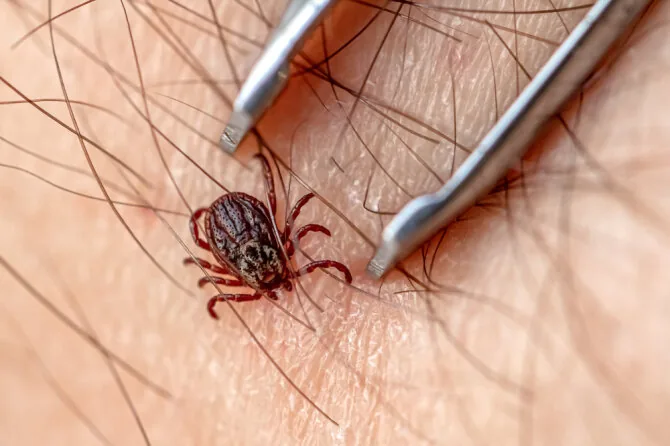
Didn’t even feel the bite
Victoria, who has one child, believes the tick may have bitten her while visiting her brother-in-law’s home. He raises goats, which can carry ticks.
“I kept having seizures, and no one knew what was happening. It was an unusual infection, and I think at that time there were no specialists who could diagnose it,” she recalled.
She spent about half a year in hospitals and later receiving treatment. “Sometimes I just stay silent. I used to be very sociable,” Victoria said.
Because of the illness’s consequences, she lost two jobs. She worked in a bar and as a teaching assistant at a school attended by children with special educational needs and disabilities.
Couldn’t remember people’s names
One of the most difficult effects of the illness was memory impairment. Victoria emphasized that almost every daily activity requires the ability to remember information.
“Tell me a job where you don’t need memory. You need it for everything we do in life – shopping, working, or traveling,” she said.
After returning home, she tried to work again as a teaching assistant but could no longer remember the names of the children and staff.
“I recognized everyone, but I didn’t remember their names. This problem persists to this day,” Victoria said.
She is now looking for work but admits that due to her health condition, it is difficult.
The infection can damage the brain
As the BBC reported citing the UK’s National Health Service, tick-borne encephalitis is a viral infection spread through bites from infected ticks. Such ticks are found in Europe, Russia, and some areas of China and Japan.
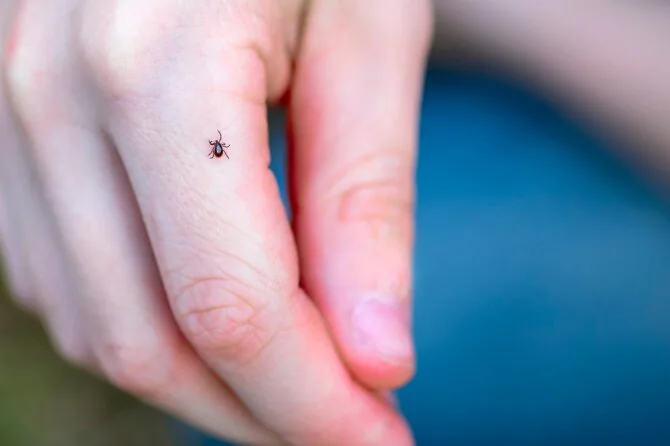
About a week after the bite, fatigue, headache, and other flu-like symptoms may appear. If the infection affects the nervous system, seizures, confusion, speech difficulties, or impaired ability to move certain parts of the body may occur.
People planning to spend time actively in countries where this infection is common are advised to get vaccinated against tick-borne encephalitis at least a month before traveling.
Read more In Vilnius district, 4 people were injured in a collision between two VW cars, including a minor
Victoria was born and raised in Greece and moved to Wales at the age of five. She returns to her homeland for vacation every year but did not know before falling ill that tick-borne encephalitis can be vaccinated against.
Now the woman urges travelers to research risks in advance, especially when planning to spend time in forested areas or near animals.
Up to 18 pills daily
Victoria still takes between 15 and 18 pills daily. Due to memory problems, she had to come up with various ways to help remember daily tasks and medications.
Night seizures now occur less frequently than before, but the woman still sleeps with her mother.
“I’m lucky to have family and friends who have supported me all these years,” she said.
Victoria’s mother, Liz Stellas, is convinced that people often underestimate seemingly minor bites.
“You need to be very careful about things that seem harmless but actually are not. An insect bite can fundamentally change a person’s life. I don’t think people realize this,” she said.
Important to check not just the body
The Welsh public health service recommends wearing long-sleeved clothes and long pants in areas where ticks may be present, applying repellent containing DEET to exposed skin, and sticking to clearly marked paths when walking in nature.

After returning from outdoors, it is important to check the body, clothes, and any pets that were with you. An attached tick should be removed as soon as possible using a special tool or fine tweezers.
Quick removal of a tick can reduce the risk of some tick-borne infections.
Professor Benedict Michael of the University of Liverpool, specializing in zoonotic infections, said that cases of tick-borne encephalitis have increased worldwide over the past three decades. However, severe illness stories like Victoria’s are relatively rare.
According to him, about 3% of infected people develop brain infection. The rest experience no symptoms or a short, though unpleasant, flu-like phase of the illness.
“This disease is important because we do not have effective antiviral treatment. When a person develops encephalitis, as happened to Victoria, the main thing is to ensure their safety, control seizures, and other complications,” the professor explained.
He emphasized that informing people is necessary also because this infection can be prevented by vaccination.
Read more „Maccabi“ and Lonnie Walker seek divorce, three EuroLeague clubs show interest