At the bottom of lakes, rivers, and lagoons lie the remains of flooded villages, sunken structures, undiscovered corners of nature, as well as human-left trash and stories that cannot be seen from the shore.
Read more Shocking incident during a unique celebration in Klaipėda
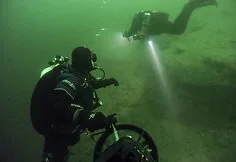
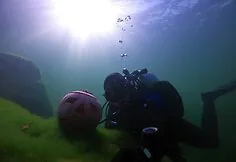
Traveler and diver Vilius Visockas told 15min about the human traces he finds while diving in Lithuania and in water bodies of distant lands.
“More people have been to the moon than to the bottom of some water bodies,” the interlocutor jokes.
Although he is better known to the public as a traveler who independently travels to dangerous countries around the world, Vilius’s relatives know well that one of his greatest hobbies is diving.
“I started diving after finishing high school. With my first earned money, I gradually assembled my diving equipment. I am a water person – a Pisces by zodiac. Perhaps that’s why I spent most of my childhood by water bodies with a fishing rod in my hands. But I always dreamed of looking deeper and finding out what lies beneath the mysterious water surface,” says Vilius.
He does not hide that while diving, he always sought waters not yet explored by other divers:
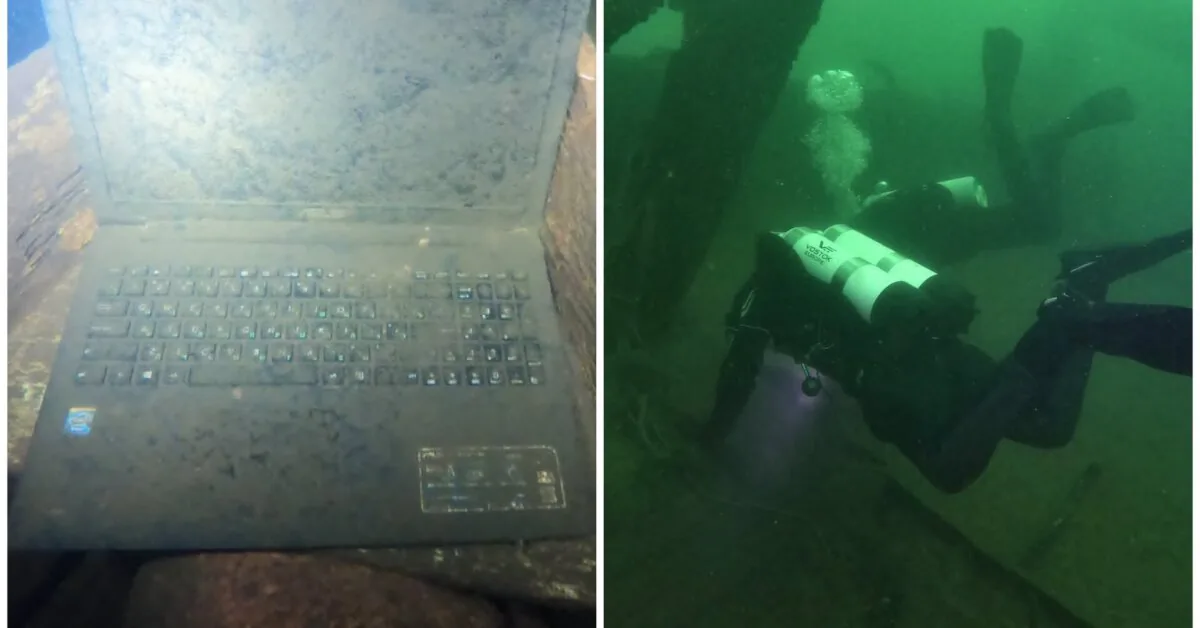
“I was always fascinated by the joy of discovery when I was the first person to visit an interesting place. Almost every larger lake or river in Lithuania is shrouded in legends about Napoleon’s treasure supposedly sunken there. Therefore, whenever I dived, deep in my heart I always hoped to find that discovery of a lifetime. Unfortunately, most often what I and other divers find underwater is human-left trash.”
No longer littering the forest, but throwing waste into the water
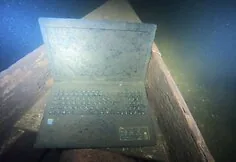
Vilius says he notices that although people are slowly getting rid of the habit of littering in nature, some vacationers by the water often succumb to the temptation to throw food and drink packaging into the water, hoping that no one will see it there, thus turning the shores of the most beautiful attractions into entire underwater landfills.
“We, divers, see all this and organize water clean-up campaigns. However, they happen rarely, so underwater ‘residents’ have to put up with pollution all year round,” lamented the diver, who records some underwater landfills in video reports.
Most interesting – underwater history
Speaking about diving, Vilius openly says that he is most fascinated by the history hidden underwater. According to him, many Lithuanian residents do not even know how many impressive things are “sunk” in the water bodies near their homes.
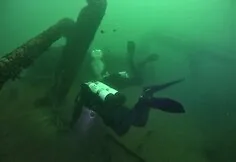
“In the nearby Elektrėnai Lagoon, entire villages were flooded during the construction of the power plant – diving there, you can still find remains of old homesteads. And everything is crowned by the Elektrėnai bridge, which plunged into the lake during an accident – like an underwater ‘Titanic’ of this city.
For people, it was a huge tragedy and loss, but for divers, it became an incredible discovery. I really wanted to show this favorite water body of mine to as wide an audience as possible, so together with Rimantas, a local diver who knows these lagoons well, we created a short documentary film about the history of the Elektrėnai Lagoon,” the interlocutor shared.
Another impressive water body in Lithuania, hiding no less secrets, is the Kaunas Lagoon and, according to Vilius, especially the areas around the Kruonis Pumped Storage Plant, which during its construction turned into a real underwater landfill.
Read more Police found 20,000 packs of cigarettes in a car stopped in Tauragė district
“Soviet work culture, apparently, did not care much for the environment, and a lot of construction debris was simply buried at the bottom of the lagoon, away from human eyes. And I discovered and filmed that underwater landfill. True, diving there is very dangerous – the unexpectedly activated power plant creates unpredictable underwater currents, visibility becomes zero, and there is a great danger of getting stuck in that underwater dump!” he recalled.
The most impressive dives in life – not only in Lithuania
According to Vilius, due to unfavorable natural conditions – frequent rain, Lithuanian rivers rarely clear up and are suitable for diving, so he and other divers usually dive in Lithuanian lakes and larger ponds.
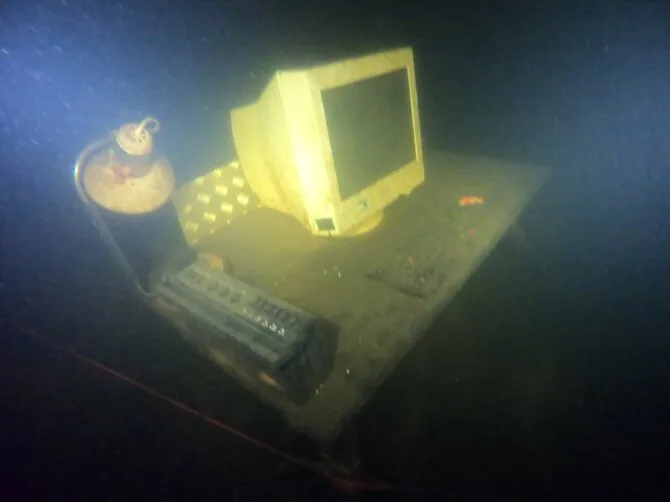
“In some lakes, divers with imagination organize underwater exhibitions or set up horror routes,” the interlocutor said.
Although he loves diving in Lithuanian water bodies, when asked to highlight the most interesting diving experience, Vilius admitted that it was not in his homeland.
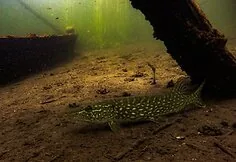
The crystal clear water flowing from the mountains was full of unseen fish.
“The most interesting dive in a river was in a completely unexpected place in the world – once, traveling from India to Bangladesh, in a river flowing at the junction of these countries, to my deep surprise, I dived and discovered the clearest water I had ever seen! The crystal clear water flowing from the mountains was full of unseen fish. However, just a few hundred meters further, entering Bangladeshi territory, the river was already full of local residents bathing in it, and after flowing past the first large settlement, it turned black… Such was the short life of that beautiful river,” the traveler recounted.
Speaking of Lithuania, the most impressive dive was in the Strėva river flowing near Vilius’s hometown:
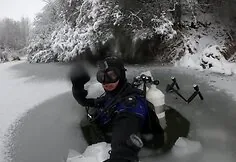
“More precisely – in one of its small ponds. I remember, even from a young age, fishing here, I always dreamed of looking at what was hidden in those dark depths. The water here only clears up late in autumn or winter, so I had to explore my favorite water body already covered with thin ice. That dive was truly difficult. But the findings exceeded all expectations!
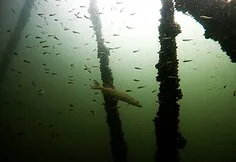
I discovered underwater ‘jungles’ with catfish nestled in tree branches and sleeping through winter, as well as structures of an ancient building, a sunken boat, and many fishing lures. More people have been to the moon than to the bottom of this small and secluded Strėva pond – that’s why diving fascinates me so much!”
Having to rescue sunken personal belongings
Although diving is just a hobby for Vilius, people sometimes turn to him, asking for help to find and retrieve items “sunk” in the water.
“Most often these are water recreationists or fishermen. Although the latter know the dangers posed by water and try to protect themselves and their belongings, sometimes, caught up in the excitement of fishing, they lose their fishing tools or phone in the water.
The situation is completely different with seasonal water vacationers, especially kayakers. They usually underestimate their abilities and the danger posed by water, so they bravely record their travel moments with phones in hand while paddling.
However, if the kayak unexpectedly overturns, a valuable device with even more valuable moments captured in it is lost. Although most people immediately lose hope of getting their phone back, one should not give up. Modern phones are usually waterproof, and many professional divers could help retrieve the phone. So, it’s definitely worth contacting us, divers, for help,” the interlocutor assured.
Read more Social Democrats decide the fate of the coalition: Blinkevičiūtė asserts – ready for anything