The National Public Health Centre (NVSC) reminds in a press release that improperly maintained sand can become a risk factor for the spread of infectious diseases.
Read more Czech ‘Fortuna’ asks for permission to acquire 70% of ‘Top sport’ and ‘Top loto’ shares
Greatest Risk – for Children
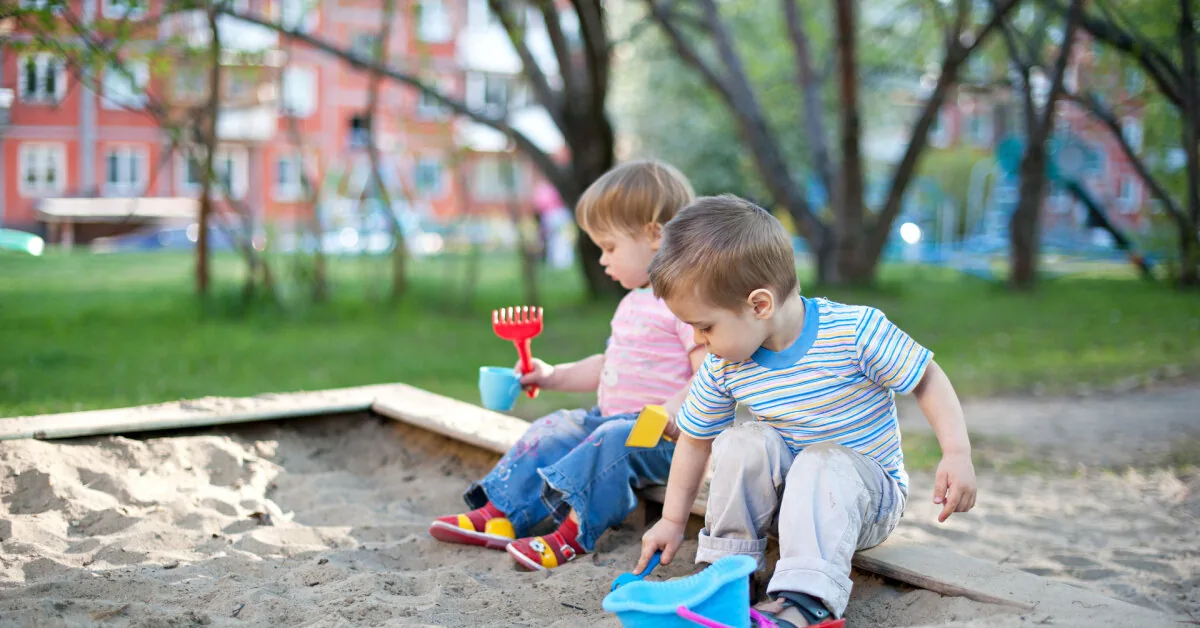
Contaminated sand can contain not only various parasite eggs, but also disease-causing bacteria and viruses. These infections usually spread through dirty hands. Microbes in the sand can cause acute intestinal infections, and parasites, causing diseases such as toxocariasis or toxoplasmosis, enter uncovered sandboxes through animal – dog or cat – faeces.
According to NVSC data, children are more often affected by toxocariasis and intestinal infectious diseases than adults. In 2025, the highest incidence of toxocariasis was registered in the 4–14 year old age group, and acute intestinal infections in the 0–6 year old age group. Higher incidence among children can be associated with more frequent contact with soil or sand, especially in playgrounds, and still insufficiently developed hygiene skills.
“Children often touch their faces and put their hands in their mouths when playing in sandboxes, so even microbes/parasites invisible to the naked eye can become a cause of infection spread. Therefore, not only the maintenance of sandboxes but also the continuous development of children’s hygiene skills is very important,” reminds Aušra Bartulienė, chief specialist of the NVSC Infectious Disease Management Department.

Regular Maintenance Helps Ensure Safety
Proper maintenance of sandboxes is one of the simplest and most effective preventive measures. To reduce the risk of contamination, unused sandboxes must be covered to prevent animals from entering them. It is also recommended to install them in sunny places, as ultraviolet sun rays help destroy pathogens.
Sand must be changed if it becomes contaminated with litter or other impurities. Even visually clean sand is not necessarily safe, so it is important to regularly perform its parasitological examinations.
Read more Before the grandiose concerts in Vingis Park – a special new release from Jessica Shy
“A sandbox may look tidy, but that does not guarantee complete safety. Therefore, it is very important to maintain the sand, prevent animals from entering sandboxes, and not forget about children’s hand hygiene,” emphasizes the NVSC representative.
We remind you that one of the most important protective measures against infectious diseases remains proper hand hygiene. Parents and educators should constantly remind children to wash their hands thoroughly with soap under running water after playing outdoors, especially after playing in the sandbox. It is also recommended not to allow children to snack while playing in sandboxes and to ensure that younger children do not put sand or dirty fingers in their mouths. It is important to take care of toys that children played with outdoors or in the sandbox: it is advisable to use them only for outdoor games, and after bringing them home – wash them thoroughly and do not allow them to be played with indoors.
Responsibility for Sandbox Maintenance
The educational institutions themselves are responsible for the maintenance of sandboxes in preschool education institutions, while the maintenance of sandboxes in public children’s playgrounds and near apartment buildings falls to their operators or owners. If a playground supervisor is not appointed, responsibility for its safety and proper maintenance falls to the owners.
The NVSC also reminds that last year the requirements of the Lithuanian hygiene norm HN 75:2016 “General health safety requirements for the implementation of preschool and pre-primary education programs” regarding sand maintenance in children’s playgrounds were clarified. It was stated that sand does not need to be changed every spring if parasitological examination does not detect helminth eggs in it.
Read more LNDT invited viewers to talk face-to-face about upcoming premieres