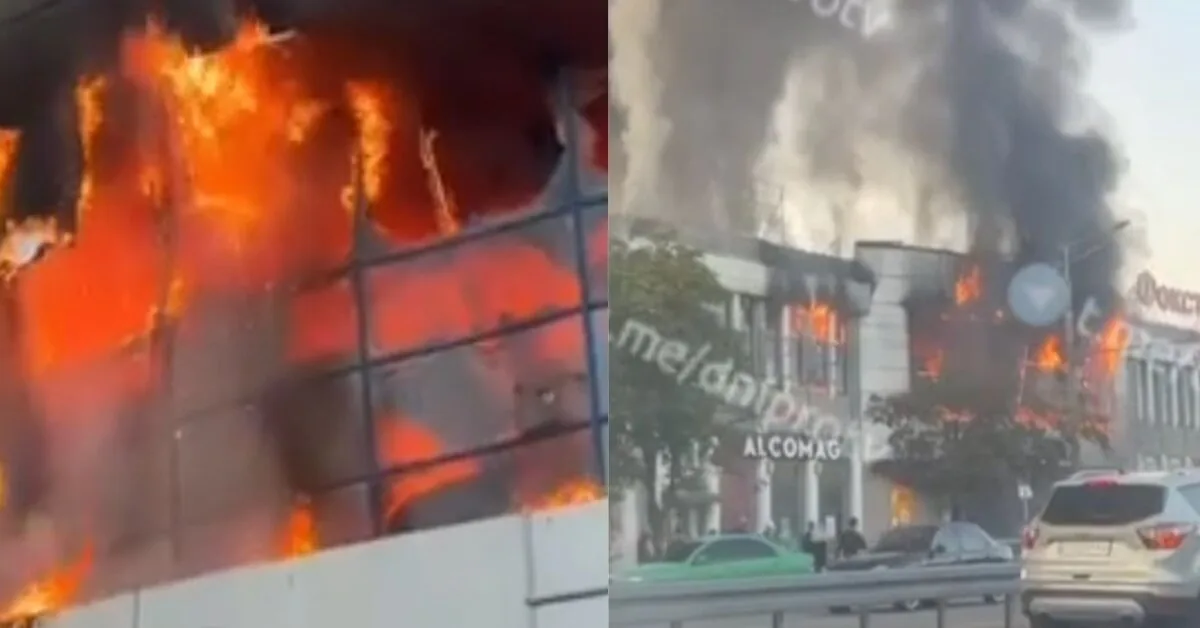
V. Putin stated that the “Oreshnik” strikes in Ukraine were carried out to test new weapons. The same goal was pursued last time.
Read more The Supreme Court of Lithuania acquitted the security guard who used tear gas
“We just struck where it was convenient to see the results. This applies to Bila Tserkva, and even more so to the DPR territory, located within the perimeter of the main fortification. Then we ordered our drones to fly there, to this shed we hit, and just looked at how the dividing blocks were arranged. Counted with millimeter precision. This is important for us so that in the future we can make a decision on the full-fledged use of “Oreshnik” against identified targets, including in urban development zones,” V. Putin justified.
What was known before
The “Oreshnik” strike on Bila Tserkva, located 90 km from Kyiv, was carried out on May 24. Before that, the Russian army struck with “Oreshnik” twice – in November 2024 in Dnipro and in January in the Lviv region.
Later, the Ukrainian Telegram channel “єRadar” published a video allegedly showing the fall of the second “Oreshnik” in the vicinity of Donetsk. The Ukrainian OSINT project “KiberBorošno” determined that the footage shows the unfinished “Rose Park” shopping center in Donetsk. The project noted that “it is impossible to determine exactly where the strike occurred”.
Read more Officials: 7 people killed in southern Lebanon in Israeli strikes
However, Ukrainian forces spokesman Yuriy Ihnat said that “only one ‘Oreshnik’ launch has been officially confirmed – into the Kyiv region”.
It looked like “Oreshnik”
The falling blocks in the video look the same as in other “Oreshnik” airstrike videos, Pavel Podvig, head of the Russian nuclear weapons project, told the “Agentstvo” portal at the time. At the same time, he stated the condition that “nothing can be precisely confirmed”.
Visually, what is seen in the video resembles “Oreshnik”, said a representative of the “Conflict Intelligence Team” (CIT) research project, who spoke on condition of anonymity. “However, it is concerning that the video is the only one (we are not sure about geolocation) and we could not find any traces on site or reports from local residents. As a result, the amount of public data does not allow for confident conclusions,” the analyst wrote then.
Read more Minister doubts the effect of a letter to Vladimir Putin: Ukraine needs to be provided with weaponry