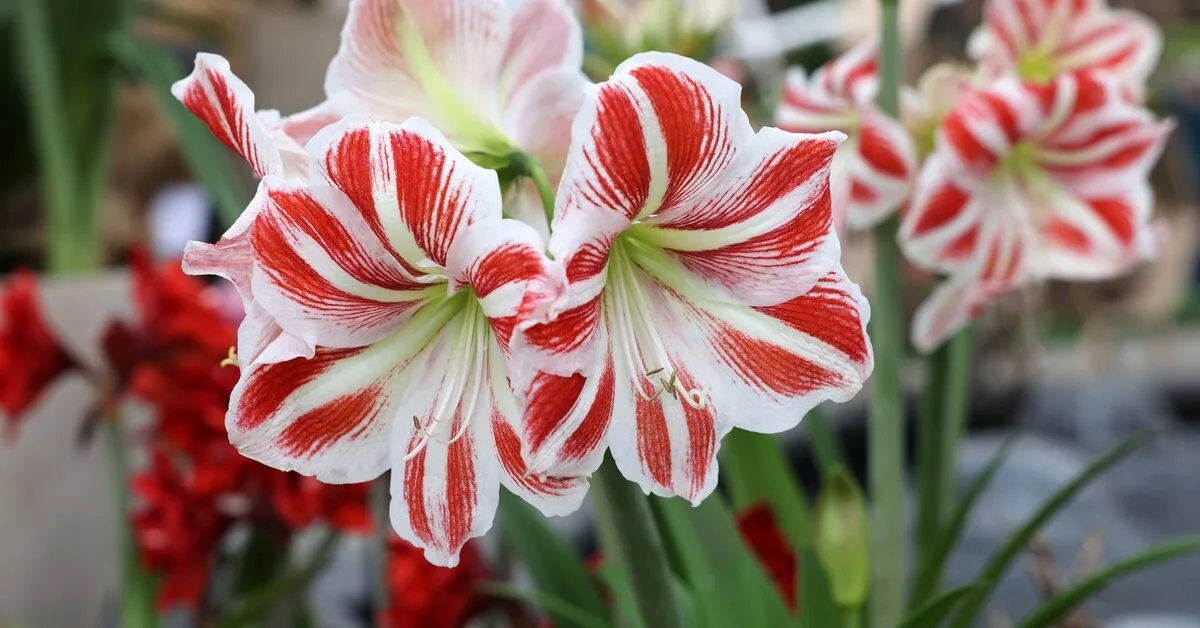










The good news is that most lilies grown in our gardens do not need to be dug up every year. Common Asiatic, many Oriental, and OT hybrids are quite frost-resistant and can successfully overwinter in the soil if planted in a suitable location.
Read more The number of missing people due to floods in Nepal increased by nearly a thousand to 6,150 people
However, there is one important condition – lilies really dislike waterlogged soil. Therefore, in winter, the danger may not be the cold itself, but rather excess moisture.
Dig up or leave in the ground?
If lilies are planted in loose, well-draining soil in the garden, they can usually be safely left to overwinter where they grow.
Do not rush to cut the stems of faded lilies. First, remove the wilted flowers, but leave the leaves and stems until they naturally yellow and dry out. While the plant is still green, it accumulates nutrients in the bulb – these will be needed for growth and flowering the following year.
Only completely yellowed and dried stems can be cut at ground level.
Lilies growing in colder or windy locations can be additionally mulched with compost, leaves, or shredded bark. This is especially useful in the first winter after planting or when growing a more sensitive variety.
Water is more dangerous than cold
Lily bulbs do not like to stand in wet soil for a long time. If the soil is heavy, clayey, and water pools after rain, the bulbs may start to rot during winter.
Therefore, when planting lilies, it is worth ensuring good drainage. If the plot’s soil is heavy, it can be improved with compost and other soil-loosening materials, or lilies can be planted in a slightly raised bed.
If lilies have successfully overwintered in the same place for several years, there is definitely no need to dig them up just because of approaching frosts.
When is it still worth digging up the bulbs?
Another situation is if a more sensitive lily species or variety is grown, one that is not very frost-resistant. For example, some special lilies, including Lilium longiflorum or Lilium nepalense, are more sensitive and may require additional protection in cold climates.
Bulbs can also be dug up if you want to transplant lilies, divide a strongly expanded clump, or if the growing site is constantly waterlogged in winter.
It is best to dig up when the above-ground part of the plant has naturally withered.
Bulbs are carefully lifted from the soil, inspected, and any smaller formed bulbs are separated. Damaged, soft, or rotting ones should be removed.
What about overwintering in pots?
Lilies grown in pots are more sensitive not because the plant itself cannot withstand winter, but because the soil in pots freezes much faster and deeper than in the garden.
Therefore, in a cold winter, it is worth moving the pot to a place protected from the harshest frosts – an unheated garage, utility building, cold greenhouse, or another cool room.
It is important not to keep lilies in a warm room. They need rest and cool conditions in winter.
If the pot remains outside, it can be insulated and placed near a wall more protected from precipitation and wind. It is also necessary to ensure that water does not accumulate in the pot.
When to start caring for them again?
In spring, lilies left in the ground start to sprout new shoots on their own. Then you can remove the thicker winter mulch layer and begin regular care.
If bulbs were dug up, they can be planted when the soil is suitable for work and there is no strong frost.
Choose a sunny or slightly shaded spot for lilies and loose, fertile, but most importantly – well-draining soil.
So, for most Lithuanian gardeners, the rule is very simple: if you grow common garden lilies in good, non-waterlogged soil, there is no need to take a spade in autumn. Bulbs can remain in the soil until spring.
Prepared based on „Gardening know how“.