









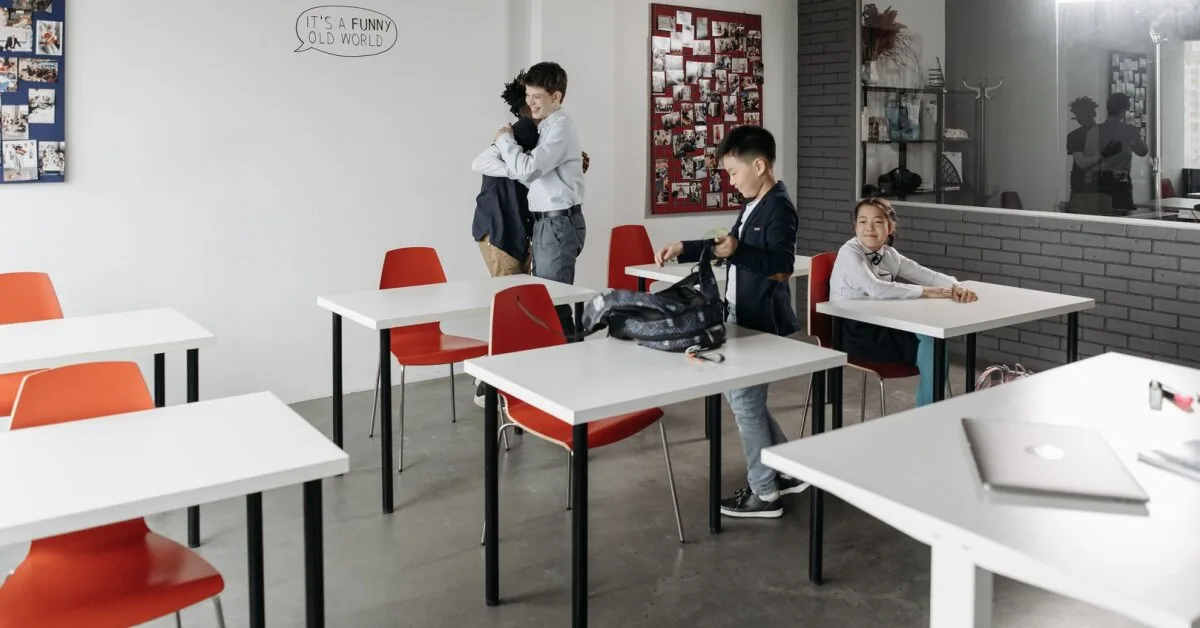
At the same time, a child can be reached by classmates’ conversations, chair shuffling, the bell, bright lighting, smells of the cafeteria or cleaning supplies, touches in a crowded corridor. Sensory sensitivity in people with autism spectrum disorder is very individual: some may be extremely sensitive to sound or light, others – on the contrary, feel some sensations less intensely or actively seek them. The same child’s reaction to different stimuli can also vary.
Read more Dainotas Varnas announced the news
“When a child has to process many sounds, images, smells, touches at the same time and also understand what is expected of them, the load on the nervous system increases significantly. Therefore, it is important first to ask not why the child behaves this way, but what is difficult for them at that moment,” says K. Košel-Patil.
When there are more stimuli than the nervous system can process at that time, sensory overload may occur: one child may cry, get angry, cover their ears, try to escape the room or move more intensely, another – become silent, withdraw, respond more slowly to questions, or be unable to perform previously usual tasks.

“In practice, it can help to have the opportunity to withdraw briefly to a quiet place, noise-cancelling headphones, dimmed lighting, the possibility to leave the classroom to the corridor a few minutes earlier, or to be warned in advance about a loud event, fire alarm test, or other unusual situation,” explains K. Košel-Patil.
Autism spectrum disorders are rightly classified as invisible disabilities – the difficulties experienced by an autistic person or the environmental adaptations they need are not always obvious to others.
Changed routine can also become a trigger
It is important to understand that the challenges of September do not end outside the school doors. After summer, waking and sleeping times, morning routines, travel from home, meal times, and daily activities change. For autistic children, returning to the school routine may require additional resources due to social, communication, sensory, and self-regulation challenges.
“Routine often provides clarity and security for an autistic child: they know what will happen next, what is expected of them, how long the activity will last. At the start of the school year, many of these answers suddenly change. Even a seemingly small detail – a different classroom, a substitute teacher, or a suddenly canceled lesson – can require a lot of additional internal resources. The more predictability in the day, the less energy the child has to spend managing uncertainty,” shares K. Košel-Patil.
Even a seemingly small detail – a different classroom, a substitute teacher, or a suddenly canceled lesson – can require a lot of additional internal resources.
Read more 7.27 million euros in funding allocated to strengthen the startup ecosystem
According to her, that is why preparation for change can start at home. A child can be shown photos of the school, classroom, and important people in advance, discuss the upcoming day’s schedule, and walk or drive the route to school several times. Picture-based daily plans can be useful for younger children, while older ones may benefit from a clearly written timetable. Before a change in activity, it is possible to warn how much time is left, and if the plan changes – explain as specifically as possible what will be different and what will remain the same.
“After lessons, not every child is immediately ready for extracurricular activities, homework, or detailed questions about the day. Some first need time in silence, a favorite repetitive activity, movement, or another calming form suitable for the child,” says K. Košel-Patil.
After a stressful day, it is important to create conditions for recovery
At the beginning of the school year, it is important to pay enough attention to the child’s physical well-being. Sleep is one area where children with autism spectrum disorders more often experience difficulties, facing problems with falling asleep, night awakenings, sleep duration, and anxiety related to sleep.
“At the start of the school year, it should not be evaluated only whether the child manages to complete all daily tasks. It is important to observe how they sleep, whether they wake up rested in the morning, how appetite, energy, and emotional well-being have changed. After an intense day, the child needs time to recover, so the evening routine should be as calm and predictable as possible. If sleep difficulties persist, the child becomes very sleepy during the day, or poor well-being begins to interfere with daily life, it is worth consulting a healthcare professional,” advises pharmacist G. Stankevičienė.

According to the pharmacist, when looking for ways to help the child calm down more easily, parents often inquire about herbal preparations or teas at the pharmacy.
“Natural composition does not automatically mean that the preparation is suitable for children of any age. For example, some lemon balm or valerian preparations are not recommended for children under 12 years old, so it is necessary to consider the specific product’s composition, the child’s age, and the information leaflet. If the child is taking other medications, it is also worth consulting a doctor or pharmacist about possible interactions,” emphasizes G. Stankevičienė.
She adds that if a child often feels tired, lacks energy, or their overall well-being deteriorates, it is worth discussing with a doctor whether blood tests should be done to assess possible nutrient deficiencies. B vitamins, magnesium, and iron are important for normal nervous system function and energy metabolism, while vitamin D is significant for normal immune system and muscle function. The pharmacist reminds that dietary supplements for a child should be chosen according to individual needs, not taken prophylactically at one’s own discretion.
Read more Concerned China has imposed strict travel restrictions on its citizens