Last year – the program of American actor Nicolas Cage and Ousmane Sembène, called the father of Senegalese cinema, this September the “Skalvija” cinema center presents a retrospective of films by Hou Hsiao-hsien (b. 1947), a representative of the Taiwanese New Wave.
Read more The main highlight of the Year of Valančius – the mystery «Symphony of Light and Faith»
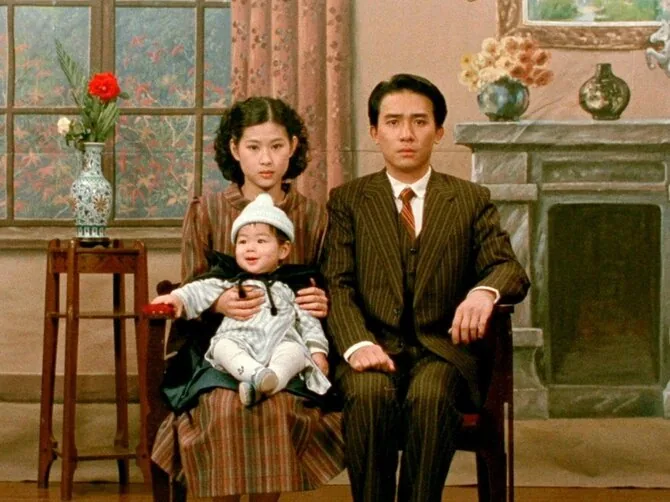
The program, called “Island of Memory,” reveals Taiwan’s historical memory and identity, as well as themes of family, generational relationships, childhood and adolescence, and the clashes between past and present. In the director’s films, major historical breaks are revealed through the everyday lives of people and personal stories, while time, memory, and loss become an inseparable part of them.
A new generation of directors
“The Taiwanese New Wave movement in the late 1980s and early 1990s fundamentally changed not only Taiwanese but also world auteur cinema. Until then, the Taiwanese film industry was dominated by commercial films – melodramas, action films, romantic comedies. Most of them were made according to clear studio formulas, often aimed at the local market. However, rapidly changing Taiwan ‘demanded’ a different kind of cinema.
Significant economic changes, urbanization, migration from rural to urban areas, the country’s complex relationship with its history and identity – these were not reflected upon. And here comes the new generation of directors who wanted to talk about what they saw around them – ordinary people, families, the provinces, childhood, urbanization, and a changing society. The camera was moved from studios and directed to the streets, schools, villages,” says Laura Bartusevičiūtė, who curated the retrospective program.
Together with directors like Edward Yang, Tsai Ming-liang, and Ang Lee, Hou Hsiao-hsien helped Taiwanese cinema become an international phenomenon. His films have won the most important awards at world film festivals and have had a great influence on contemporary auteur cinema.

Hou Hsiao-hsien’s cinematic language is distinguished by long takes, a static camera, carefully composed images, and fragmented storytelling. The director often refuses to show the most important events directly, leaving them off-screen, and gives the narrative much space for observation, silence, and everyday details.
Read more Van driver who veered off the road left schoolchildren alone in the forest: investigation started
The program – more than twenty years of creativity
The retrospective will present ten films revealing different stages of Hou Hsiao-hsien’s work. The early films “The Beauty” (1980) and “Green, Green Grass of Home” (1982) are close to the popular cinema in Taiwan at the time, but already show the director’s important attention to everyday life and young people.
In the films “The Boys from Fengkuei” (1983), “A Summer at Grandpa’s” (1984), “A Time to Live, a Time to Die” (1985), and “Dust in the Wind” (1986), the narrative becomes more fragmented and looks more personally at Taiwanese society and the experiences of the director’s own generation. “Daughter of the Nile” (1987) marks another direction – an urbanized, youthful, and restless Taiwan of the 1990s.
The retrospective also presents three internationally recognized works by the director: “City of Sadness” (1989), a historical family saga that won the Golden Lion in Venice; “Flowers of Shanghai” (1998) – a refined drama of the world of Shanghai courtesans at the end of the 19th century; and “Millennium Mambo” (2001) – a fragmented, hypnotic story about a young woman and a changing Taiwan at the beginning of the new millennium.
The retrospective will be accompanied by film presentations
On September 10, the retrospective program will open with the film “City of Sadness” – the first Taiwanese film to win the Golden Lion at the Venice Film Festival. It will be presented to the audience by Associate Professor Dr. Deimantas Valančiūnas, director of the Institute of Asian and Transcultural Studies at the Faculty of Philosophy of Vilnius University.
Other retrospective films will also be accompanied by live presentations – film critics Dmitrijus Gluščevskis and Monika Gimbutaitė, journalist Ieva Balsiūnaitė, co-founder of the podcast “Proto pemza” Aivaras Žukauskas, head of the Taiwan Representative Office in Lithuania Ambassador Constance Hsueh-hong Wang, and lecturer at the Institute of Asian and Transcultural Studies at Vilnius University and longtime organizer of the “Taiwan on Screen” festival Nomeda Gabija Vosyliūtė will tell the audience about them.
The entire retrospective program is here.