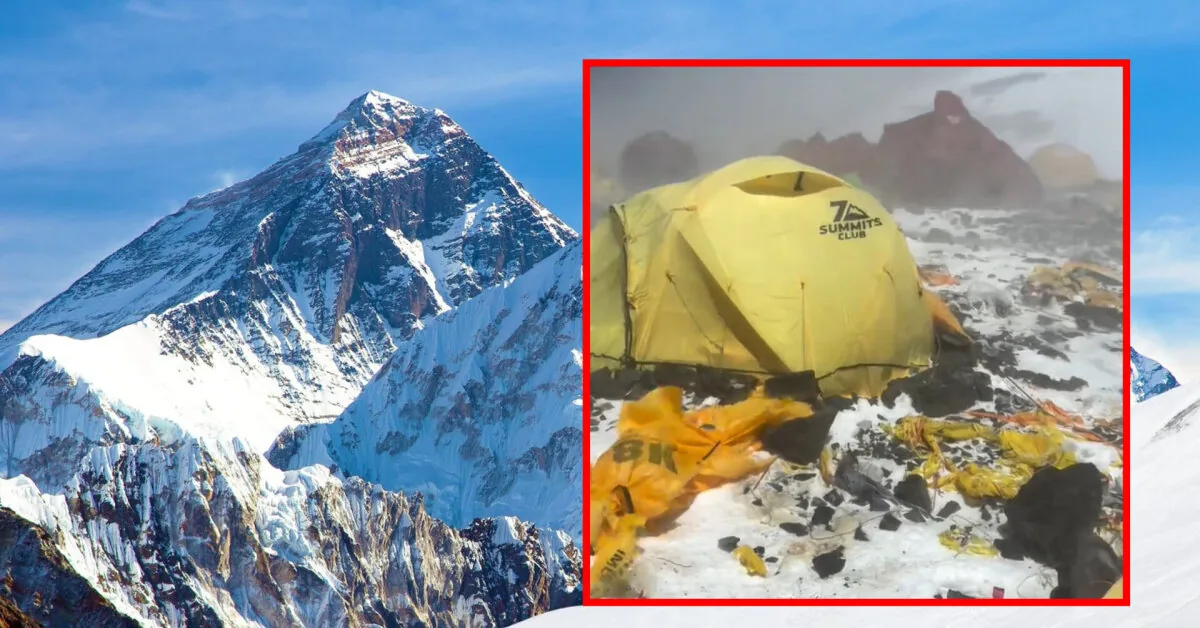
Fixed and dangerous human crowds in narrow climbing sections are recorded, writes the portal “Daily Mail”.
Read more Suddenly died the star of the series «Twin Peaks»: he was only 44 years old
Recently shared videos show hundreds of climbers stuck in one of the most dangerous sections – the Hillary step, located at about 8790 meters altitude. Due to the traffic jam, some climbers had to wait for several hours.
The mountain turns into a kind of garbage dump.
“Almost three hours in this place due to congestion and difficult conditions at high altitude,” says the description of one video.
The Hillary step is considered one of the most difficult places on Everest, located in the so-called “Death Zone,” where the oxygen level is dangerously low and the human body cannot stay for long.
According to Nepalese authorities, as many as 275 climbers reached the summit in one day – a new record on this route. The previous record was set in 2019.
With increasing flows, the overcrowding problem is being talked about more loudly. Experts warn that narrow climbing windows and limited trail spaces cause dangerous congestion that can pose a serious risk to climbers’ safety.
Read more Simulated engine failure exercises in Taiwan ended tragically
Meanwhile, some expedition organizers reassure that sufficient oxygen supplies help manage the situation, and similar flows exist in other popular mountain locations.
However, criticism is also growing regarding environmental protection. At Camp IV, the highest base camp in the world, tents, oxygen cylinders, and other waste are left behind, turning the mountain into a kind of garbage dump.
Activists and the mountain community say that Everest is increasingly becoming a commercial object, losing its original status as an extreme challenge.
Nepalese authorities have conducted cleanup campaigns in recent years – tens of tons of waste have been removed from the mountain, as well as the bodies of deceased climbers. However, due to extremely difficult conditions, such operations remain dangerous.
This year, the climbing permit fee was also increased – from 11 thousand to 15 thousand US dollars. This is the first price increase in nearly a decade.