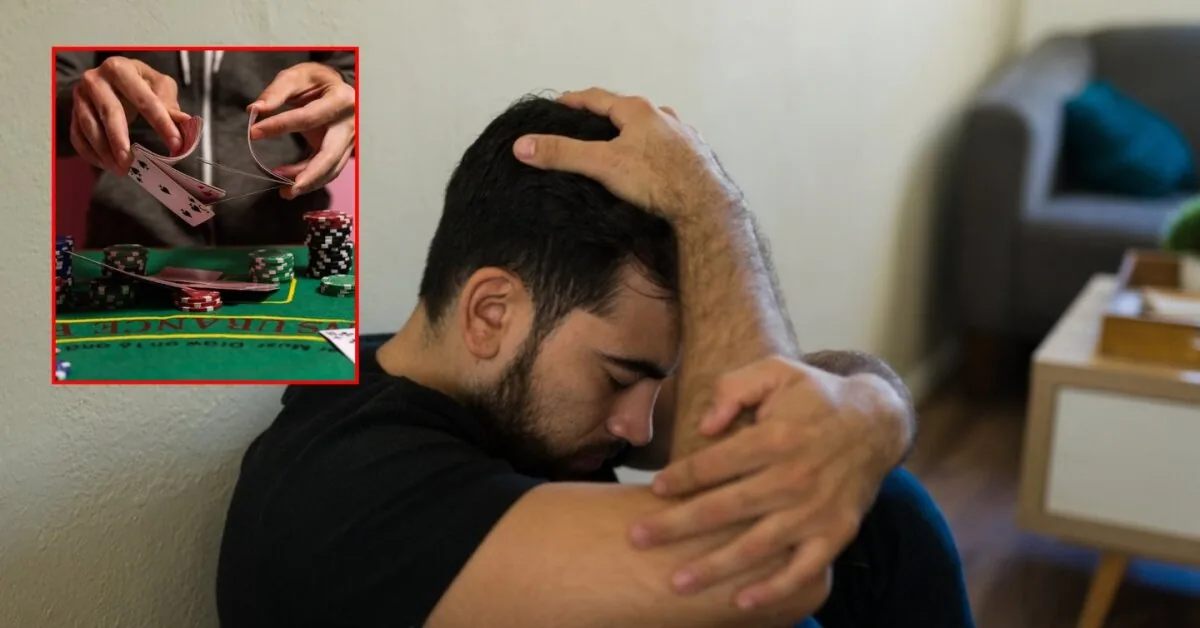
According to him, in practice it is often possible to reach agreements with creditors for smaller debts, more favorable payment terms, or even settlement agreements, so bankruptcy is often not the first step.
Bankruptcy is not the first choice
According to the lawyer, a person who can no longer repay debts due to gambling should first not rush to court, but sit at the negotiating table with creditors.
“Personal bankruptcy is not the only solution. It is more of an extreme measure when there is no other way to settle with creditors. In my view, it is always worth first negotiating the debt arrangement, payment schedule, interest reduction. Even when debts are already being collected by bailiffs, a settlement agreement can be made,” explains V. Budnikas.

According to him, people are often surprised to learn that creditors are much more flexible than they appear at first glance.
“From experience, I can say that creditors are quite reasonable when they see an insolvent debtor. After all, they understand perfectly well that otherwise they will recover the debt only gradually and over a long time, or not at all. I have seen more than one case where a debt of more than 30 thousand euros was reduced by almost half.
The person settled by paying about 15–17 thousand euros and received confirmation that the parties have fully settled. In such cases, the debtor proves that they can refinance the debt or borrow elsewhere and settle now, and the creditor evaluates what is more beneficial – to recover part of the money today or wait an indefinite time,” the lawyer says.
Negotiations often yield more benefits than people expect. According to the lawyer, there is no issue that cannot be resolved by a settlement agreement – agreeing on debt reduction, interest, payment deferral, or arrangement.
Not everyone will be allowed to declare bankruptcy
If a person still fails to reach an agreement, personal bankruptcy can be considered. However, having large debts alone is not enough.
The size of the debts alone does not mean that a bankruptcy case will be filed.
“Currently, a natural person is considered insolvent when they cannot fulfill overdue debt obligations exceeding 25 minimum monthly wages. However, the size of the debts alone does not mean that a bankruptcy case will be filed,” explains V. Budnikas.
He points out that from January 1, 2027, amendments to the Personal Bankruptcy Law will come into effect: the requirement that debts must exceed 25 minimum monthly wages will be removed.
Nevertheless, the court evaluates each situation individually.
“The court considers not only that the person has debts. It assesses why they arose, when they were incurred, what the money was used for, what portion of the debts arose due to gambling, and what portion due to other reasons, such as unsuccessful business or economic activity. It also looks at whether the person honestly disclosed information, did not hide assets, no longer borrows, no longer gambles, seeks help, and tries to settle with creditors as much as possible,” emphasizes the interlocutor.

The law provides that the court may refuse to file a bankruptcy case if it is determined that the person became insolvent due to harmful habits, including gambling.
However, as the lawyer emphasizes, this is not an automatic decision – each case is evaluated to determine whether gambling was the main cause of insolvency.
How much does personal bankruptcy cost?
The lawyer says that online you can find offers to administer the bankruptcy process for about a thousand euros, but in reality, costs are usually higher:
Read more Leaked 911 call: what happened at the «Home Alone» actor’s death scene?
“Depending on the size of the debts, their number, case complexity, and scope of disputes, the whole process usually costs from 3 to 7 thousand euros. This amount includes the insolvency administrator’s fee, legal services if needed, and the costs of administering the recovery plan.”
Since the recovery plan usually lasts three years, these costs are spread over the entire period.
Bankruptcy does not mean debts disappear
According to V. Budnikas, there is still a widespread belief in society that bankruptcy means simply “wiping out” debts.
“It is not debt cancellation. Rather, it is an opportunity for a person to restore solvency while taking creditors’ interests into account as much as possible. For three years, one lives according to a court-approved plan – regulating income, expenses, payments to creditors, asset sales, and other obligations. All this is supervised by the insolvency administrator,” says the lawyer.
During this period, the collection of old debts is suspended, interest and penalties are no longer calculated, but the person must cooperate with the administrator, work or actively seek work, provide all necessary information, and fulfill the obligations set out in the plan.

After the recovery plan ends, the remaining unpaid debts are usually written off, but there are exceptions. Obligations for child support, compensation for damage caused by a criminal act, certain obligations to the state, and administrative fines are not written off.
What mistakes can be costly?
As the lawyer notes, people considering bankruptcy often worsen their situation themselves. The most common mistakes are delaying seeking help, transferring assets to others, hiding income, not disclosing all creditors, continuing to gamble, and ignoring bailiffs’ or creditors’ demands.
“It is also wrong to think that bankruptcy is an easy way to wipe out debts and start life from scratch. If a person acts dishonestly, the bankruptcy case may not be filed or may later be terminated. In such a case, the situation only worsens – time is lost and additional costs are incurred,” warns V. Budnikas.

The most important thing is not to hide the problem anymore
The lawyer emphasizes that for a person who realizes they can no longer repay debts due to gambling, the most important thing is not to start looking for new ways to borrow.
The court needs to see that the person is genuinely changing their behavior.
“First, one should stop taking new loans, stop borrowing from relatives, not try to win back losses, not make sham transactions, in other words, not ‘transfer’ assets and not hide income if there is any. At the same time, it is very important to seek not only legal help but also help for addiction. When deciding on bankruptcy, the court needs to see that the person is genuinely changing their behavior – no longer gambling, acknowledging the problem, and seeking to solve it with the help of psychologists or other specialists,” emphasizes V. Budnikas.
Most people sooner or later want to return to a normal life – to have a good reputation, the ability to freely use their bank accounts, acquire property, and no longer live constantly hiding from debts. Therefore, the lawyer believes that even in very difficult situations, it is first worth seeking an agreement with creditors, and personal bankruptcy should be considered only when all other options have been exhausted.
Funded by the State Public Health Promotion Fund (state budget) funds.
Read more Bird flu virus detected in dolphin that died in South Australia