







Climatologist, sustainability educator, television and radio show host Silvestras Dikčius says that the most important thing is not to look at sustainability as giving something up. According to him, sustainability based on self-restriction does not work in practice. A more sustainable lifestyle should be a conscious choice, and a smaller environmental impact is a positive result of such a choice.
“Sustainability can be very diverse and creative. For example, I walk a lot instead of using transport, I choose stairs instead of the elevator, and I usually walk to the store as well. This way, I walked 6 million steps in a year and burned about 200 thousand calories – which is equivalent to about 380 hamburgers. I also travel in a more environmentally friendly way. These choices are beneficial not only for nature but first and foremost for myself,” says the sustainability educator.
S. Dikčius emphasizes that an important part of a more sustainable life is a plant-based diet, which is also beneficial from a health perspective because it contains fewer calories.
“My main principles of sustainable everyday life are to walk to the grocery store and buy only what is really needed. This helps avoid spontaneous and unhealthy temptations, reduces food waste, spends less money, and keeps me moving even without exercising. These are some of the simplest principles that can be applied daily to contribute to environmental conservation. Living even more sustainably every day can be achieved by applying a few targeted solutions in household management,” shares S. Dikčius.
Environmental conservation – saving energy and money
Home solutions that help save resources can provide more opportunities to live not only more sustainably but also more economically. According to Morta Bučinskienė, head of the IKEA Interior Design Department, reviewing lighting, heating solutions, and the energy consumption level of household appliances can significantly reduce energy consumption and monthly expenses.
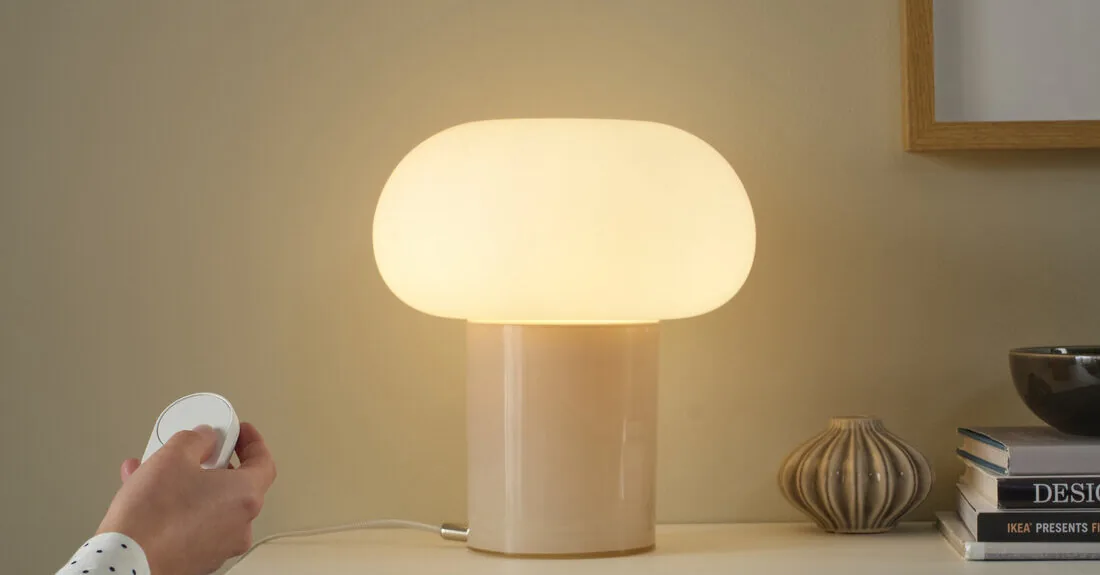
“One of the most effective energy-saving solutions is LED bulbs. They allow saving up to 85% of energy compared to incandescent bulbs. You will save even more by turning them off every time you leave the room,” says M. Bučinskienė.
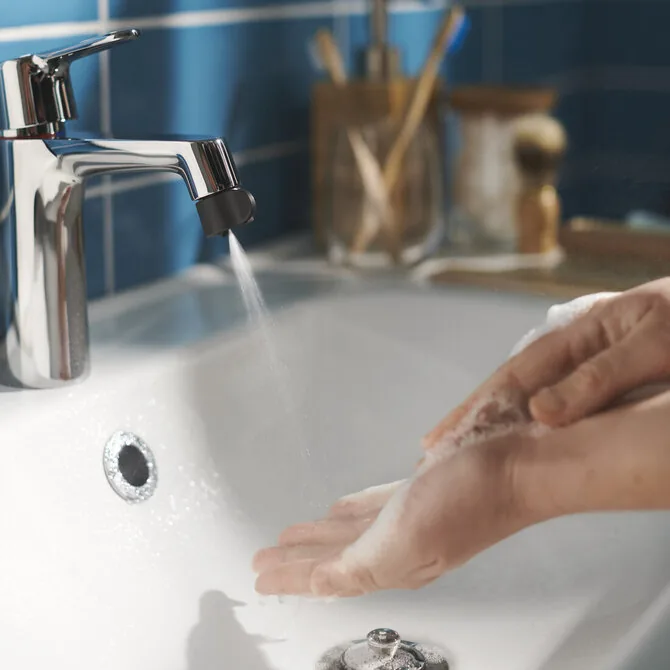
To achieve more sustainable resource use, water usage habits at home are also very important. Water consumption can be reduced by regulating flow, installing faucets with aerators, or using a special spray nozzle suitable for most bathroom faucets on the market. Such solutions can reduce the amount of water used per minute several times, notes M. Bučinskienė.
“A dripping faucet is a silent water waster. Completely turning off the water or replacing worn parts can prevent unnecessary water waste. It is worth reminding that even simple habits like turning off the water while brushing teeth or shaving help save water. Every habit change can directly reduce utility costs,” emphasizes M. Bučinskienė.
Other IKEA tips on how to save energy at home:
Let clothes dry naturally. Drying clothes on a drying rack is one of the most energy-efficient alternatives to an electric dryer. It is also a great way to air out clothes that are worn less often, thus reducing their wear and tear.
Cover pots and pans while cooking. First, make sure the size of the pot or pan matches the size of the burner. It is also important to use a lid while cooking – this prevents heat from escaping and allows using lower heat, thus saving energy.
Protect windows from heat loss. Part of the home’s heat can be preserved by using thick curtains. This is especially useful during the cold season or cooler spring nights.
Insulate floors. Floors can let in cold and cause heat loss. Laying a rug can retain some heat and make the home cozier.
Use textiles. When relaxing at home, wrap yourself in a blanket. At night, cover the bed with a blanket – this will make it warmer and cozier.
If it is hot at home in summer, choose live plants as decorations. Plants are one of the most natural ways to reduce sun exposure, absorb heat, and help regulate humidity. Try placing houseplants near walls where they get the most sunlight.