In life, children will inevitably face challenges and difficulties. The goal of parents is not to remove these challenges, but to help children find ways to overcome them. In her book “Resiliency: What We Learned,” resilience researcher Bonnie Benard says that resilient children are characterized by the ability to communicate effectively with others, problem-solving skills, personal confidence in their ability to cope with difficult challenges, and optimism about the future.
Read more Association leader on missing mountaineers in Kyrgyzstan: «There is a chance»
However, the path to resilience is not simple, as a child’s ability to be resilient is shaped by various factors – their individual traits, family, and broader environmental characteristics.
Social networks and technologies also have a significant impact. A study by the Lithuanian Sports University (2025) revealed that 60% of 9th–12th grade students spend on average more than the recommended four hours per day in front of screens. During summer holidays, it is even more difficult for parents to control the time spent on phones. However, the lessons worth learning for every child are not on the phone screen, but in reality.
Lessons that a phone screen will not teach
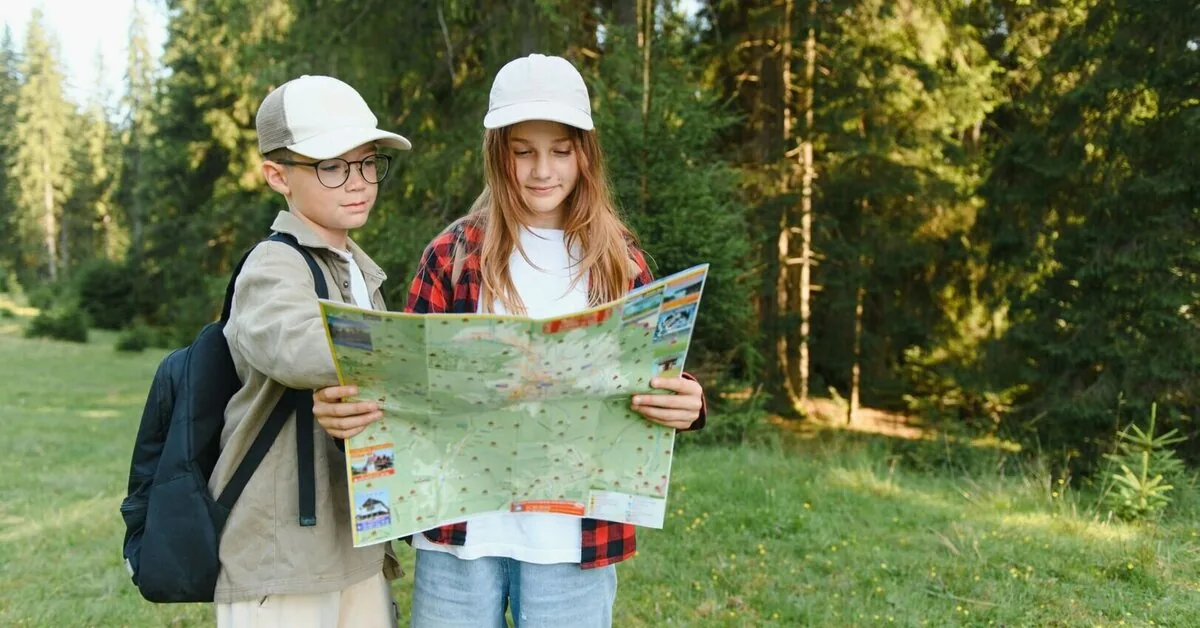
K. Roglys and D. Bruškus, who have been working with youth for 6 years, say that many children today are well oriented in the virtual space, but when faced with simple practical situations, they often feel insecure. For example, when lost in the forest, they do not know how to act if phone signal or GPS is lost.
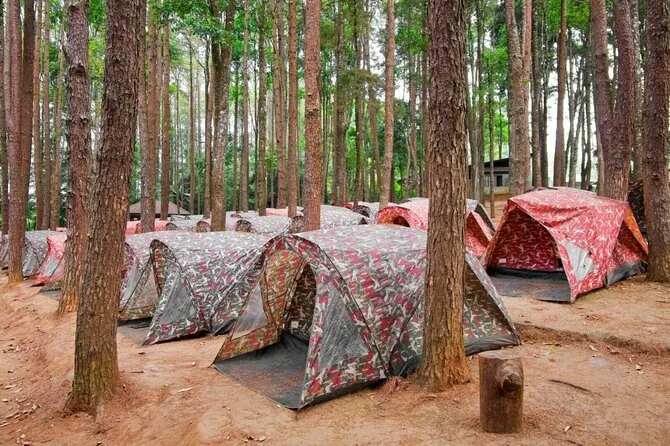
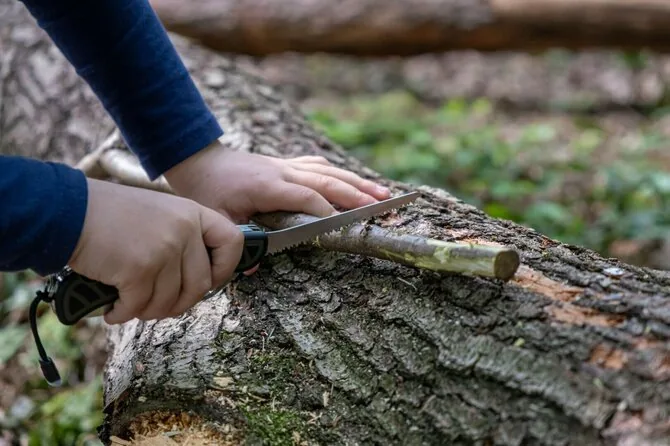
That is why camps organized with riflemen pay a lot of attention to acquiring knowledge useful in real life – survival in nature, topography, orientation, knot tying, shelter building.
“Building a fire is again a separate art. You need to know how to find the right materials, prepare them, and safely start a fire,” says the instructor, who this summer, together with his colleague rifleman K. Roglys, will train children at the leadership camp “ReadyCamp” organized by the seaside.
Children take away a large amount of knowledge from the camp: how to make survival bracelets, how to return home from the forest without GPS when lost, how to safely start a fire, etc. But most importantly, all these skills are passed on to children at the camp not through strict military discipline and harsh orders, but through play, experience, and communication.
“You cannot communicate with children as if they were soldiers. There is no point in causing them stress. Discipline in such camps is learned gradually, in a more fun way, through engaging activities,” emphasizes D. Bruškus.
One of the most important parts of such camps is first aid training. Children learn not only theoretically but also practically how to stop bleeding, bandage wounds, use a tourniquet, and respond in case of an accident. According to him, this is not knowledge needed only in extreme circumstances. It can be useful in everyday life – from a simple injury to a more serious accident. Besides medical skills, children also learn actions to take when lost, principles of calling for help, and safe behavior in nature.
Changes that parents notice first
Instructors emphasize that the most important results in such a camp are usually not related to learned knots or built shelters. Much more significant changes happen inside the child – self-confidence, a sense of responsibility, and the ability to make decisions strengthen. “Sometimes the biggest troublemaker is simply a child who lacks attention. A sincere conversation is enough, and they engage in activities completely differently,” says K. Roglys.
After camps with riflemen, parents often notice that children become more independent, take better care of their belongings, communicate more boldly, and trust their abilities more.
“One of our goals is to cultivate respect both for peers and parents. Often after the camp, family relationships become more open. When children see that adults at the camp talk to them as equals, it becomes easier for them to open up, talk about topics they were previously shy to discuss with adults, and share their problems. Having gained a different experience of communication with adults at the camp, communication with parents can become more open,” says D. Bruškus.
The most important lesson – “I can”
For all these reasons, specialists do not see such camps as preparation for the army or a strict discipline school. According to them, the greatest value of such camps is that children, having briefly left the world of screens, learn to take care of themselves, gain confidence, and understand that they can overcome more challenges than they previously thought. “This realization often becomes the greatest achievement of the summer,” unanimously affirm K. Roglys and D. Bruškus, who work with children and teenagers.
Read more Incidents in Kaunas center: Evacuation in «Akropolis», gas pipe damaged on the street