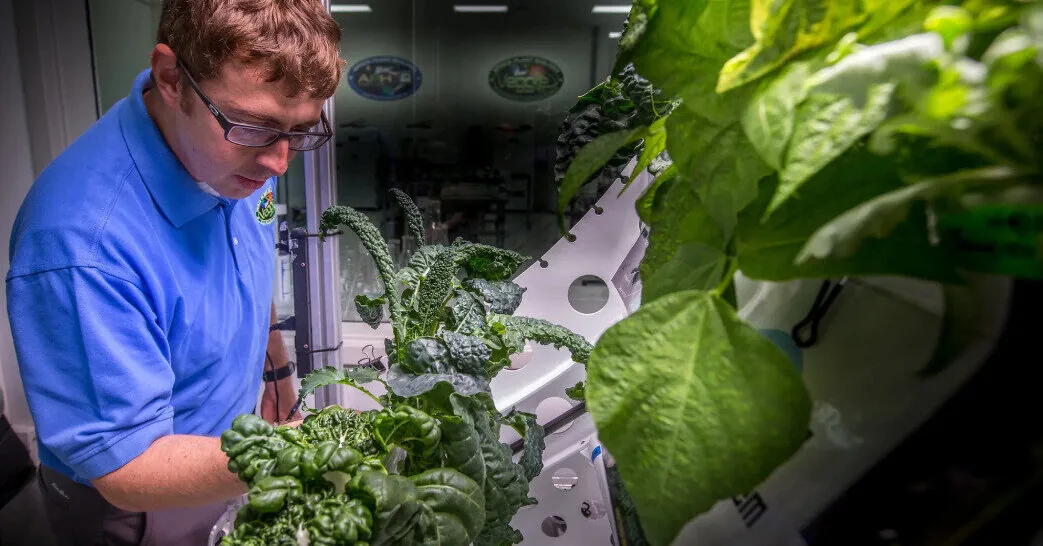
Imagine that you are a member of a human mission to Mars, and your task is to grow the first food plants in the Mars settlement. Such a task is worrisome because the soil on this planet is very poor. However, scientists are considering a possible solution – beneficial fungi that could improve the growing medium and help plants establish themselves.
Read more The crypto millionaire Kasputis motivates the huge lawsuit in the Dargis case with past nightmares
Although growing plants on Mars using fungi is likely still a prospect for several decades, this did not stop an international team of scientists from the United States and Brazil from seeking new ways to improve plant productivity beyond Earth using unconventional methods.
In a recent article published in the journal “Frontiers in Astronomy and Space Sciences,” researchers discussed how certain types of fungi, called beneficial fungi, could help turn the toxic and nutrient-deficient lunar and Martian regolith (a loose layer of rock) into a favorable medium for growing plants.
Beneficial fungi are types of fungi that can promote nutrient cycling in plants, soil, and other organisms. In this study, scientists examined why lunar and Martian regoliths lack essential nutrients for plants, especially nitrogen, potassium, and phosphorus, and how this deficiency could be overcome.
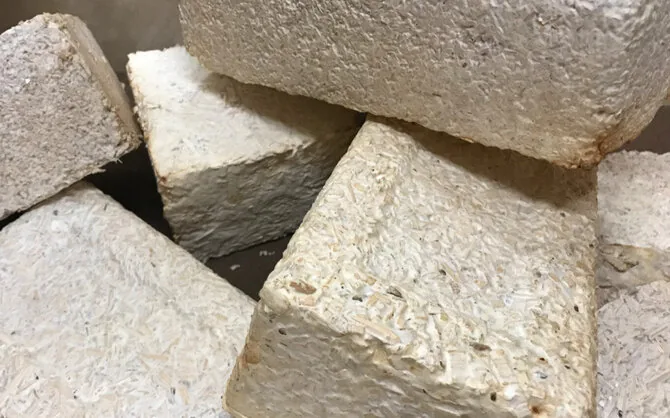
Fungi promote growth
Scientists noted that some species of fungi found on Earth promote plant growth by improving nutrient uptake and helping plants withstand abiotic stress, i.e., unfavorable environmental conditions not caused by living organisms.
Abiotic stress is particularly important in this case because plants would be grown in nutrient-deficient media (lunar or Martian regolith). To overcome this challenge, researchers propose using arbuscular mycorrhizal fungi (AMF).
In botany, these fungi have been known since the mid-19th century. They act like a microscopic extension of the plant root system, helping the plant better absorb nutrients. Scientists state that future research will be needed to fill knowledge gaps about growing plants under real space mission conditions, especially using actual lunar and Martian regolith. Nevertheless, they are optimistic about the possibility that fungi could contribute to higher yields on the Moon and Mars in the future.
Read more If you want an impressive garden effortlessly, start with this plant

“Incorporating plant growth-promoting fungi into agricultural systems based on lunar or Martian regolith would be strategically important for improving space plant cultivation and human settlements beyond Earth. Fungi such as Trichoderma and various arbuscular mycorrhizal fungi, or AMF (Glomeromycota), are distinguished by their ability to reduce abiotic stress, mobilize essential nutrients, and possibly improve the physicochemical structure of regolith substrates. These microorganisms are a promising biotechnological tool that can modify the regolith environment, its inorganic composition, and positively affect the microbiome introduced into inhospitable substrates through engineering,” the study authors write.
Using lunar and Martian regolith for growing plants is called in-situ resource utilization, or ISRU. This principle is also described as living off local resources. It means that mission-essential components are obtained using local, available resources rather than being transported from Earth or elsewhere.
Such a solution could reduce or perhaps completely eliminate the need to transport soil from Earth.
In the case of the Moon and Mars, this would mean the possibility of using the regolith there, which lacks nutrients necessary for plants, and combining it with beneficial fungi. Such a solution could reduce or perhaps completely eliminate the need to transport soil from Earth for food cultivation. This would greatly reduce the financial and logistical burden associated with transporting food supplies and materials needed for agriculture to the Moon or Mars.
The application of ISRU in future human missions to the Moon and Mars is part of NASA’s “Moon to Mars Architecture” program. This study adds to the growing list of scientific works dedicated to the use of local resources, especially research on the application of lunar and Martian regolith for plant cultivation.
Read more Kristupas Vaitiekūnas urges allies to allocate larger subsidies for the defense of the eastern flank