







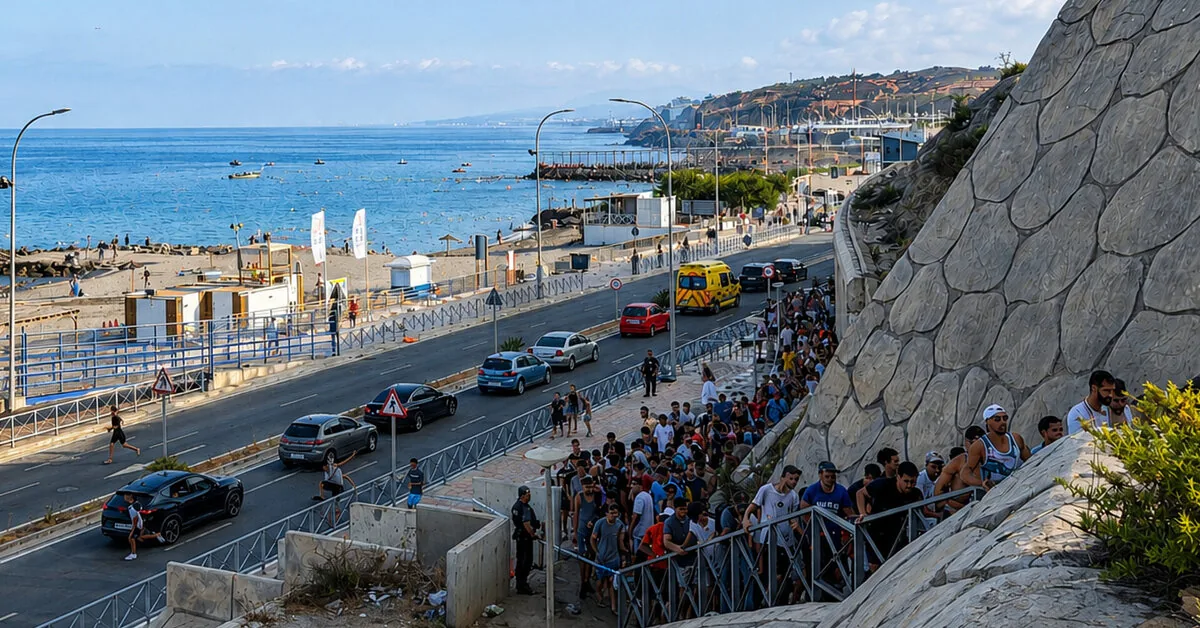
An unprecedented case, when about 50–70 thousand people flooded into Ceuta from Morocco – dozens of them died trying to do so, and almost all the others have already left – revealed disagreements among EU countries on migration issues.
Read more „Xpeng“ introduced a new electric car that also runs on gasoline: what makes the L03 special?
Since the first images of the mass arrival – often bypassing the barrier separating the Moroccan enclave – appeared, the Spanish government has found itself at odds with many of its EU partners.
At 10 a.m. (11 a.m. Lithuanian time), the bloc’s interior ministers joined a video conference that could have provided an opportunity to seek common ground, but could just as well have become an arena for open conflict.
Although Spain quickly began returning migrants from Ceuta, where, according to it, about 2.5 thousand migrants remained on Monday, the government of Spanish Prime Minister Pedro Sánchez maintains a more open approach to migration than most other EU leaders.
The countries demanding a tougher line are most vocally led by Italy, whose Prime Minister Giorgia Meloni attacked Madrid’s position and, especially, the recently expressed aim to grant legal status to undocumented migrants already in the country.
Both Italy and Denmark last week called for Spain to be removed from the Schengen free movement area due to the Ceuta crisis – an idea Madrid firmly rejected, and according to EU rules, it is legally impossible in any case.
War of letters
In a letter sent to EU institution leaders on Saturday, P. Sánchez accused other EU countries of a selfish attitude and called for urgent negotiations to prepare a joint response to such incidents.
Within a few hours, 22 countries, led by Italy, Denmark, Germany, and Hungary, sent a response letter also demanding urgent negotiations, but with a different goal: to continue pushing a tough stance on immigration.
According to one EU diplomat, during preparatory EU ambassadors’ talks on Monday, the Spanish representative expressed disappointment that other capitals allegedly did not provide support.
On the other hand, although everyone assured Madrid of solidarity, some member states “are asking themselves whether Spain’s recent policy has sent a signal that the doors are open,” the diplomat added.
Read more Qatar: efforts for Iran and US agreement continue
In recent months, the EU has significantly tightened migration rules, including allowing member states to send persons who have not received asylum to so-called “return centers” located outside the bloc’s borders.
It was expected that on Tuesday Italy would renew its pressure on the EU to establish such centers in various African countries, based on the existing Rome and Albania agreement model.
Rwanda and Uganda are among several countries considered potential partners for establishing such centers.
“I understand Spain’s frustration over its failed migration policy, but we must protect Italy’s borders,” Italian Foreign Minister Antonio Tajani told the newspaper Corriere della Sera.
“What happened in Ceuta is not a minor incident; it threatens the entire Union,” he emphasized.
EU heavyweight France distanced itself from the initiative of the 22 countries, claiming it amounts to exploiting the situation in Ceuta for political purposes.
European Commission President Ursula von der Leyen praised P. Sánchez’s “quick crisis resolution” and welcomed Tuesday’s talks as a first step in creating a “common European response.”
The Commission head called on the bloc to “double efforts” in five areas: first, to prevent illegal migration by cooperating with partner countries, strengthen external borders, implement early warning systems, dismantle smuggling networks, and increase the scale of returns.