









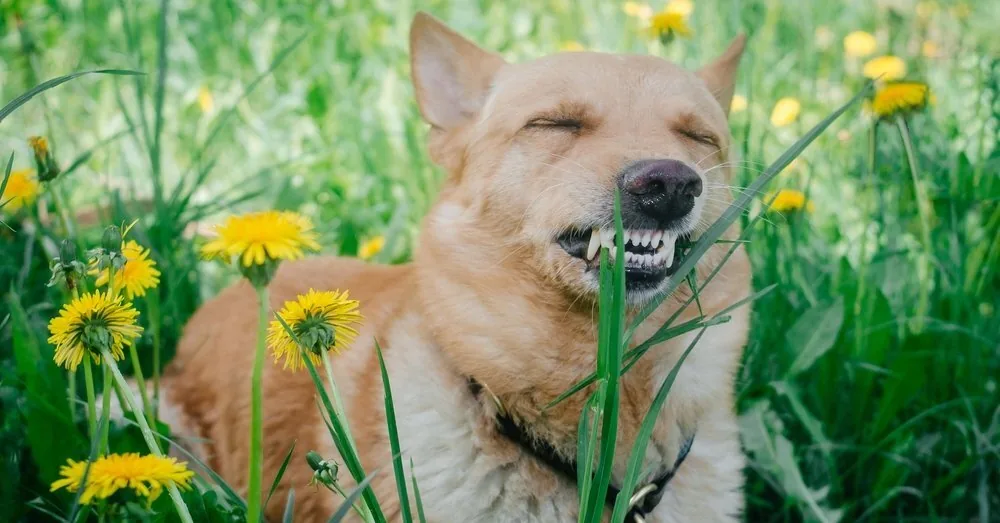
According to veterinarian Justas Kantoravičius, both dogs and cats explore their environment not only by smell but also by mouth, which is why they are attracted to young, soft grass blades, their scent, and texture.
“Chewing grass is not a sign of illness by itself. If a pet chews a few blades and then behaves normally – plays, eats, is active – there is really no need to worry,” explains the head of the veterinary clinic “CanisFelis” in a press release.
According to the specialist, the common myth that dogs eat grass to induce vomiting is not supported by scientific evidence. Most healthy dogs do not vomit at all after eating grass, and for cats, chewing grass is also natural behavior.
“If vomiting does occur, it is usually an accidental bodily reaction, not the purpose for which the animal started eating grass,” says the veterinarian.
However, specialists urge attention not to the grass eating itself, but to what plants the pet can access. The veterinarian points out that ordinary meadow or lawn grass usually poses no danger, but the risk comes from poisonous plants growing among it or lawns treated with chemicals.

“In Lithuania, pets most often get poisoned by deadly nightshade, ragwort, foxglove, and in home flowerbeds – daffodils and tulips,” he lists.
The specialist reminds that one of the most dangerous plants for cats is more often found not outdoors, but at home.
“Lilies are the most dangerous for cats. Even a very small amount – pollen on the fur, a piece of leaf, or water from a vase – can cause acute kidney failure, so there should be no delay. In such cases, you should immediately contact a veterinarian,” he emphasizes.
The veterinarian also recommends not allowing pets to eat grass on roadsides, places that may have been sprayed with herbicides, pesticides, or fertilized with chemical fertilizers, as well as areas with abundant bird droppings.
“Such places may contain bacteria, parasites, or fungal spores that can cause digestive disorders or infections,” explains J. Kantoravičius.
According to the specialist, concern should arise if the pet starts eating grass unusually often or constantly vomits, has diarrhea, drools excessively, becomes lethargic, refuses food, or has impaired coordination after a walk.
“If poisoning is suspected, you should not try to induce vomiting at home. It is best to contact specialists as soon as possible, and if possible – photograph the plant or bring a sample,” advises the specialist.
Read more Boeing finally received certification for its Boeing 737 MAX 7 model