








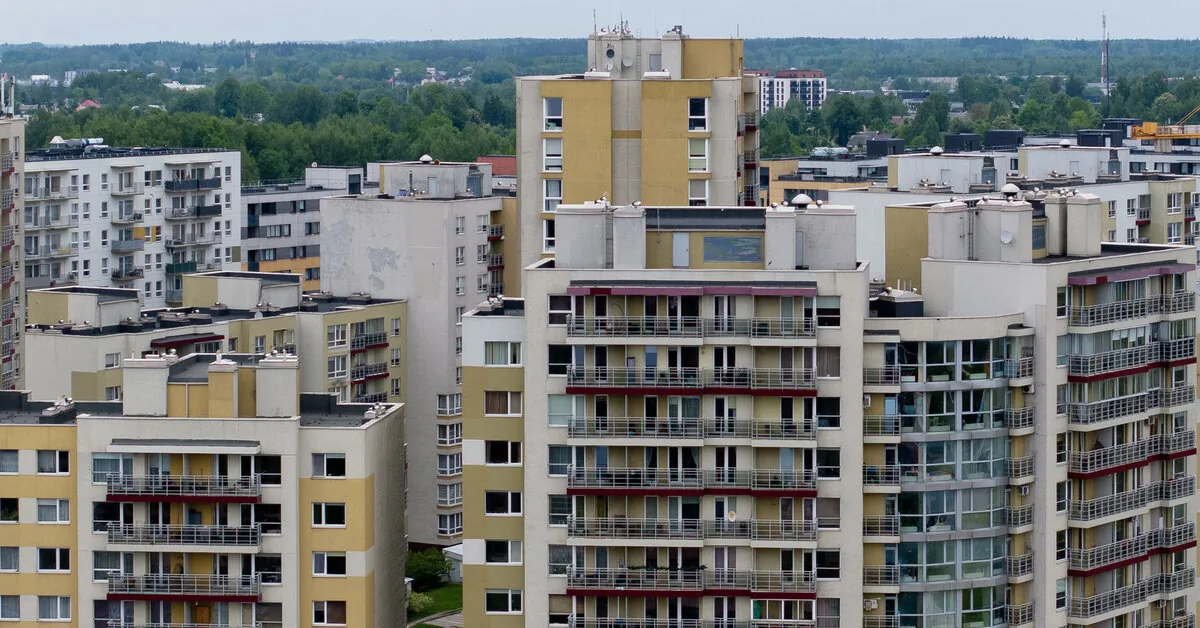
According to Eurostat data, housing in Lithuania increased by 11.9% year-on-year in the first quarter of 2026 – more than twice as fast as the 5.1% EU average. Compared to the previous quarter, prices rose by another 3.3 percent.
Read more Cloud and AI divisions contributed to Microsoft’s profit growth
According to the Bank of Lithuania’s assessment, in spring different housing price indices already showed an annual growth of 12–17%, while the average net salary increased by about 8.4 percent. This is not a pace that could continue forever.

Price ceilings are not a single number
However, unlike often thought, there is no single price in the housing market at which everyone suddenly stops buying. Some choose smaller or atypical purpose housing, others move to the city outskirts, extend the loan term, or allocate more money for the down payment. Therefore, affordability can worsen for a long time without a decrease in the number of transactions.
However, the first signs of limits are already visible. The Bank of Lithuania calculates that over a decade, the income of a person earning median income increased by about 150%, while housing prices rose by about 170 percent.
For a person earning average income, housing is still more affordable than in 2015, but the situation is much worse for those with lower incomes. In other words, the market has not yet hit overall ceilings, but some residents have already reached them.
Prices can still rise
First, Lithuania’s economy and residents’ incomes are still growing. In the first quarter of 2026, the average wage increased by 8.4% year-on-year, and the number of employed people reached a historic high. As long as people have jobs and expect rising incomes, housing demand remains resilient.
Second, the real supply of new housing lags behind. Although about 10,000 homes were offered in the primary market of big cities in June, in Vilnius, 70% of the new homes listed were not yet completed. The Bank of Lithuania forecasts that a more noticeable increase in the supply of physically completed homes will appear only in summer or autumn 2027. Until then, buyers will compete for a limited amount of already built housing.
Third, the market is supported by investment demand. Every third housing transaction in Lithuania is considered an investment, about 40% of such transactions in Vilnius, and 37% in Kaunas. This is also helped by relatively low real estate taxation. Moreover, as I have written several times, some residents may direct funds withdrawn from the second pension pillar into real estate, although too much concentration of savings in one asset class is not safe.
Do we already have a bubble?
Despite the current situation, I would not yet call the entire Lithuanian market a bubble. Prices are supported by wage growth, high employment, limited supply of completed housing, and a strong desire to own a home. However, it seems that prices in some new projects may already be overly optimistic. In such cases, corrections are entirely possible, especially when more completed projects enter the market in 2027.
Read more Russia attacked Ukraine with 358 drones and missiles
The biggest warning signal is not the high price itself, but the detachment of prices from incomes. If housing continued to rise by 12–17% for several more years, while incomes grew about half as fast, the market would start to suppress demand itself. Buyers simply would no longer receive loans of the required size.
Price stagnation is likely
If you are waiting for a real estate price correction like in 2008, you are probably just wasting time. A more significant price drop would require a very bad combination: rising unemployment, stagnant wages, weaker exports, more expensive financing, and forced sales.
Until then, a slowdown in growth or price stagnation is more likely in Lithuania than a sudden collapse. A small interest rate increase is definitely not enough. In April, the average interest rate on existing housing loans was 3.98%, and a 0.4 percentage point increase in EURIBOR would raise the monthly payment on a 130,000 euro loan by about 28 euros. This is unpleasant but not a reason for most households to rush to sell their homes.
Therefore, the biggest risk for buyers in 2026–2027 is paying a price today that already includes several years of future growth and taking a loan that uses up all savings without a financial cushion. Otherwise, real estate still looks like a fairly solid investment.
However, real estate prices may continue to rise faster than incomes, causing residential real estate to increasingly concentrate in the hands of a relatively small group of owners, such as large real estate developers or investment funds.
For young people starting independent lives, the only realistic option then might be renting, as buying a home with a loan would simply be beyond their financial means.
This trend is already noticeable in some older European countries, where the ratio of homeowners to renters is very different from that in Lithuania. For example, in Germany, about 50% of households rent their homes.
So housing prices in Lithuania can still rise. But keep in mind that the period when almost every property automatically increased at a double-digit pace cannot last forever. The higher prices rise now, the more future growth will depend not on buyers’ enthusiasm but on their real incomes.
Read more Analysts: economic growth in the second quarter was driven by consumption, construction