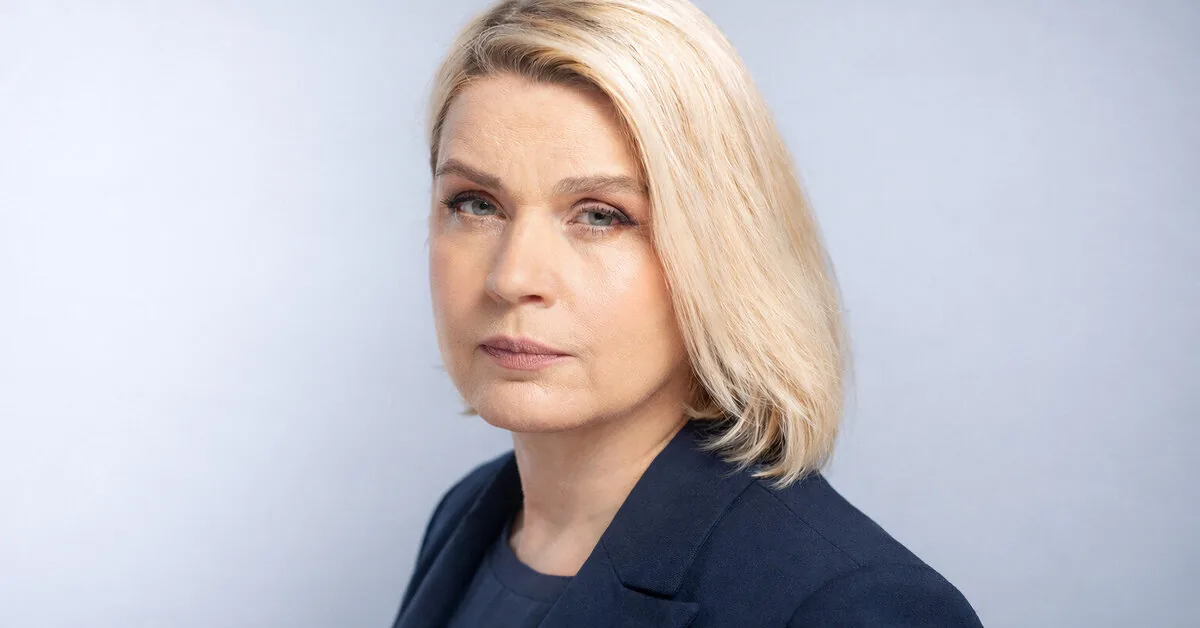
Sonata Petraitienė, the director of Vilnius Humanistic School, states in a press release that there is no single answer on this topic – schools constantly seek a balance between order and a sensitive approach to a growing person.
Read more Iran and the US have almost reached an agreement: «Axios» revealed the conditions
“On the one hand, we talk about the child’s freedoms and rights to express themselves through appearance. On the other hand, the school is an institution with a very clear purpose – to teach and learn. Therefore, it naturally tries to discipline behavior, as well as certain aspects of appearance,” she says.
Uniforms do not solve the problems
According to the director, for this very reason some schools choose uniforms – this way it is easier to solve issues related to appearance boundaries. However, in the school she leads, uniforms were consciously abandoned.
“It would be strange for me to require children to wear uniforms when I myself fought against them during adolescence. While studying in high school, I sought the right to come to school dressed as I wanted at least one day a week. Therefore, today it seems most important to me that the child feels comfortable at school and can focus on learning. Our approach is this – you should come to school dressed comfortably, taking into account the weather conditions. Especially when it comes to primary school children, the most important thing for them is that clothes do not interfere with movement, play, or learning,” says S. Petraitienė.
Still, she admits that certain boundaries exist in the school. According to the director, teachers respond sensitively to overly revealing or sexualized clothing but avoid public remarks or shaming children.
“We observe and subtly curb children’s nudity. But we talk about it face to face, very politely. We say that school is not a beach. Just as a person in high heels would look strange on a beach, it is important to feel what kind of clothing is appropriate for a specific environment at school. We do not want to shame or publicly criticize children because during adolescence they are very sensitive to comments about their appearance,” says the school director.
According to her, the school’s goal should not be to raise comfortable children who are afraid to stand out or show their individuality.
Read more Israel condemns the «shameful and absurd» inclusion on the UN sexual violence list
“Let them search for themselves. We can observe how the child grows, changes, and accept it as a natural stage of their development,” says S. Petraitienė.
Teenagers’ self-expression is not a problem, but a search for self
A much more sensitive topic, according to the education expert, is teenagers’ hairstyles, hair colors, or makeup. She says that during adolescence, appearance becomes one of the most important forms of self-searching, so categorical bans can hurt the child.
“During adolescence, children are often dissatisfied with their bodies and how they change. Therefore, criticizing a child’s appearance at this time is very insensitive. Teenagers at this stage are searching for themselves – changing hairstyles, dyeing hair, experimenting with style and makeup. This is a natural part of maturation,” emphasizes S. Petraitienė.
According to the director of Vilnius Humanistic School, it is much more important not to control children’s appearance but to observe what certain changes might signal about their emotional state. If a child’s hairstyle or appearance suddenly changes very radically, it may indicate deeper issues – parents’ divorce, trauma, desire to fit into a certain group.
She also points out that changes in children’s appearance can sometimes signal more serious problems, so it is important for teachers not only to assess how a student looks but also to notice what lies behind such changes.
“One of the first signs that a child may be using psychotropic or other harmful substances is sudden changes in appearance. If they no longer take care of themselves, neglect hygiene, constantly walk around with tangled, unwashed hair, do not change clothes, it may be a signal that something more serious is happening in the child’s life,” warns the expert.
Read more Belarusian propaganda depicts a collapsing Lithuania: what is really being kept silent?