








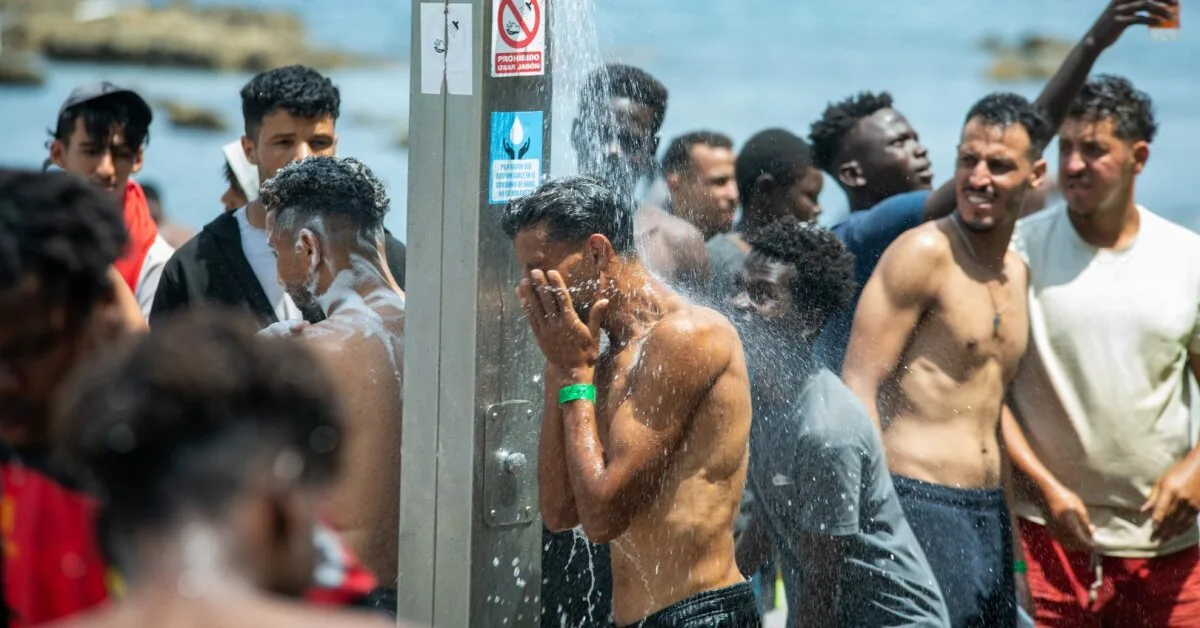
- Currently, the mass border crossing seems to have stopped. The vast majority of arrivals have returned to Morocco. The city and border area still have military, police, and Civil Guard forces, repatriation procedures continue, and the search for the deceased is ongoing. The official death toll has risen to 72 and may still increase. Most people died in the crush at the border or drowned.
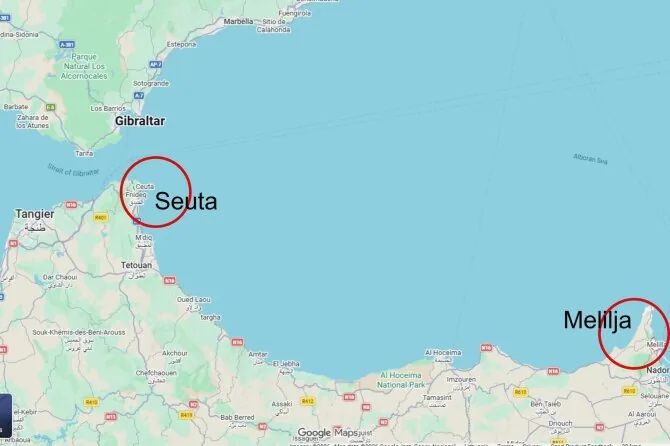
- Ceuta is an autonomous Spanish city in North Africa, sharing a land border with Morocco. Although geographically in Africa, it is politically and legally Spanish and part of the European Union. Entry into Ceuta does not mean free passage to mainland Spain. Additional document checks apply when traveling from Ceuta to other parts of the country.
- On July 30–31, according to the Spanish government, about 50,000 people illegally entered Ceuta from Morocco – more than half the city’s population. Most were young Moroccan citizens. The crisis was very large but geographically localized. By July 15, the total number of illegal arrivals in Spain was 24.7% lower than in the same period in 2025. However, illegal land arrivals to Ceuta had already increased by about 149%.
What triggered such a massive movement?
- Messages spread via TikTok, Instagram, WhatsApp, and other channels claiming that the Spanish border was open and that entry into Ceuta was possible without documents. The Spanish government also states that criminal networks involved in human trafficking exploited this misleading information.
- These messages were further fueled by the July 8 decision of the Spanish Supreme Court that people trying to enter Ceuta by sea cannot be automatically returned at the border without examining each case individually. However, the decision did not grant them the right to stay in Spain nor prohibit later return under the usual procedure. On social media, this distinction was presented as an almost guaranteed chance to remain.
- Nevertheless, such a scale of influx would have been difficult without a significant weakening of Moroccan border control. Spanish media reported that in the first hours, Moroccan officials barely intervened in some places. Only later did they stop the mass movement. Suspicions of possible deliberate use of migration for political pressure are reinforced by a 2021 precedent. Then, amid heightened tensions and weakened Moroccan control, more than 8,000 people entered Ceuta in two days. Later, relations between Spain and Morocco improved, but Madrid became highly dependent on Rabat’s cooperation in border security. Therefore, some politicians and experts speak of possible instrumentalization of migration.
- The question of responsibility is also raised for the government of Spanish Prime Minister Pedro Sánchez. P. Sánchez leads the center-left Spanish Socialist Workers’ Party – PSOE, which governs together with the smaller left-wing party Sumar. A recently launched migrant status legalization program is aimed at people who lived in Spain before January 1, 2026, and could prove at least five months of continuous residence. However, its scale may have raised expectations that illegal arrivals in Spain could eventually legalize their status.
- The main center-right opposition force – the conservative People’s Party, PP – accuses P. Sánchez’s government of reacting late and insufficiently. It demands a greater role for the EU border agency Frontex, treating the crisis as a national security issue, and changing the Foreigners Act to allow faster return of people arriving by sea. The government itself admitted it underestimated the scale of the crisis.
- The far-right opposition party Vox speaks of an “invasion,” demands the immediate expulsion of illegal arrivals, and directly links the crisis to P. Sánchez’s migrant status legalization program.
- The government also faces criticism from the left. The opposition Podemos calls the crisis a Moroccan hybrid hostile action and criticizes P. Sánchez for a too cautious approach to Rabat’s responsibility.
- The crisis occurs as Spain transitions into a pre-election political cycle. If there are no early elections, the next general elections should take place in 2027. Spanish media note that both P. Sánchez and PP leader Alberto Núñez Feijóo are already operating in campaign mode. Migration is likely to become one of the most important topics of the upcoming campaign.
- It is not easy to assess the popularity of P. Sánchez and his government, as poll results vary significantly. In the state CIS July poll, PSOE led with 33%, PP had 25.1%, and Vox 15.3%. However, in an independent 40dB poll, PP and Vox together had a clear advantage over PSOE, Sumar, and Podemos. This indicates a polarized society and that the right-wing bloc leads in many polls.
- Public opinion on migrant status legalization is divided. Even before the Ceuta crisis, 37.6% of respondents viewed the program favorably, 33% unfavorably. However, about 60% thought there were too many migrants in Spain, and 59% feared the program would encourage new arrivals.
- Donald Trump called the Ceuta crisis an “invasion” and used it in domestic politics – warning that similar consequences would await the US if the Democrats gained strength.
- The EU’s reaction was mixed. European institutions expressed support for Spain and proposed strengthening Frontex’s role, but some countries consider Sánchez’s policy as encouraging migration. Italy temporarily introduced additional checks for passengers arriving from Spain, France strengthened controls, and an urgent EU interior ministers’ meeting was called for August 4.
Read more About DI diagnosis – directly to a psychiatrist: you will be surprised what is required from them
Read more From the road workers – the latest information about the flooded Avižieniai-Bukiškis roundabout
Read more Nigerian who joined «Žalgiris»: «It still doesn’t feel real»