

As Russian soldiers fall like flies, rumors of an impending mass forced mobilization are spreading everywhere. The country’s economy is strangled by uncontrollable war expenses. And after Ukraine’s strikes on oil refineries, millions of residents are forced to wait in the longest queues for fuel.
The residents of Moscow seem to have split into two camps: some stubbornly insist that events are unfolding naturally, while others acknowledge how much has changed since the last parliamentary elections five years ago, when Russia had not yet started a large-scale war against Ukraine.
Most of the “Lukoil” gas station customers I spoke with noted that it’s not such a big problem to wait 20 minutes to fill up the car’s tank. Russia, one of the main oil producers, has found itself in an unusual situation – it is running short of fuel.
However, one driver, 37-year-old Yuri, admitted that he “lives under war conditions,” and “people are beginning to understand this.” He and his friend Igor could not agree on whether the situation would improve or worsen. Yuri held a more pessimistic view. They, like others I spoke with, asked not to disclose their last names to avoid trouble with the authorities.
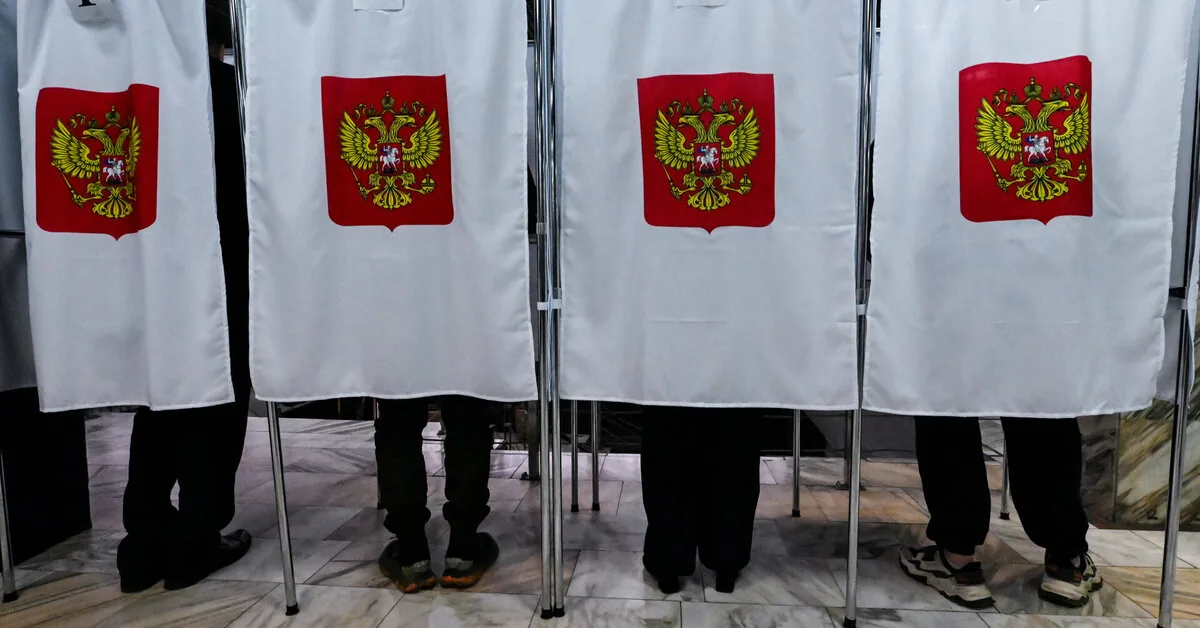
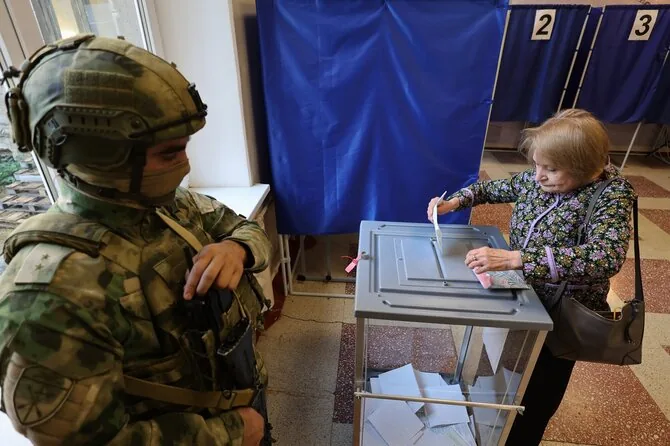
During the three-day elections, Russians will have almost no opportunity to officially express dissatisfaction with the increasingly painful consequences of the war, the end of which is still not in sight.
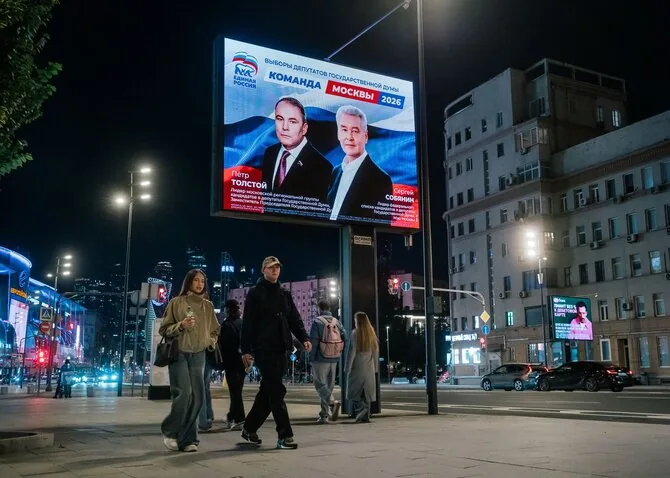
The Kremlin has turned these elections into deadly boredom even by Russian standards, and the results are known in advance. The only party opposed to the war, “Yabloko,” was banned from participating in the elections. And many candidates feel that it’s not even worth trying because of these elections.
Across Russia, videos have become popular showing that planned political debates were canceled because no one showed up. Last Saturday, I attended a forum in Moscow dedicated to young candidates and young voters. However, not a single representative of the ruling “United Russia” party appeared.
The few election campaign videos that appeared are low-budget. In one, Viktor But, the notoriously infamous arms dealer known as the “Merchant of Death,” is portrayed as a struggling businessman.
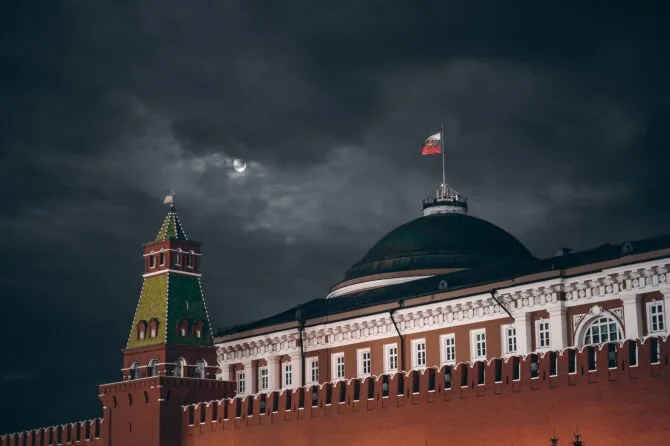
Still, the Kremlin considers the elections a way to legitimize its policy, and many Russians are preparing for what will happen after they cast their votes. The government may take drastic actions in military, economic, and political spheres.
“People live for today because no one knows what will happen tomorrow,” admitted Alexey Venediktov, former chief editor of the radio station “Echo of Moscow,” which was banned at the start of the war.
“Everyone is increasingly worried about what might happen. Will prices rise? Taxes? Will there be mobilization? Will people need cards to buy fuel?” he said. “A feeling of insecurity has taken root.”
In Samara, a city of 1.1 million on the Volga, psychologist and professor Anna believes that the long-suppressed anxiety of the Russian people will eventually burst out.
“They say: ‘I don’t see it,’ ‘I don’t hear it,’ ‘I won’t tell anyone about it,’” the expert said. “But at the same time, these feelings are so intense that it’s simply unbearable.”
In July, a study by one of the main state-associated polling organizations, the Public Opinion Foundation, found that nearly 60% of Russians reported that their relatives experience anxiety – the highest figure in the past four years.
That month, Russians withdrew more cash from banks than in the past six years, the financial director of the state bank “Sberbank,” Taras Skvortsov, told the news portal “RBC.” Many Russians also fear that the Kremlin will tighten internet restrictions.
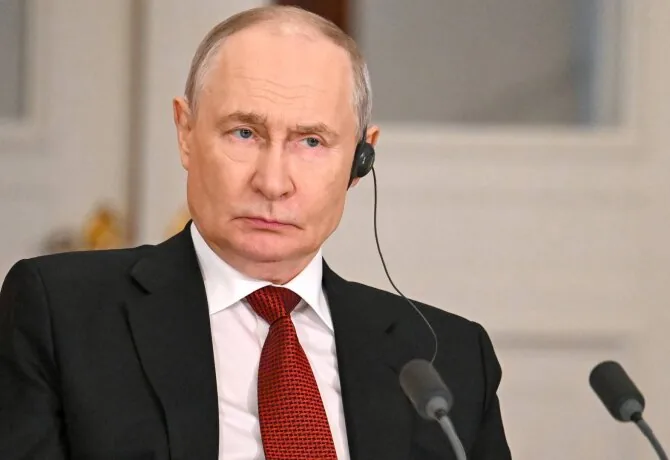
The Kremlin and its public relations apparatus are renewing their rhetoric beyond the election campaign. The long-dominant narrative that everything is proceeding normally is changing. Now the Russian authorities acknowledge that many people face difficulties and fear, and insist that the only solution is to rally around the country’s leader Vladimir Putin and his war.
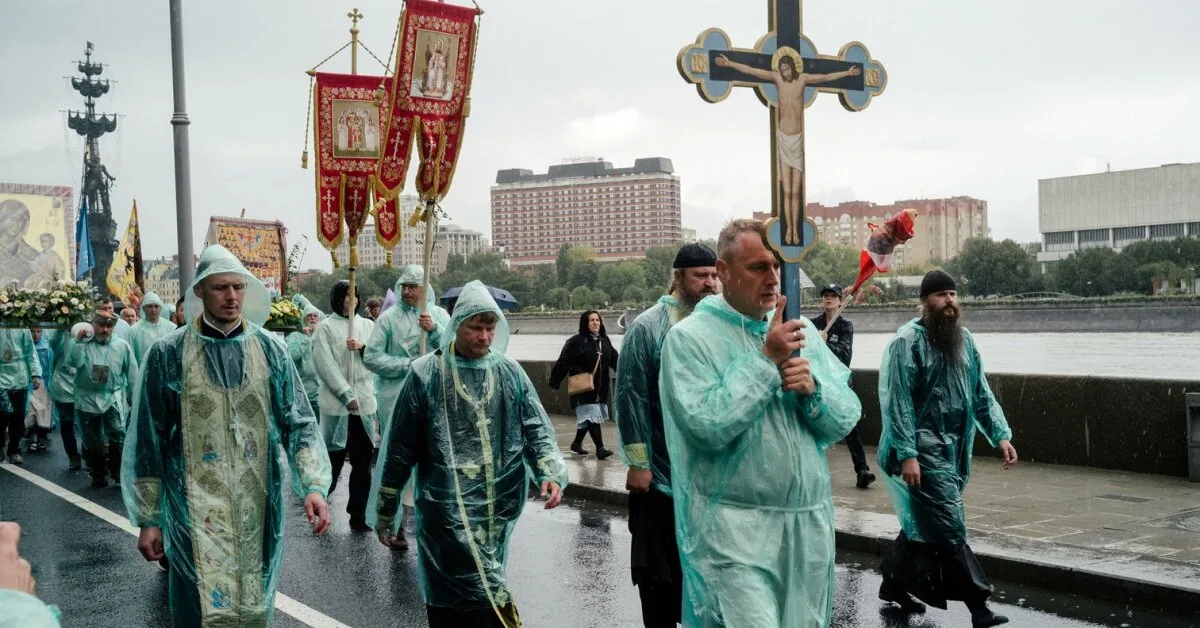
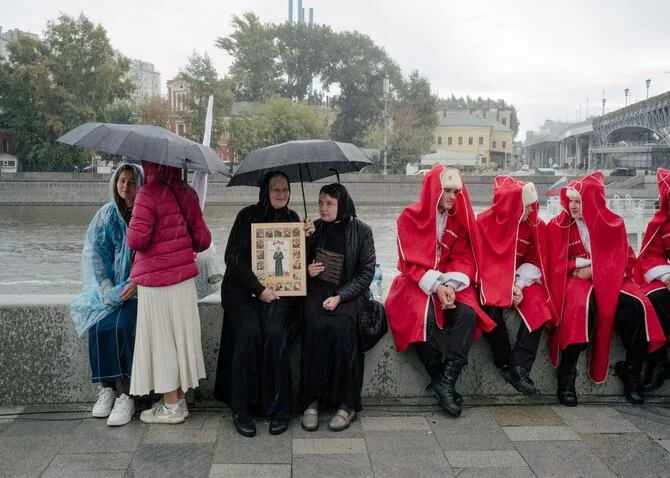
Two weeks before the elections, according to the Ministry of Internal Affairs, a crowd of 100,000 Russians marched along the wide avenues of the Russian capital, following the remains of Dmitry Donskoy, the prince who ruled Moscow from 1359 to 1389. Donskoy is celebrated for leading the Russian army to a widely renowned victory over the Mongol Golden Horde in 1380.
His remains were unearthed last month in the catacombs of one of the Kremlin’s cathedrals after what Russian officials called a completely accidental discovery. The symbolism of this event is clear: just as Donskoy, despite slim chances, defeated the Mongols, so Russia supposedly will defeat the “collective West,” which today supports Ukraine.
Read more A new EuroLeague tournament has started: Šaras’s team narrowly missed the final
“He is a holy warrior who led battles to victory and united Russian soldiers,” said 38-year-old Alexey, adding that in 2022 he voluntarily went to fight against Ukraine and the following year moved to serve in the government apparatus.
“Our enemy is trying to divide us,” he said, describing the enemy as “those who help Ukraine.”
That same evening, one of the Kremlin’s most famous propagandists, Margarita Simonyan, appeared as a guest on Russia’s main evening news talk show and took over Donskoy’s propaganda baton.
“When it’s scary and hard, when my children – and not only mine – spent half the summer hiding in dressing rooms in Sochi, people ask: could we have done without this, just not started it?” she rhetorically asked, mentioning the Black Sea resort repeatedly attacked by Ukraine.
“Of course, we had to do it,” she said bluntly. “If we hadn’t risen, like Dmitry Donskoy, we would have taken an irreversible path to slavery, becoming a colony of the West.”
However, this propaganda narrative may not resonate as desired among those Russians who are already sick to death of the war.
“It feels like you’re constantly under some pressure,” student Yaroslav confided after an event at the “Yabloko” party headquarters.
“Basically, everything is fine: you’re alive. You haven’t been blown up yet. You can walk. You can go to work or study. It just feels like something is always weighing on you,” he said, pointing to his chest.
The young man said he recently received an electronic summons to report to the military enlistment office. But, as he recounted, just a few days ago he entered the Moscow metro hiding under the hood of his sweatshirt, hoping that facial recognition cameras would not catch him.
When his father’s long-haul truck broke down, money was needed, and he joined the army. Yaroslav said his father was sent to the front despite having no military experience.
33-year-old teacher Pavel, working in the Novosibirsk region, noted that the prevailing mood in Russia about the war has changed significantly compared to last year.
“The phrase ‘When will this all end?’ has started to come up quite often in conversations,” he noted. “Even if people’s attitudes toward the war differ completely and their levels of radicalism vary, when they talk among themselves and the conversation momentarily quiets, someone utters exactly these words.”
Pavel said that funerals in his village have become so common that for the past two years they have been celebrating not the New Year, which is important to most Russians, but “mourning events.”
Vitaly, 50, from Kazan, who recently started working as a driver in Moscow, was candid: a wave of mobilization will soon begin, although Putin publicly claimed the government has no such plans.
According to him, the local draft office tried to persuade Vitaly to join the army a few months ago despite his older age.
“All local businesses are struggling,” he said. “So many people are dying. And if you asked me, I still can’t understand what all this is for.”
Read more Changes in Egidijus Dragūnas’s career: announced unexpected news
This article was published in The New York Times.
© 2026 The New York Times Company