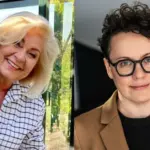



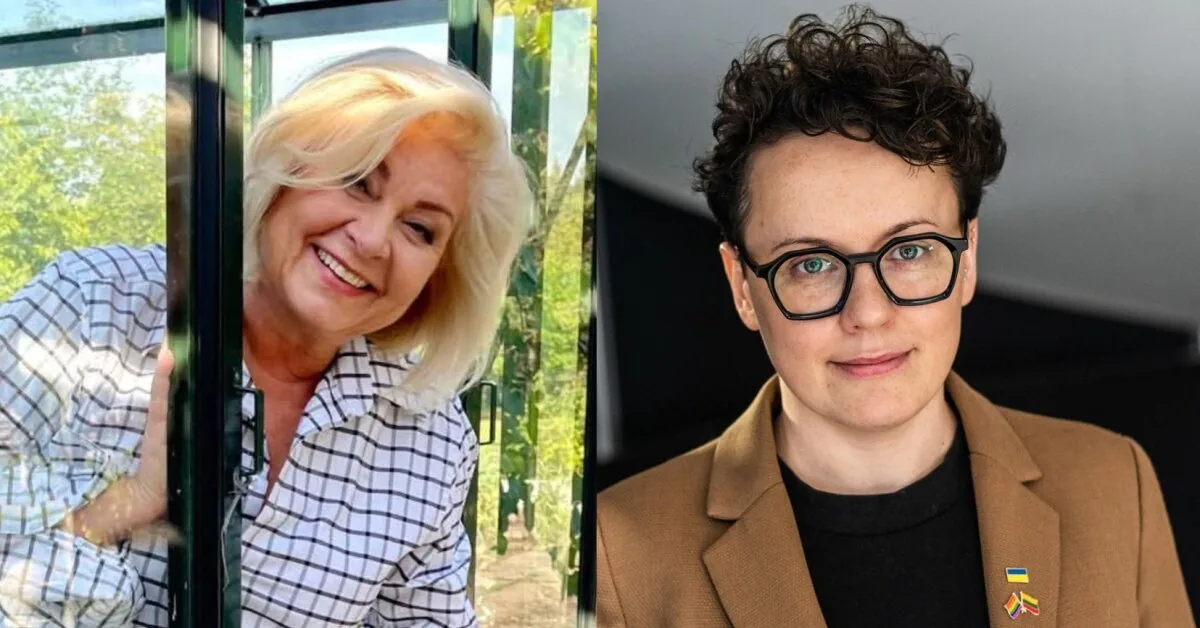
Read Edita’s statement here:
After an unpleasant incident, Edita Mildažytė burst out – pointing a finger at the “invasive species” in Lithuania: “Where do these people come from?”
Read more The fateful day has come: the Russian «elite» rush to evacuate children and relatives
The head of the Lithuanian Human Rights Center, Jūratė Juškaitė, commented on Edita’s sharper opinion, sharing her insights on social networks.
“I read and think – where are we going and where will we end up when people are no longer called people, but invasive species?
Both reading Edita Mildažytė’s widely echoed statement on social networks and following the discussion in the public space, it gives the impression that something has happened to Lithuania – our country has been flooded by aliens from elsewhere, that there is no reason for this except their desire to Islamize Lithuania, take away the title of Mary’s land from us, and take over our jobs and economy.
That their arrival in Lithuania has nothing to do with our own interests, and we do not control the process, we are only victims, ordinary people trying to resist the migration imposed on us.
But dear people, the absolute majority of migrants arriving in Lithuania are not protected by any international convention, their presence in Lithuania is only our state’s decision. That is, except for refugees with international protection, Lithuania could basically send all other migrants home, if not tomorrow, then within a year or two.
Work permit expired – you go home.
Study visa expired – you go home.
No European Union will give us anything, no international finger-pointing will happen. No human rights defenders will say anything if states decide not to admit economic migrants.
What stops us?
Maybe it’s that, using E. Mildažytė’s words, the “invasive species” pays more than 350 million euros in personal income tax and more than 600 million euros in state social insurance and compulsory health insurance contributions per year? That’s almost a billion in taxes.
Maybe it’s that foreign students help our universities earn income and thus pay better salaries to lecturers and invest in the quality of studies?
Maybe it’s that Lithuania’s demographic situation is one of the worst in Europe? Some demographers calculate that in a few decades non-Lithuanians will make up up to one-fifth to one-quarter of the population. Not because Lithuanians feel sorry for empty homesteads or cities and out of goodwill admit migrants, but because there will be no one to take care of us old people and no one to pay taxes to the state.
Maybe it’s that Europe (and the USA, by the way) is shrinking. For some time now, positive population growth in Europe has only been maintained thanks to migration. Otherwise, our continent would lose about 1.3 million people annually.
That’s for sure – let’s throw those migrants out, no one will scroll phones while driving, no emergency situations will arise, no need to look at bearded men near a Prius, and life will be as it was,” writes J. Juškaitė.
Edita’s post
Comparing the rapidly growing number of arrivals, E. Mildažytė likened them to invasive species spreading in nature – from Sosnowski’s hogweed to cormorants – which, initially seeming harmless or even useful, eventually start destroying local ecosystems.
E. Mildažytė spoke about this on the social network Facebook. She agreed to share the post also with the news portal Žmonės.lt.
Read more Polling stations in Sochi closed due to drone threat as elections begin in Russia
“About invasive species…
I even flinch in surprise and almost crawl under a Toyota Prius driving against traffic… The dark-skinned bearded driver doesn’t even notice me – his gaze follows an app on the mobile phone screen.
As if that wasn’t enough, a frightened cyclist with a blue bag on his shoulders falls in front. All the contents of his load spill out of the backpack. The courier adjusts the mask covering his mouth and starts loading the ordered food back into the thermal bag. He will deliver it to the customer. It doesn’t matter that the food has already been near a puddle.
– Where do these people come from? – the thought flashes. Who and when invited them? Without language, without skills, without orientation?
What economic benefit does the country get from food delivery people and drivers called by apps? Today they even change our traffic culture! Economic benefit, you say? For whom and what?
Once, from the vast Soviet Union, for economic benefit, Sosnowski’s hogweed was imported and promoted in Lithuania. It was hoped that growing it would solve fodder problems in collective farms. It turned out to be poisonous.
Today, not only collective farms but also the Soviet Union no longer exist… But Sosnowski’s hogweed – as much as you want!
I remember how photographers admired the coastal sundew, its geometrically precise shapes… Until it turned out that this attractive invasive plant is destroying the fragile coastal flora.
And the soapwort? It was protected and nurtured. The biggest fines were for those who picked it in the dunes. And today – uproot it with roots and carry it away in carts. Destroy this invasive pest!
The same with lupines. Not long ago we improved soils and fields with them, and today we pick them in bunches so that next year they don’t reseed and lungwort and vetch can thrive in those places.
And cormorants? Some curse them, others admire them. Mostly those who live far from their colonies. We still admire the great egrets, but we are already trying to catch invasive crayfish so they don’t dominate over the natives.
That’s how it is in nature: when you allow or even deliberately introduce an aggressive invasive species, it adapts and does not hold back – it overshadows the natives.
At first, a few exotic seedlings are charming… But later they change the entire ecosystem.
Now Europeans are even creating powerful programs to preserve native species still found in authentic places. Especially rare, slow-reproducing varieties growing in old sites, which do not recover if we do not protect them,” wrote E. Mildažytė on social media.
Read more Baltic Assembly Award – philosopher Zenonas Norkus
E. Mildažytė’s Facebook post: