







- Reuters: election results may help Putin justify further war
- Putin threatened: “Let’s live peacefully, otherwise we will be forced to respond”
- IAEA: a drone hit the cooling tower of a Russian nuclear power plant, no fire broke out
- Reuters: Russia is massively attacking Ukraine with training missiles
Find the latest news about Russia’s invasion of Ukraine HERE.
Trump signed a new sanctions law against Russia
08:15
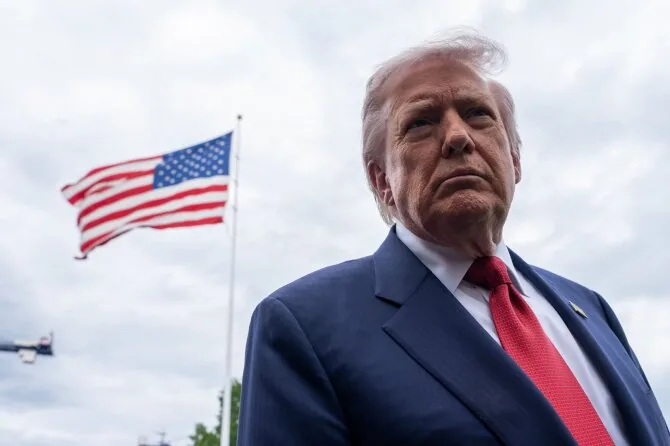
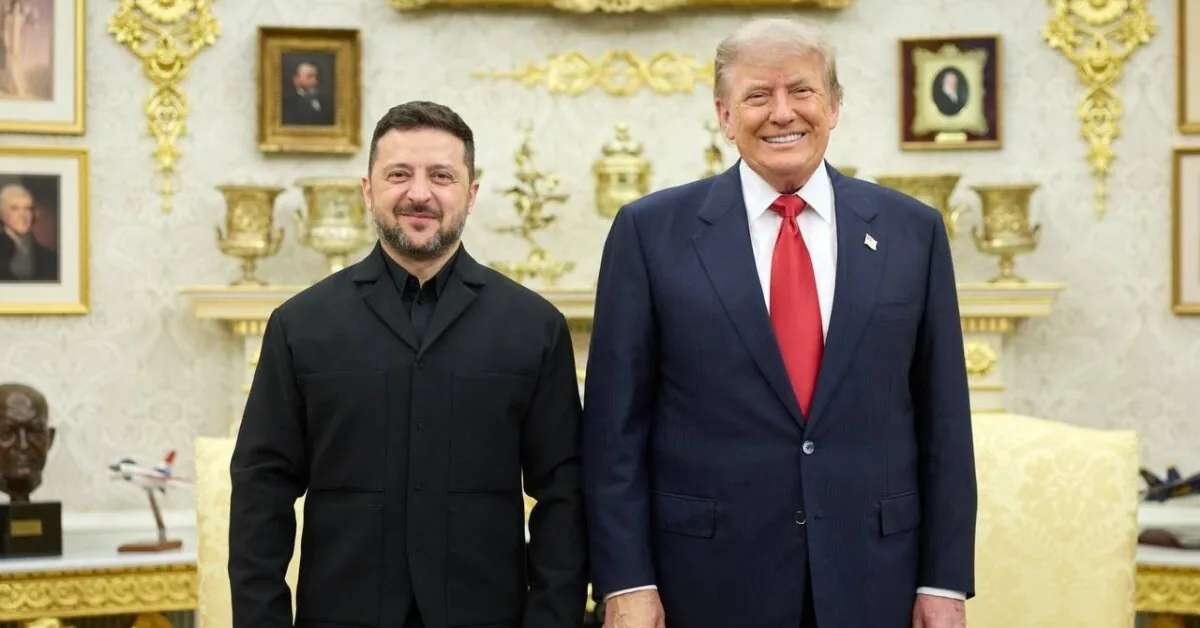
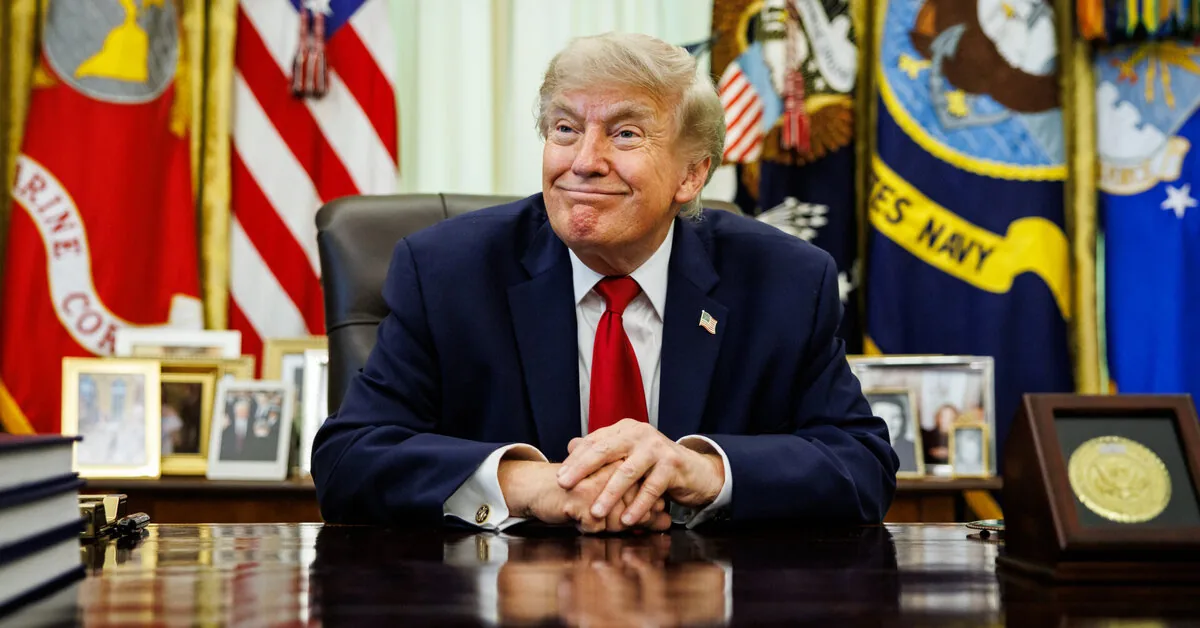
US President Donald Trump signed a wide-ranging bill targeting Russia on September 18, introducing new sanctions and tariff measures, the White House announced, reports Kyiv Independent.
Read more Jocytė, seizing the opportunity again, accurately made three-pointers
The “Lindsey O. Graham Sanctioning Russia and Iran Act of 2026” expands sanctions and other restrictions targeting Russia and extends the Iran sanctions law for another five years. The Trump administration had officially supported the bill before its passage.
Among its provisions is a requirement for the president to impose tariffs of up to 100% on goods imported from foreign countries meeting specified criteria within 30 days of the law’s enactment.
This includes countries that knowingly purchase Russian-origin crude oil or natural gas 30 days after the law’s enactment and that were among the top five importers of Russian crude oil or natural gas by volume in the previous 12 months. This provision also applies to the top five countries helping Russia evade oil sanctions during the previous period.
The law allows the president to waive tariffs, sanctions, or restrictions if he submits written certification to Congress that it is in the national interest, along with a report explaining the basis for such a waiver. It also requires the president to impose tariffs of up to 500% on goods imported from Russia within 30 days of enactment, subject to exceptions specified in the law.
Additionally, the law expands sanctions on Russian officials, financial institutions, state-controlled or state-affiliated entities, energy sector actors, ships involved in sanctions evasion, and other intermediaries.
President Volodymyr Zelensky welcomed Trump’s decision, thanking him and members of both houses of Congress who supported the measure.
Zelensky recalled that L.O. Graham repeatedly called for increased economic pressure on Moscow, including targeting Russian oil purchases, financial services to Russia, and international business ties with Russian companies linked to the Kremlin and its war against Ukraine.
“The best way to honor Lindsey’s memory is the full and swift implementation of this law’s provisions,” Zelensky said.
He added that L.O. Graham believed the United States has enough leverage to confront authoritarian governments if it acts decisively.
“Peace comes through strength. Security comes through safety. And the best guarantee of security is resolve,” Zelensky said.
The House of Representatives passed the bill on September 16 by a vote of 262 to 159 and sent it to Trump. The measure had already passed the Senate in August, with 86 senators voting in favor, 11 against, and it received strong bipartisan support.
The law faced some opposition from lawmakers over the broad tariff authority it grants the president. The law does not name specific countries, but China and India are among the world’s largest buyers of Russian oil and may be subject to its provisions.
L.O. Graham, a Republican senator from South Carolina and a prominent advocate for additional sanctions on Moscow, sought the passage of this bill for over a year. He died on July 11 at age 71 from heart disease, a day after meeting Zelensky during a visit to Kyiv.
The bill was later renamed in honor of L.O. Graham.
Nighttime Russian attack in Odesa: residential buildings damaged, fires broke out
09:53

On the night of September 18 to 19, Russian forces attacked Odesa and the Odesa region. The attack damaged civilian infrastructure and an administrative building, reports UNIAN.
According to Serhiy Lysak, head of the Odesa military administration, infrastructure and an administrative building were damaged during the night attack. There was no information about casualties at that time.
The Odesa City Council reported that the attack temporarily disrupted the city’s electric transport traffic. Some trolleybus and tram routes were not operating, others ran on altered routes. In some parts of the city, witnesses reported power and water supply interruptions during the night.
Oleh Kiper, head of the Odesa regional military administration, said Russian forces massively attacked civilian regional infrastructure overnight. One of the strikes again hit an administrative building that had been attacked the day before. A fire broke out on its upper floors but was quickly extinguished by firefighters.
The Odesa regional state emergency service confirmed that a fire broke out in an 11-story administrative building during the repeated strike. Another fire occurred in a two-story educational institution building.
In the Odesa district, roofs, facades, and windows of two residential buildings were damaged, as well as a car and a minibus. More than 100 rescuers and 27 pieces of equipment, along with five National Guard firefighters and one piece of equipment, were involved in damage control.
Read more Flights suspended in Luxembourg due to suspected drones
Strikes on railway infrastructure
As previously reported by UNIAN, on September 18 Russian forces struck Odesa’s center with drones. According to a UNIAN source, one of the administrative buildings of the Ukrainian railway company Ukrzaliznytsia near the railway station was hit.
The source said the building was hit twice – the second strike occurred when rescuers had already arrived at the scene. At least 10 people were injured in this attack, including rescuers. One injured civilian was in serious condition.
Ukraine neutralized three “Banderol” missiles and 138 Russian drones overnight
09:26
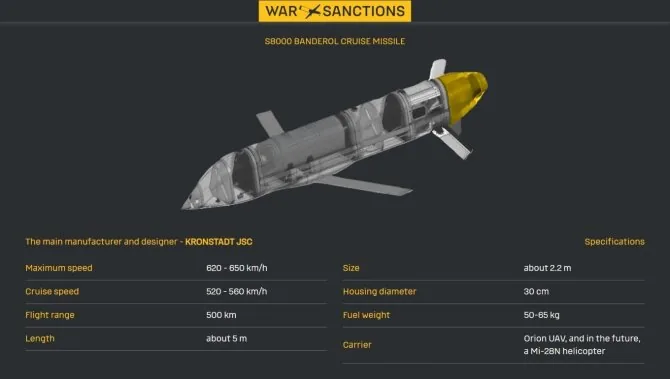
Ukraine’s air defense forces neutralized three units of “Banderol” type ammunition and 138 drones used by Russian forces to attack Ukraine since the evening of September 18.
According to Ukrinform, this was announced on their Telegram channel by the Ukrainian Armed Forces Air Force.
Since 6 p.m. on September 18, the enemy attacked with two Zircon cruise missiles from Russia’s Kursk region, as well as 174 strike drones – Shahed type (half of which were jet-powered), Gerbera drones, Banderol / Dan-T loitering munitions, and Parody type decoy drones. They were launched from the Oryol, Millerovo, and Primorsko-Akhtarsk districts in Russia, as well as from temporarily occupied Donetsk and Hvardiiske in temporarily occupied Crimea.
The main attack directions were the Odesa and Kyiv regions.
The air attack was repelled by Ukrainian defense forces’ aircraft, anti-aircraft missile forces, electronic warfare units, drone units, and mobile fire groups.
Preliminary data shows that by 8 a.m. on September 19, air defense forces had shot down or suppressed three Banderol / Dan-T ammunition units and 138 drones.
Hits were recorded at 15 locations, and debris from downed targets fell in nine locations.
The enemy’s missiles did not reach their targets; information about possible crash sites is being clarified.
The attack continues – more than ten drones are still in Ukrainian airspace.
According to Ukrinform, two people were injured during a Russian drone attack in the Bucha district of Kyiv region on the evening of September 18.
US approved possible $2.7 billion arms package for Ukraine: what weapons are planned?
08:18
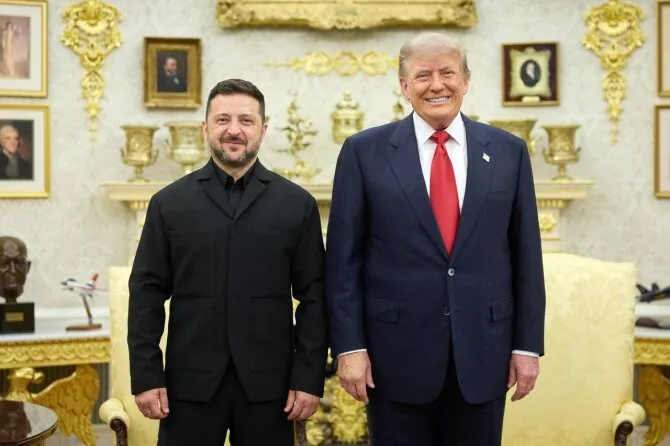
The US State Department confirmed a possible sale of military equipment and services to Ukraine worth $2.7 billion, aimed at modernizing air defense systems, reports UNIAN.
This is stated in the department’s announcement. It notes that if the agreement is concluded, Ukraine will pay for it with contributions from European partners and from the US Foreign Military Financing (FMF) program funds allocated during Joe Biden’s presidency.
The State Department clarified that the FMF program provides grants allowing countries to purchase US-made weapons and defense equipment.
FMF funds will be counted as the US contribution to Ukraine’s reconstruction investment fund, applying a 1:1 matching ratio, the State Department clarified.
Ukraine’s reconstruction investment fund was established under last year’s US-Ukraine agreement on mineral resources.
What weapons Ukraine may receive
According to the State Department, the package includes:
- S-300 equivalent missiles;
- GAM-67 missiles;
- laser-guided and longer-range air defense missile systems;
- modernization kits for launchers and mobile launch systems;
- radars for countering unmanned aerial systems.
The State Department clarified that the possible agreement will still need to be considered by Congress.
US and the war in Ukraine
The US remains one of Ukraine’s main partners in resisting Russian aggression. Washington provides Kyiv with military and intelligence support.
In August, President Volodymyr Zelensky announced an agreement for monthly deliveries of Patriot missile systems.
Additionally, the US has resumed full intelligence sharing with Ukraine. Ukrainian forces use this data to plan operations and identify enemy targets for strikes.