- Kremlin intimidation tactics: what is Vladimir Putin aiming for?
- Horrific footage emerged showing how Russia attacked shoppers at a shopping center
- “Complete nonsense”: a new face appeared next to Putin in Chechnya
- A new shot in the trade war with Russia: Armenia took unplanned actions
Find all the news about Russia’s invasion of Ukraine HERE.
Russia shaken by strikes overnight: flames engulf oil refinery and “Ozon” logistics center
08:04
The Ukrainian military launched an attack on Russia’s Samara region on the night of August 22. It struck an important oil refinery and the “Ozon” logistics center, according to Russian Telegram channels, as reported by the Kyiv Independent.
Photos and videos posted by locals on social media show thick black smoke rising above the Novokuibyshevsk oil refinery. It is reported that the facility may have been damaged by the strike.
The refinery’s annual processing capacity is 8.8 million tons of oil – one of the ten largest oil refineries in Russia. It produces gasoline, diesel, and fuel oil.
Later in the night, a large fire broke out in the nearby city of Chapayevsk. Flames were seen at a warehouse owned by “Ozon.” “Ozon” is one of Russia’s largest e-commerce companies and a main competitor to “Wildberries.” If confirmed, this would be the first time Ukrainian forces directly struck an “Ozon” facility.
Novokuibyshevsk and Chapayevsk are about 900 kilometers from the frontline in Ukraine. It is not yet clear what weapons were used in the attack, but Ukraine regularly conducts long-range drone strikes on targets deep inside Russia.
The attack came just one day after Ukrainian President Volodymyr Zelensky confirmed that on the night of August 21, Ukraine struck the Perm oil refinery in Russia. This facility is about 1,500 kilometers from Ukraine.
Russian ballistic missiles hit railway company in Kyiv: one employee killed
10:31

On the night of August 22, Russian forces struck one of the railway companies in Kyiv’s Darnytskyi district with missiles. One “Ukrzaliznytsia” employee was killed in the strike, reports UNIAN.
“Ukrzaliznytsia” board chairman Oleksandr Perchovskyi reported that Russia also launched attacks on railway infrastructure that night.
According to him, one of the railway companies in Darnytskyi was hit by ballistic missiles. At the time the ballistic threat was announced, or perhaps even a second earlier, the company was already struck. One employee – a brigadier – was killed on the spot. After the first strike, other employees were quickly evacuated.
Additionally, the enemy attacked the Odessa railway. The “Rozdilna” railway station building was damaged in the strikes.
“The consequences are being promptly addressed, the enemy did not affect our train traffic,” added O. Perchovskyi.
Russia struck Odessa region: railway station damaged, electricity and water supply disrupted
10:29
On the night of August 21-22, the Russian occupying army launched a massive combined attack on Odessa and the Odessa region, striking civilian infrastructure.
According to Oleks Kiper, head of the Odessa regional military administration, the region was shelled throughout the night. The strikes affected transport, industrial, and energy infrastructure, as well as residential areas. According to the latest data, one person was injured.
The railway station in Rozdilna was the most affected. A five-story residential building, an industrial enterprise, and a sports facility were also damaged.
In some settlements in the region, including Odessa, electricity and water supply were disrupted. Specialists have already begun emergency restoration work.
According to the Odessa regional State Emergency Service, cars parked near the railway station caught fire during the attack. In another district of the Odessa region, the roof of a five-story residential building was damaged.
Rescuers worked all night at the strike sites – extinguishing fires and clearing the consequences of the attack. More than 100 rescuers and 23 units of equipment were involved in the liquidation efforts.
Russia received new North Korean missiles: which Ukrainian regions are at risk revealed
08:55
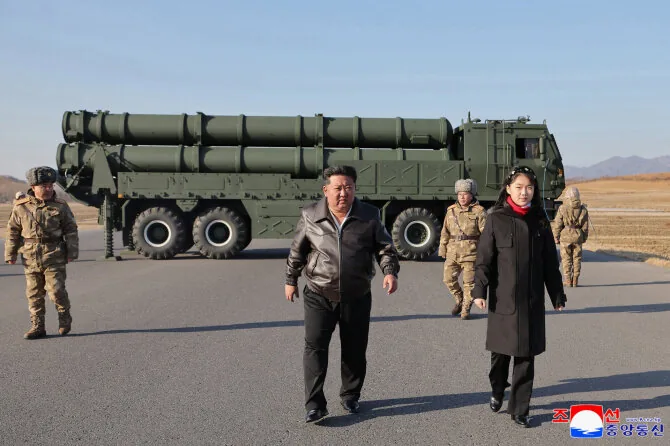
Russia has received the first batch of North Korean short-range ballistic missiles “Hwasong-11C,” also known as KN-30. According to Ukrainian intelligence, the new missiles are being deployed in the Voronezh region, reports UNIAN.
It is also planned to use six transport and launch vehicles, which will be operated by North Korean military personnel together with Russia’s 112th Guards Missile Brigade.
According to available data, North Korea has delivered about 50 ballistic missiles to Russia, including the new KN-30s. The Russian military has previously used North Korean KN-23 and KN-24 missiles.
At the same time, there are reports of a possible deployment of up to 120 missiles in the Voronezh region. If confirmed, Moscow would gain an additional ballistic missile supply channel, supplementing Russia’s own “Iskander-M” missiles.
Until August 20, no confirmed KN-30 launches against Ukraine had been recorded.
How does the KN-30 differ from previous missiles?
The KN-30 is an enlarged version of the “Hwasong-11” family missile. Its length is about 10.1–10.2 meters, and diameter about 1.26 meters. For comparison, the KN-23 is about 8.77 meters long and 1.1 meters in diameter.
It is reported that the KN-30 can fly 600–900 kilometers, allowing it to be launched from Russian territory farther from the Ukrainian border.
North Korea also states that the missile’s warhead can weigh up to 2.5 tons, though these technical details are not independently fully confirmed.
Therefore, the missiles could potentially be used to strike large stationary targets – industrial enterprises, energy and transport infrastructure, warehouses, and other facilities.
Which Ukrainian regions could be reached?
The deployment of missiles in the Voronezh region is significant due to its proximity to Ukraine. Analysts estimate that from this territory, targets in Sumy, Kharkiv, Chernihiv, Poltava, Kyiv, Dnipropetrovsk, and Zaporizhzhia regions could potentially be attacked, depending on the missile’s range and launch location.
The greater range of the KN-30 also allows Russia to keep launch vehicles farther from the Ukrainian border while still striking targets in central Ukraine.
Why does Russia need North Korean missiles?
Supplying KN-30s could increase pressure on Ukraine’s air defense. Ballistic missiles are difficult to intercept, and the number of systems capable of effectively shooting them down is limited.
Even less accurate missiles force Ukraine to use limited air defense interception resources. Therefore, Russia can combine its “Iskander-M” with North Korean KN-23, KN-24, and KN-30, increasing the total number of ballistic missiles available.
Experts also note the possibly lower accuracy of these missiles. Due to the large warhead and imprecise targeting, they may pose a particularly high threat to civilians.
Explosions heard again in Kyiv: night attack accompanied by fire
08:10
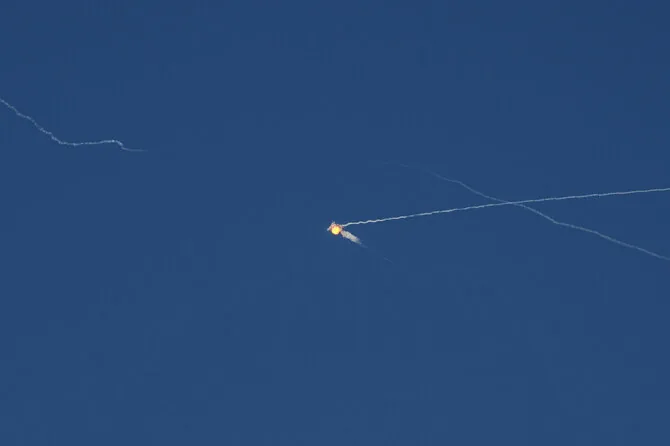
On the night of August 22, around 1 a.m. local time, several explosions were heard one after another in Kyiv, report journalists from Kyiv Independent on site. The explosions occurred just minutes after an air raid alert was announced.
A warehouse caught fire in Kyiv’s Darnytskyi district, local authorities reported. Preliminary data indicate one person was killed and several others injured in the attack.
Later in the night, explosions were also heard in several settlements in Kyiv region near the capital.
The exact extent of the damage caused by the attack is not yet clear.
The latest attack came just two days after Russia launched a large-scale ballistic missile and drone strike on Kyiv at midnight on August 20. At least 15 people were killed and dozens injured in that attack.
“It was a massive attack,” Ukrainian President Volodymyr Zelensky said on social media about the August 20 strike.
According to him, the Russians prepared for this attack for a long time and used different types of ballistic and cruise missiles and drones to cause as much damage as possible to civilian infrastructure.
According to the Ukrainian Air Force, Russian missiles and drones struck 28 locations in Kyiv during the August 20 attack.
Read more In Vilnius district, a truck hit a cyclist – the woman was taken to the hospital