- “Burned for three hours”: Ukraine attacked an air defense site near the “Putin Palace”
- Decided the fate of Russian military bases in Syria
Find all news about Russia’s invasion of Ukraine HERE.
“Burned for three hours”: Ukraine attacked an air defense site near the “Putin Palace”
09:14
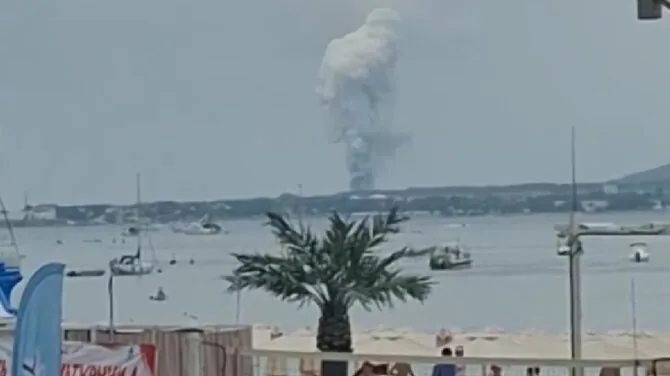
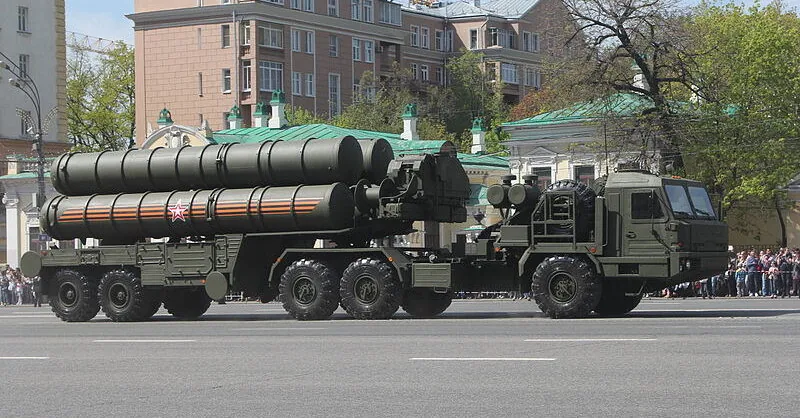
On Sunday night, Ukrainian Armed Forces drones attacked positions of the Russian S-400 “Triumf” anti-aircraft missile system in Gelendzhik, Krasnodar Krai.
Read more Ears itching to madness? Explained why it happens and what to do
According to the commander of the Ukrainian drone forces, Robert Brovdis, this complex was near the so-called Kremlin leader Vladimir Putin’s palace on the Black Sea coast.
“The S-400 position in Gelendzhik, on the coast, near the catacombs, burned and smoked for three hours,” wrote the Drone Forces commander.
This is not the first strike in the region, which V. Putin considered unreachable by Ukrainian drones. On August 3, debris from a Ukrainian drone fell on the beach in Arkhipo-Osipovka (part of Gelendzhik municipality), killing seven people and injuring at least 40 more. This settlement is about 22 km from V. Putin’s residence.
The complex, known as the “Putin Palace,” is a 17.7 thousand sq.m facility on the Black Sea coast, about 20 km from Gelendzhik.
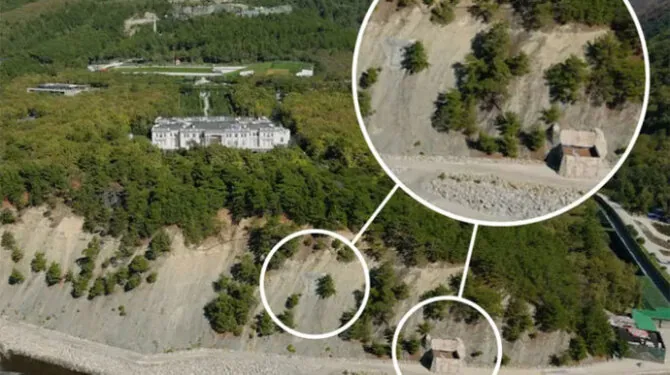
According to Alexei Navalny’s investigation, the territory includes a restaurant, helicopter pad, church, amphitheater, guest houses, and gas station, as well as an 80-meter-long bridge. The investigation states that the main building houses a pool with a water disco, a spa center, saunas and Turkish baths, production facilities, a library, and a music lounge.
A no-fly zone has been established over the complex’s territory, and, according to the investigation, about 7 thousand hectares adjacent belong to the Russian security service.
Besides this air defense system, according to R. Brovdis, four more Russian air defense sites were destroyed on Sunday night.
He refers to the Tor anti-aircraft missile system near Pudovo settlement in Rostov region, the Pantsir-S1 anti-aircraft missile and gun system in Yeisk, Krasnodar Krai, the Podlet-K1 radar station in Golovatovka, Rostov region, and the Kasta 2E2 radar station in Latonovo, Rostov region.
The drone forces commander said that three more Russian “shadow fleet” ships were destroyed in the Black Sea – one oil tanker and two dry cargo ships.
The fate of Russian military bases in Syria revealed
10:02
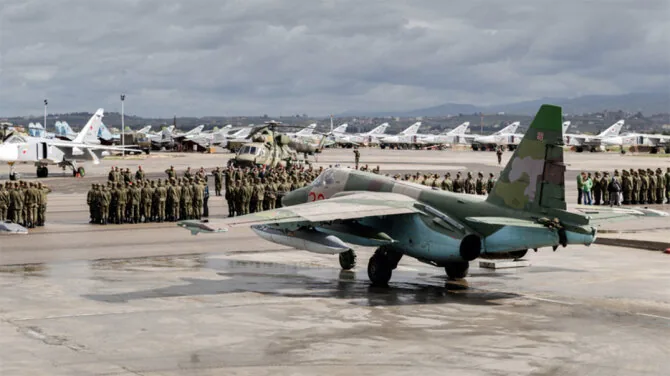
The Syrian government announced on Sunday that it has reached an agreement with Moscow on the future of two Russian bases on Syrian territory.
These bases were previously used to provide military support to the ousted leader Bashar al-Assad during the Syrian civil war.
Will continue to be used
The official Syrian news agency SANA, citing the Ministry of Foreign Affairs, stated that the Hmeimim air base and the Tartus naval military base – the only two official Russian military bases outside the former Soviet Union territory – will be transformed into “joint training and capability enhancement centers, under new agreements ensuring mutual interests.”
The memorandum of understanding, prepared after one and a half years of negotiations, “provides for a period not exceeding three months to complete this process,” added SANA.
At the same time, civilian facilities at both bases will be transferred to Damascus’s control.
Russia was the main ally of B. al-Assad during the 13-year conflict in Syria and provided vital military support that helped keep the former leader’s forces in power.
B. al-Assad’s ousting in 2024 was a major blow to Moscow’s influence in the region, and President Vladimir Putin is making efforts to develop relations with new officials in Damascus to secure the bases’ future.
During the negotiations, both Hmeimim and Tartus bases continued to operate.
Syrian Foreign Minister Asaad al Shaibani visited these facilities on Sunday to “inspect the equipment and infrastructure provided for in the historic memorandum of understanding,” SANA reports.
Syria has expressed willingness to cooperate with Moscow, and President Ahmed al Sharaa has been received twice in Moscow by V. Putin since taking office.
However, Damascus has repeatedly demanded that Russia extradite B. al-Assad, who has been hiding in Moscow with his wife since his ousting.
Earlier this year, the Kremlin withdrew its forces from the Qamishli airport in northeastern Syria.
Russia dropped 5 aerial bombs on Sumy
09:49
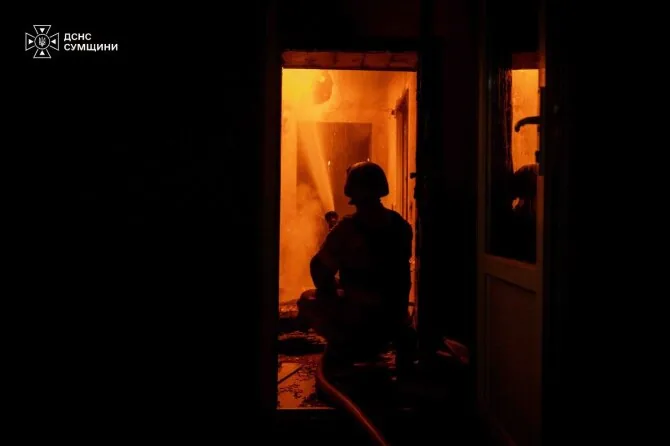
Russian forces carried out five strikes with guided aerial bombs on civilian infrastructure in Sumy in northeastern Ukraine last night, injuring 14 people.
Oleks Hryhorov, head of the Sumy regional military administration, wrote on the Telegram platform: “Last night the enemy again struck the city with guided aerial bombs. Five strikes on civilian infrastructure were recorded. Three locations in two city districts were hit.”
According to the official, 14 people were injured, including a 14-year-old child, but the injuries are not severe.
Meanwhile, the Ukrainian Air Forces reported on Telegram that Russians launched a Kh-59/69 missile and 126 drones into Ukraine last night. By 9 a.m., 92 drones were shot down or suppressed. It was reported that 31 hits were recorded in 22 locations and drone debris fell in two more locations.
Russia is angry that America helps Ukraine: what it demands from Kyiv again
09:30 Updated 10:14
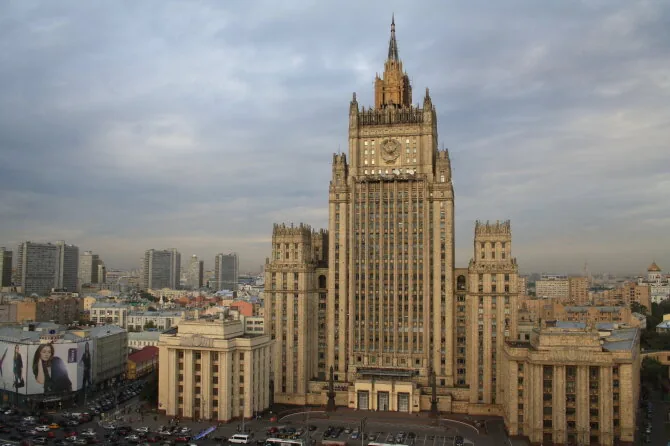
Russia will not agree to “freezing” military actions in Ukraine unless the “main” causes of the war are removed, said Mikhail Galuzin, Deputy Head of the Russian Ministry of Foreign Affairs, in an interview with the propaganda news agency TASS.
“As Russian President Vladimir Putin has repeatedly said, without removing the main causes of this crisis, no cessation of actions is possible,” he emphasized.
The deputy minister said that currently Ukrainian President Volodymyr Zelensky is “completely out of touch with reality” and “trying to escalate the conflict.”
M. Galuzin spoke about strikes on Russian energy infrastructure, including Caspian pipeline consortium facilities, “operating primarily in the interests of Kazakhstan’s economy.”
“We hope that the international community, including the United States and European countries that influence the Kyiv regime, whose oil and gas companies are shareholders of the Caspian pipeline consortium, will respond adequately,” he said.
At the same time, the deputy minister criticized US aid to Ukraine and called their actions “contradictory.”
“The ongoing US arms supplies to the Kyiv regime, intelligence data provision, and other assistance incompatible with the goal of ensuring peace speak for themselves,” emphasized M. Galuzin.
In the interview, he noted that Moscow is allegedly ready to achieve its goals “taking into account the Anchorage agreements” and is confident that “resolving the situation in Ukraine by diplomatic means is possible if there is the appropriate political will.”
Earlier, Rodion Miroshnik, special envoy of the Russian Ministry of Foreign Affairs, stated that Russia should be prepared for a long-term continuation of hostilities in Ukraine, as the war will not end soon.
Foreign Minister Sergey Lavrov also said in early July that Moscow intends to fight until the goals outlined by V. Putin in June 2024 are achieved. Then the Kremlin leader demanded that Ukraine give up Donbas, Zaporizhzhia, and Kherson regions, recognize them and Crimea as Russian territory, abandon NATO membership, and carry out “demilitarization” and “denazification.”
Ukraine struck one of Russia’s largest oil refineries
08:18
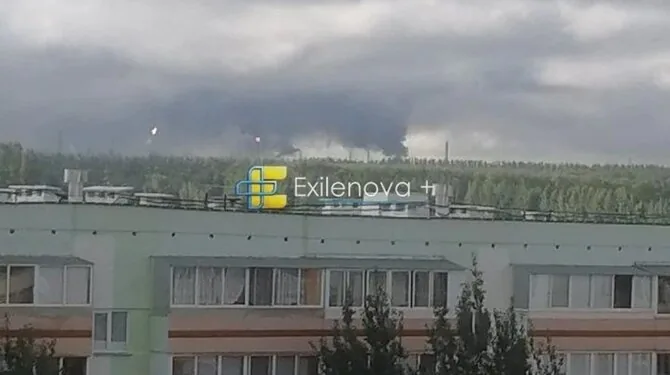
Ukrainian drones attacked an oil refinery in Russia’s Tatarstan region.
According to monitoring channels, residents of Nizhnekamsk and Chistopol in Tatarstan reported a large number of drones flying over their cities.
Read more Juozas Olekas will meet with four members of the Cabinet of Ministers, the mayor of the capital city
Later, smoke rising was recorded.
Russian authorities have not yet commented on the situation.
Nizhnekamsk is one of the largest and most modern petrochemical and oil refining centers in Russia, hosting two major companies – TANECO and TAIF-NK, as well as Sibur plants.
This industrial complex is a key element of Russia’s fuel and energy infrastructure.
Commander of Ukrainian drone forces: strikes in Crimea could be seven times more
08:07

The major leading Ukraine’s drone war says that recent strikes in Crimea are the first phase of a campaign aimed at making the peninsula, illegally annexed by Russia in 2014, unusable as a Russian forces’ foothold.
Major Robert Brovdis, known by the call sign “Magyar,” one of the most prominent new-generation Ukrainian military leaders, said his forces could attack seven times more military targets in Crimea if promised Western ally funds arrived faster.
“Crimea is among the main conceptual pillars on the path to ending the war,” R. Brovdis told news agency AP in an interview.
Despite funding shortages, Ukraine’s summer campaign in Crimea has already caused significant damage: strikes on railway bridges, oil depots, and electrical infrastructure to disrupt supply lines and “blind” Russian air defense against incoming Ukrainian drones.
R. Brovdis said his forces are equipped with only 14% of what is needed to conduct the Crimea campaign at full capacity.
Since leading an international grain trade business, the numbers-minded R. Brovdis joined Ukraine’s territorial defense as a volunteer in the early days of the war. He quickly rose through the ranks, led one of the country’s most effective drone brigades, and was later appointed to lead the unprecedented Ukrainian drone forces.
“It’s not that Ukrainian manufacturers’ production capacities prevent us from producing the required number of drones,” said Brovdis. “It’s a banal problem of funding at the wrong time, when our partners allocate funds, but they move much slower than planned.”
Read more HERE.
Russia announces capturing 2 villages in Donetsk region
07:34
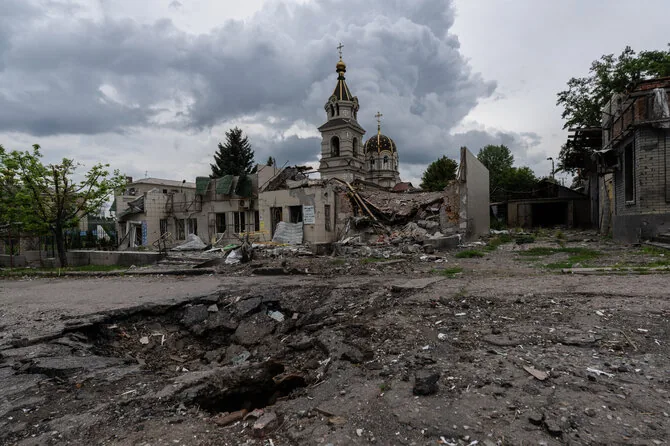
Russian forces have captured two villages in Donetsk region. This was reported by Russian media citing the Russian Ministry of Defense, writes Reuters.
“Ukrainian forces have not confirmed that these two settlements fell into enemy hands, and Reuters was unable to verify reports from the front line,” the released statement says.
“DeepState” analysts reported that Russians advanced near Iljovka, located outside the city limits of Kostiantynivka, where fighting continues.
Protests against hostility towards Ukrainians in Polish cities
06:58

Demonstrators across Poland took to the streets to protest violence and hostility towards Ukrainians, promising to support this community amid spreading anti-Ukrainian sentiments.
According to the portal TVP World, rallies took place on Sunday in 22 cities, including the capital Warsaw, the southern city of Krakow, and the Baltic Sea port city of Gdansk.
The event with the slogan “Don’t be indifferent” was organized by the Polish civic movement “Committee for the Defense of Democracy” (KOD).
According to the organizers, the demonstrations were aimed at responding to increasingly frequent verbal and physical attacks against people because of their origin, language, or appearance.
They also sought to show solidarity with Ukrainians and other minorities experiencing violence and discrimination.
Volodymyr Zelensky announces planned new talks with intermediaries on ending the war
06:43
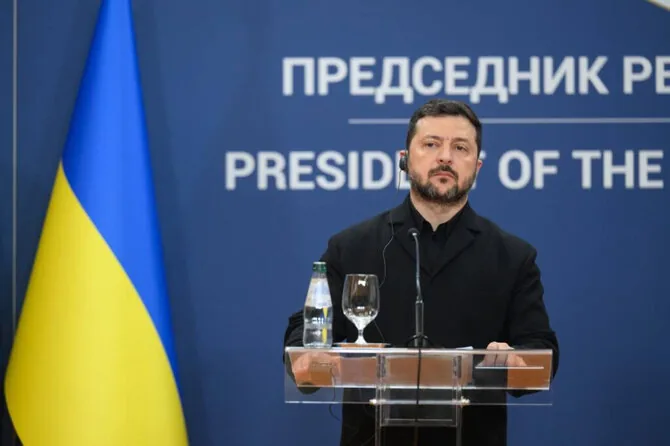
Ukrainian President Volodymyr Zelensky announced new talks with peace process intermediaries next week, as well as further negotiations to secure additional air defense packages.
“(Next) week there will be new talks with intermediaries, especially regarding necessary steps and proposals. Ukraine, as always, is active in diplomacy,” Zelensky said in an evening address published on Telegram.
“There will also be new negotiations to ensure air defense packages for our country and our people’s protection,” he added.
Zelensky said he received reports from Prime Minister Serhiy Koretsky on Sunday and spoke with the Commander-in-Chief of the Ukrainian Armed Forces, Mykhailo Drapat, about protecting Ukrainian cities and responding to Russia.
“We definitely provide fully justified responses, and every Russian strike will receive our response. The Russian war will increasingly be felt in their own homes – in Russia,” the president said.
If Russia provokes NATO: expert explains what risks Kremlin faces
06:19
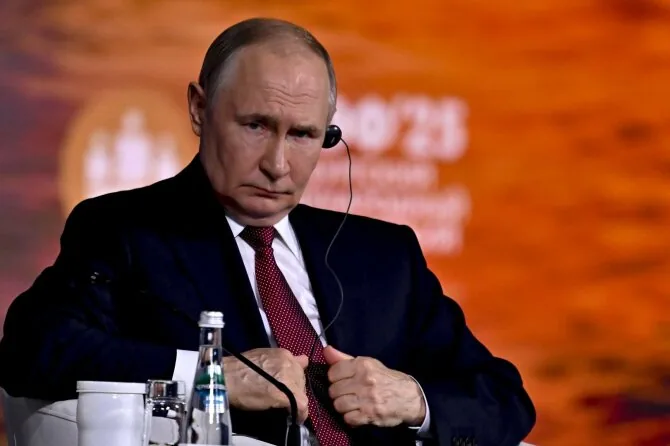
On August 6, The Wall Street Journal published an article about a new US intelligence assessment stating that Vladimir Putin could test NATO’s resolve in the coming years, writes Andrew Latham, senior fellow at the Washington Institute for Peace and Diplomacy, in an article published on the “19fortyfive” portal.
A. Latham notes that officials described various possibilities – from cyberattacks and proxy actions to, in the worst case, a small ground invasion of the alliance’s eastern flank between this fall and 2029.
The analyst emphasizes that this assessment does not mention the most complex scenario – a limited ground invasion. A. Latham notes that this scenario is considered unlikely, but its likelihood gradually increases each year.
“The document’s authors do not provide journalists with percentage probabilities of scenarios, and what was ultimately published resembles more a forecaster’s confidence assessment,” the article’s author says.
He stressed that the report appeared about a week after a Russian Kh-101 missile fell in eastern Poland.
“How NATO now responds to a small provocation best shows how the alliance will respond to a larger one,” says A. Latham.
F-16 fighters were scrambled then, and the Lublin prosecutor’s office investigated the missile debris within days.
German General Staff General Christian Freuding said in June that all 32 NATO member states agree that Russia could have the capacity to invade one of these member states by 2029. A. Latham emphasizes that this statement relates to what Moscow will ultimately be able to build, not what V. Putin will want to do when he has those capabilities.
According to him, another important aspect is Russia’s motivation. The analyst quotes Lithuanian Defense Minister Robertas Kaunas, who said on July 20 that the Kremlin needs a new victory because the war in Ukraine is stuck, and agrees that the minister’s view is correct.
However, he notes two reasons why the alleged Russian invasion remains irrational.
First, crossing NATO’s border would cause Moscow to lose the ability to deny its actions, regardless of what NATO does.
The other reason is a possible NATO response, which is now said to be strong and would make the risk not worth it for Russia.
Read more Zelenskis announces new talks with intermediaries about ending the war