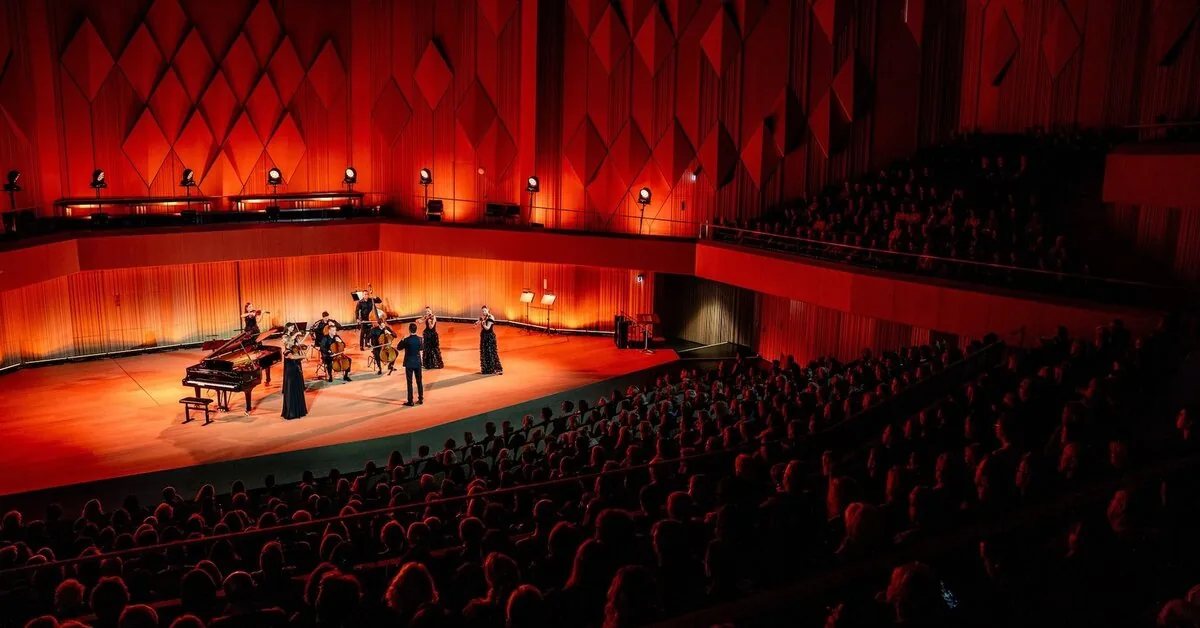







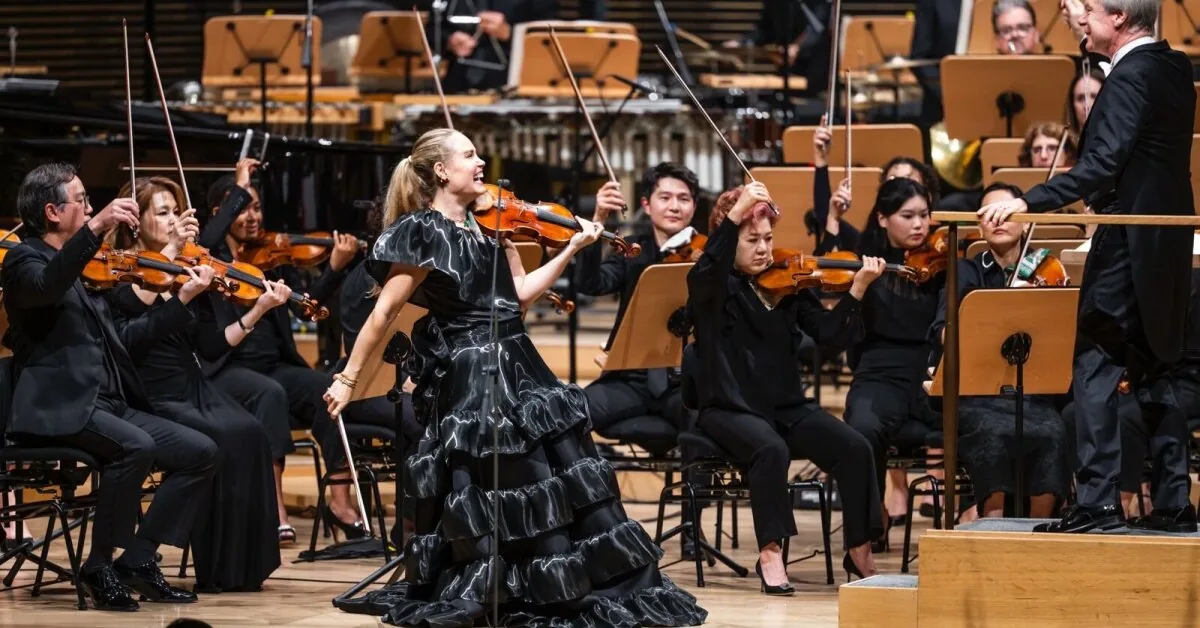
This fall, Leila Josefowicz is coming to Vilnius – on October 22 at the Lithuanian National Philharmonic, she will perform a violin concerto with the Lithuanian Chamber Orchestra, conducted by the excellent American conductor Jonathan Stockhammer. As the concert approaches, we invite you to get to know the violin star and her personality more closely, according to a press release.
Read more New packaging rules: how to prepare so that the business does not have to pay for mistakes
“Art must first be important to you”
Leila Josefowicz started playing the violin at the age of three – initially because her father wanted her to. “But I chose to continue myself,” she recalls. Over time, music became a personal pursuit to perform as well as possible – not just to seek success, but also to ensure that art was meaningful to her personally. “Art must first be important to you, only then does it become important to others,” the violinist is convinced.
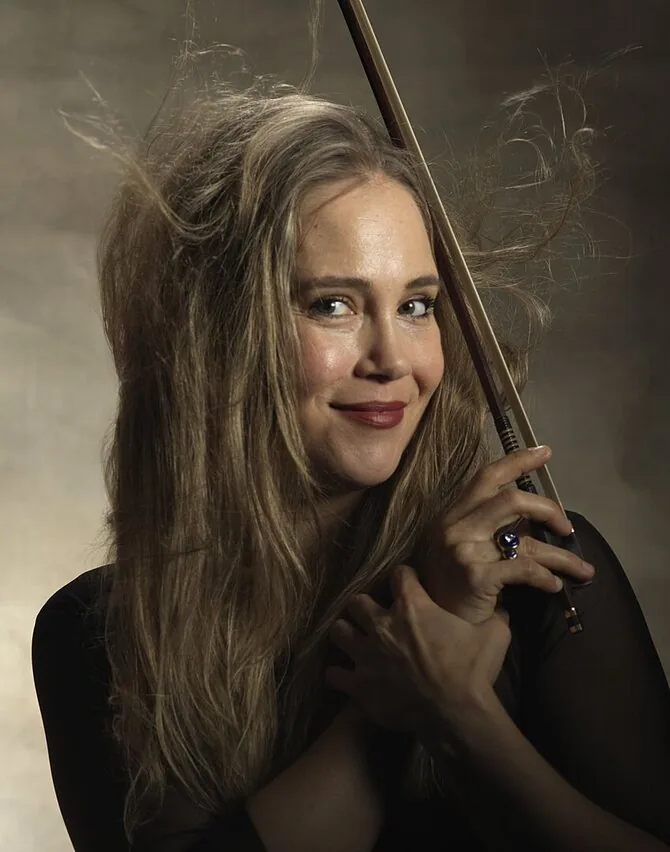
A very strong stimulus for the performer was her first appearance as a soloist with a symphony orchestra. “The experience of live performance is unique – when the instruments of the musicians playing around you sound, the feeling is completely different from listening to a recording,” says the violinist.
However, early success also had its price. Leila’s family life began to revolve around her playing, which caused the performer to feel pressure. There were moments when she doubted whether it was healthy for her to pursue a violinist’s career at all. But after some time, the performer felt that the violin became a kind of support for her. Now she sees the instrument as an inseparable part of her identity. “Without the violin, I would be like a body without a skeleton, like a body without bones,” she sums up her relationship with playing.
“If we thought like that about every piece, nothing would be performed”
Leila Josefowicz is today one of the brightest ambassadors of contemporary violin music. She chose this direction partly by rebelling against the established system. While studying at the prestigious Curtis Institute, she felt the old-fashioned attitude of many people towards the repertoire, but after graduation, she realized that such an opinion prevailed almost everywhere. Her huge desire to perform John Adams’ Violin Concerto in 1993 became the first important step.
“I urged people to include this piece in programs, argued with those who were not used to thinking about newer music. At that time, it was common to think: ‘Well, the premiere of this piece has already happened, so that’s it – no one will play it for a while.’ That was the attitude. And I thought: are you kidding? Because if we thought like that about every piece of music, nothing would be performed. It’s actually absurd. And not only absurd – it’s stupid,” the violinist shared memories from the beginning of her career.
The pleasure of working with living creators
Instead of sticking to the well-known classical repertoire, Leila constantly sought how she could discover something new. Gradually, working with living composers became a very significant part of her activity and, in her words, the richest way to experience music. “I enjoy collaborating with living artists,” she says. “Of course, I respect Beethoven and other great composers known to us all. But in a way, they are anonymous to us. When you meet a music creator, everything changes. That fascinates me a lot. That’s why I do what I do.”
However, the performer’s enthusiasm for collaboration is very respectful. Leila Josefowicz states that she intervenes in the creative process only when she clearly sees that something would be technically impossible to play. “Impossible and difficult are different things that must be clearly distinguished,” emphasizes the performer. “People thought that Tchaikovsky’s Violin Concerto was impossible, although it is actually possible to perform it. Difficulty is part of the music. If the music is not difficult, it loses its life.”
Read more After the influx of migrants in Ceuta, Ursula von der Leyen proposes an emergency management measure
The violinist especially likes pieces that have space for lyricism and sound exploration – the performer likes to have the opportunity to reveal the sound of her instrument. “If the composer writes trillions of rapidly changing notes, it does not give me the opportunity to explore what sounds I can produce. That was Miles Davis’s approach: what can you say with one note? On the other hand, rhythm and pulse have always been the essence of my playing. There is a way to contrast and juxtapose these things, and that suits me very well,” shares Leila Josefowicz about her performance philosophy.
New music must be learned as well as Beethoven or Mozart
Dedication to contemporary repertoire requires a responsible approach to new music. As is known, classical repertoire concerts are usually played from memory and pieces are known like the back of one’s hand. The violinist admits to noticing that far from all performers devote enough time to learning today’s music.
Leila Josefowicz learns new pieces as intensively as she once learned the classical repertoire. “It can’t be that I don’t play something well just because it’s new. Actually, my approach is very simple: if I learned Beethoven by heart, I have to try to learn Adès by heart as well. If I learned Brahms or Mozart by heart, I have to learn Berg too. When I learn a new score, I have to constantly repeat it in my mind. Even when going to the store, I take the score with me because while shopping I can remember that I have to check something in it,” the performer shared about her learning peculiarities.
“Music takes you to another space”
For the world-renowned violinist, music is not just what we learn, analyze, or accumulate knowledge about. Its impact, according to the performer, is much more immediate. “You don’t sit and think: ‘Oh, what a wonderful structure’ or ‘what wonderful harmony.’ When the music is truly wonderful, you don’t think about it – you are simply overwhelmed. You don’t consciously analyze it, music just takes you away,” shares Leila Josefowitz about the power of music.
The performer is convinced that music plays an important role in our lives – it helps a person to step back from everyday life, from duties and routine, and brings them back to the present moment. During the pandemic, when live music almost disappeared, the violinist especially clearly felt how much this experience means to us. “Every person needs to step back from something in life. Music takes you to another space – to being here and now,” says Leila.
The meaning of music and the hope it provides are also highlighted by Leila’s thoughts about today’s world. The performer calls the present a “deep period,” acknowledging humanity’s tendency towards war and greed, but at the same time emphasizing that people are capable of creating things that are almost divine – for example, performing music and sharing a human experience through sound. “We cannot lose faith in humanity,” she says. “We must continue to create art and music. And be generous.”
The world violin star Leila Josefowitz’s performance in Vilnius – on October 22 at the Lithuanian Chamber Orchestra and conductor Jonathan Stockhammer’s concert at the National Philharmonic. Tickets are sold by “kakava.lt”.
Read more What happens to the heart if you eat these cabbages every day?