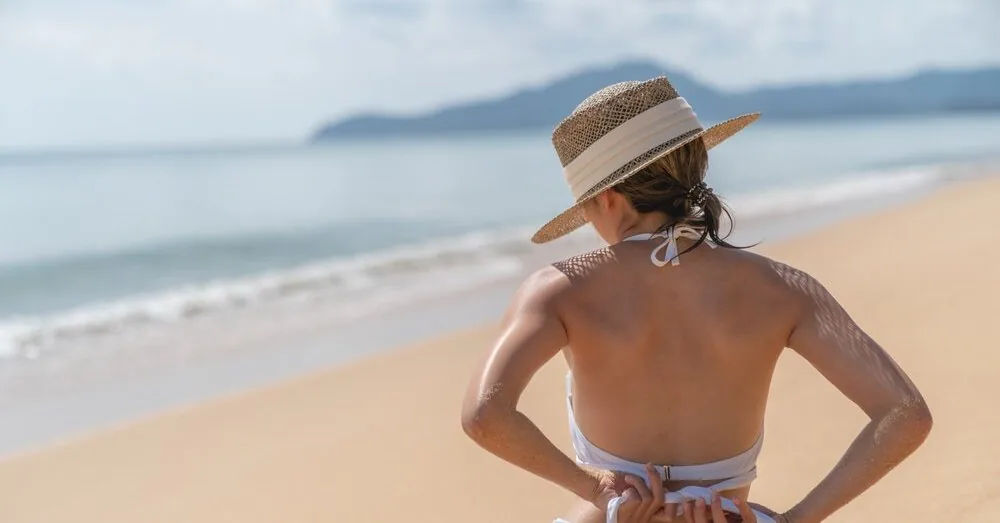
New research shows that fewer Spanish women go topless on the beach because they fear unwanted photos spreading online. A YouGov survey conducted last year showed that 37% of Spanish women said they often sunbathe topless, 13% do so occasionally, 9% only once or twice, and 40% say they have never done it.
Read more Hong Kong records highest temperature in observation history
This is less than the 2017 Ifop survey, when Spain led among eight surveyed countries, with 49% of women saying they regularly or occasionally chose to go topless, reports the Daily Mail.
This decrease surprised many Spaniards, as sunbathing topless or complete nudity on the country’s beaches is usually considered normal and a form of self-expression. However, the latest report from the Spanish newspaper El Pais shows that this trend is driven by a decreased sense of safety among women when sunbathing topless.
One of the survey participants, 44-year-old Maria, said: “It’s a vicious circle. Fewer women behave this way because they feel unsafe, and when others see fewer women doing so, they themselves are less willing to do it.”
Although the Spanish Ministry of the Interior states there is no evidence of a widespread problem on beaches, El Pais has received numerous testimonies from women about being photographed while sunbathing between 2008 and 2025, with these photos later being distributed online or among friends. Experts note that in recent years there has been growing concern about the phenomenon of “sex-spreading” – the distribution of sexually explicit photos online without the person’s consent.
Sociologist Silvia Semenzin agrees with the opinion that women feel less safe than in the 1980s, when public decency laws were first abolished in Spain.
Read more Houthis active in Yemen reported striking an oil refinery on the coast of Saudi Arabia
“Back then, being without the top part of a swimsuit was considered an expression of rebellion and sexual freedom,” she says. “Today we no longer have full control over our bodies: gazes are not limited to the beach, and sexual freedom does not go hand in hand with safety – something the internet does not provide us.”
58-year-old participant Monica said that she no longer goes topless on the beach. “At most, I can cover myself with a towel, but I don’t walk or swim without the top part of a swimsuit. Neither do my friends. Times have changed, and people are aware of the dangers associated with social networks,” she says. However, the women interviewed also mentioned that due to unrealistic beauty standards, they feel more constrained and increasingly face judgmental looks from others.
One young participant said: “I don’t think men or the photos they take of our breasts have anything to do with it. I think it’s something we impose on ourselves because we usually feel ashamed of our bodies.”
In Spain, toplessness and even nudity on beaches have been common for several decades. This practice is legally protected and culturally considered non-sexual, a natural expression of personal freedom. After the end of Francisco Franco’s conservative dictatorship in 1975, Spain underwent rapid social liberation. During this transitional period, public decency laws were abolished, making both going braless and complete nudity fully legal on all public beaches.
Read more Went nowhere with 5 garbage bags: how Milena turned a painful experience into a profession