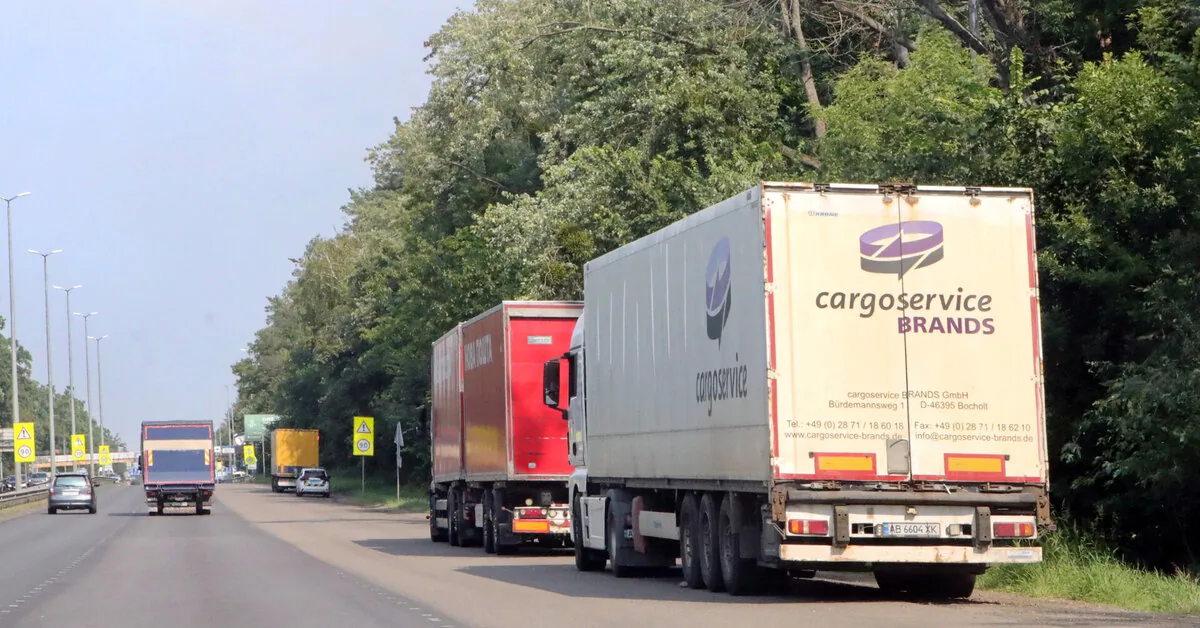
Valerija Savenkova, Commercial Director of the logistics company “Logistic Performance,” said that rising fuel prices have forced her company to reduce its geographical scope of operations, reports the Polish public broadcaster TVP.
Earlier this year, her company transported cargo across the country, but in the past month, due to Ukrainian drone strikes on Russian oil refineries, fuel prices have risen by 16–18%, causing the company’s transportation costs to increase by 4.5–5.5%.
“We managed to very quickly reorganize our logistics operations and abandon long-distance routes,” V. Savenkova told the news agency Reuters. “We no longer make deliveries through Russian regions. We are now focusing on shorter routes in the Moscow region and delivering cargo to the nearest ports.”
Despite the extensive Russian railway network, according to the state statistics agency Rosstat, more than 70% of all cargo in the country was transported by road in the first half of this year. Higher trucking costs increase inflationary pressure, and even if the situation stabilizes, industry representatives say no one expects prices to return to previous levels.
Read more Its temperature – to scorching heat: «I will pray for the final»
In July, when the fuel crisis reached its sharpest phase, freight rates increased on average by 12–15% compared to the previous month, and on some routes and in certain regions, the increase reached as much as 50%, with fuel accounting for about 30% of freight transport costs.
According to Georgiy Vlastopulo, founder of the logistics company “Optimalog,” customers are increasingly looking for alternatives to road transport. Demand for direct rail transport has grown by about 18–20%. Demand for sea transport has increased by 10–12%, he said.
Market participants fear that the price surge may become a long-term trend.
“Rates will not be reduced, we can say that for sure,” said G. Vlastopulo. “We believe that even if the situation normalizes and fuel supplies in the region become sufficient again, rates will likely decrease by no more than 7–10%. This is because transport companies will want to recover at least part of the losses they suffered due to lower cargo load factors and reduced fleet utilization.”
Read more Morauskaitė sprinting in the inflation race: «Strongly kicks in the butt»