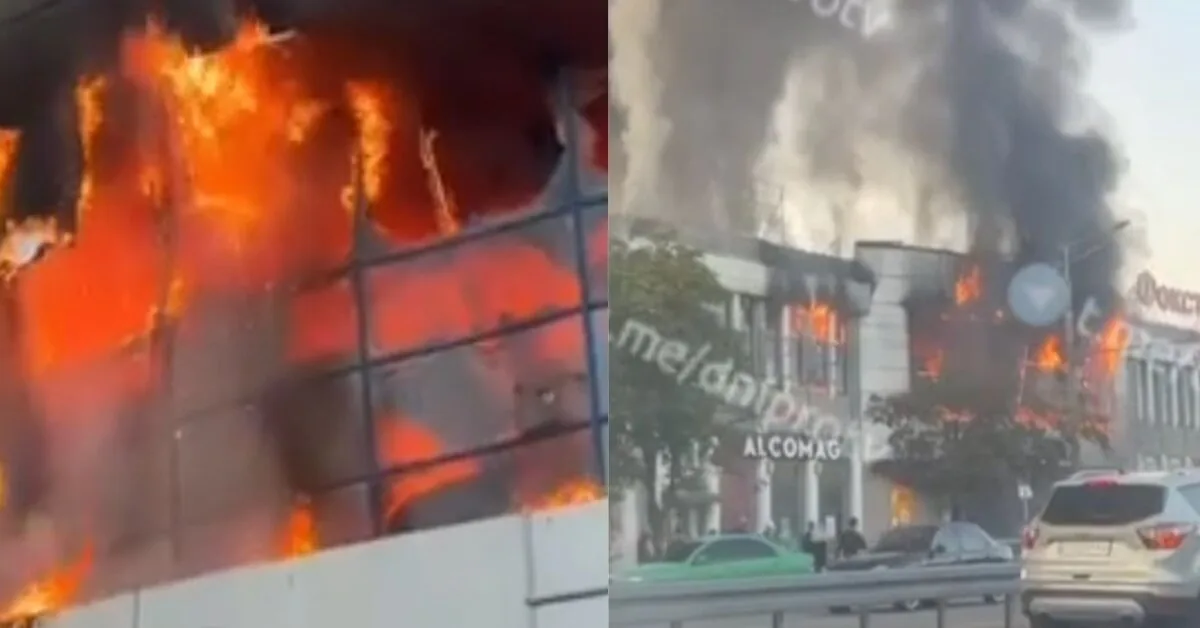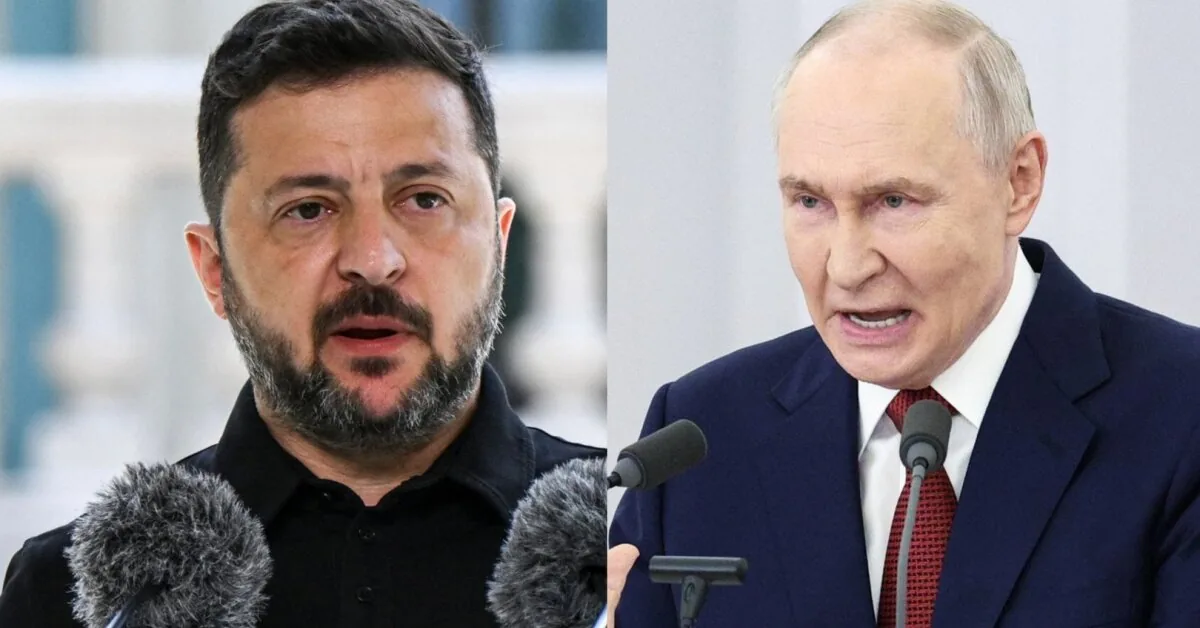
The publication, among other things, analyzes the 40-day strike campaign against Russia, which President Volodymyr Zelensky announced at the end of June, aiming to push the war deeper into Russian territory and pressure it to cease hostilities.
After that, Ukrainian forces significantly intensified missile and long-range drone attacks on Russian infrastructure, primarily oil and gas facilities, logistics centers, and military bases.
According to the Security Service of Ukraine (SBU), at least 100 successful combined strikes were carried out during this campaign. The farthest strike was delivered to an oil refinery in Omsk, located about 2,700 kilometers from Ukrainian-controlled territory. The facility was so severely damaged that it was forced to cease operations.
Drone warfare expert Alexandra Molloy from the University of New South Wales in Australia believes that Ukraine has significantly improved its capabilities both tactically and strategically during the war. According to her, increased drone production has changed the very logic of the conflict.
“They… have changed the entire defense equation. Previously, about a thousand drones were produced annually. Now we see forecasts that 10 million drones will be produced per year,” said A. Molloy.
The consequences are clearly visible from attacks on Russian oil infrastructure. In the first years of the war, three such strikes were recorded, in the second year – 13, and in the fourth year, their number already exceeded 130.
At the same time, Russia faced a decline in oil refining volumes and fuel shortages. In July, oil refining volumes dropped to the lowest level in more than two decades.
These problems are increasingly felt by ordinary Russian citizens as well. The article’s author explains that due to fuel shortages, the authorities were forced to introduce gasoline sales restrictions, and Russia began seeking additional supply sources abroad. Specifically, fuel was imported from Kazakhstan, India, Japan, and Morocco.
A completely new target of Ukrainian attacks recently became the logistics warehouses of Russia’s largest online retail company, Wildberries. About 20 company facilities were hit.
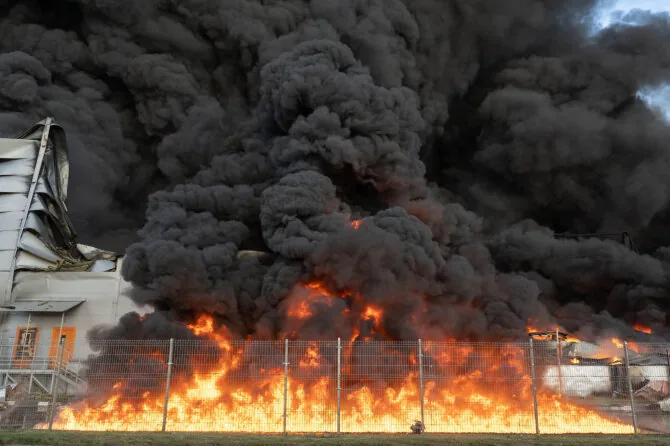
Expert Jennifer Parker notes that Wildberries is important not only to the civilian economy but also supplies certain equipment to the Russian military.
At the same time, Ukraine intensified attacks on military infrastructure. Recently, the SBU announced the destruction of a strategic bomber Tu-95MS, two Su-35 fighters, and two L-39 training combat aircraft.
Read more In the center of Vilnius, services were searching for a person who possibly jumped from the bridge
Ukrainian forces also continue to strike Russian logistics routes in the occupied southern territories of Ukraine.
J. Parker notes that the scale of the Ukrainian campaign has become a serious test for Russian air defense. According to her, the effectiveness of Russian defense systems turned out to be lower than expected before the war.
ABC News notes that the war is gradually transforming from a prolonged confrontation on the eastern front into a large-scale long-range strike competition.
Ukrainian drones provide the ability to attack targets at distances previously achievable only by expensive missile systems and combat aircraft.
Experts say that the development of unmanned technologies is already changing not only the course of the current war but also the entire concept of modern armed conflicts.
As previously reported by UNIAN, the intensifying air war between Ukraine and Russia results in increasingly effective strikes that damage economic infrastructure and increase civilian casualties.
According to United Nations data, at least 1,396 civilians were killed in the first half of this year alone – 37% more than last year. At the same time, the number of Russian missile strikes on Ukraine continues to grow.
It was also reported that the commander of the Unmanned Systems Forces, Robert “Madiaras” Brovdi, believes the war can only end by destroying five main pillars of the Russian war machine: funding, weapons production, rear protection, mobilization capabilities, and the illusion of stability.
He emphasized that Ukraine’s strategy must systematically and asymmetrically bleed the aggressor by consistently dismantling these components of its war machine.