









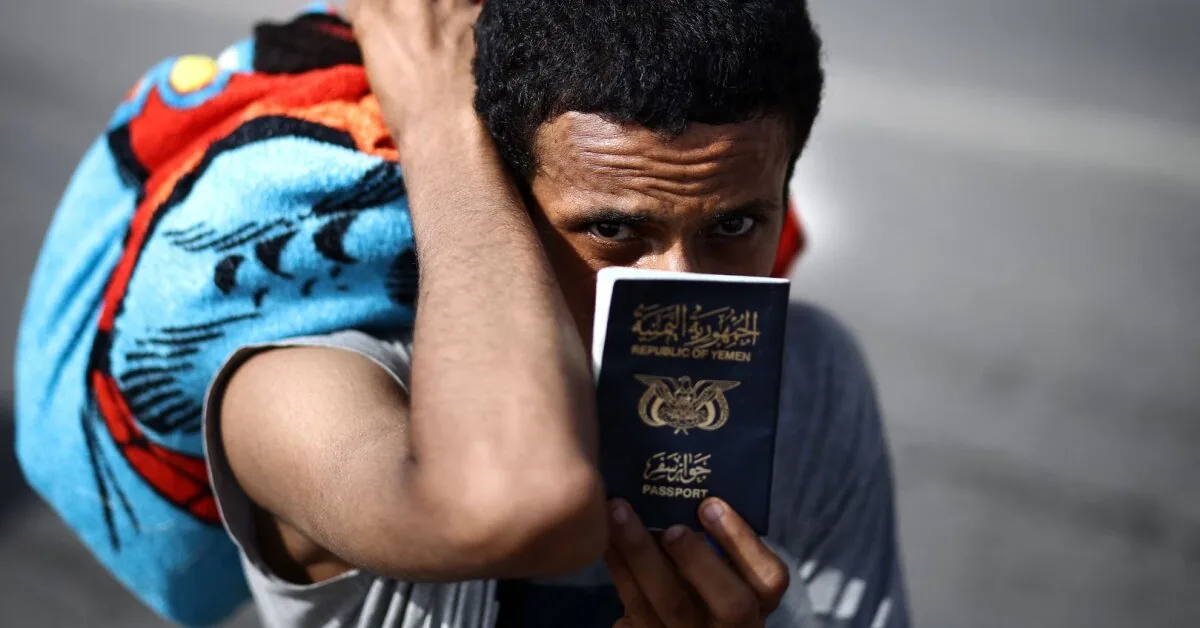
Without waiting long, the man joined the crowd of tens of thousands of people. He remembers that many were surprised to see Moroccan police urging them to “go to Spain.”
Read more Lithuania’s U18s were defeated by Estonians led by a «Žalgiris» talent
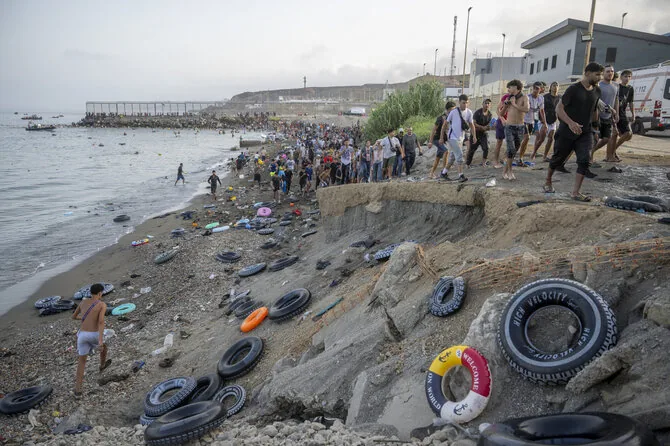
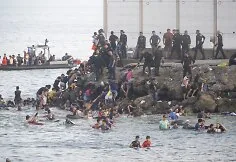
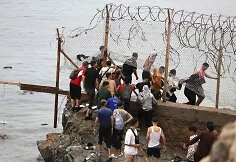
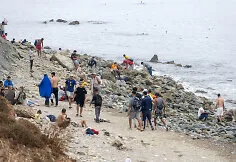
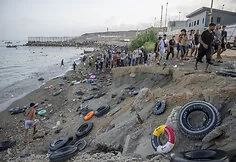
Some, like himself, climbed over the barrier, others crawled through holes in the chain-link fence, and a third group reached Spanish territory by swimming. Some wore wetsuits, splashing water with flippers, others simply floated towards the Spanish shores wearing orange vests and pink inflatable life rings. This chaos claimed at least 60 lives.
“A lot of people gathered,” said the 37-year-old man. “A very large number.”
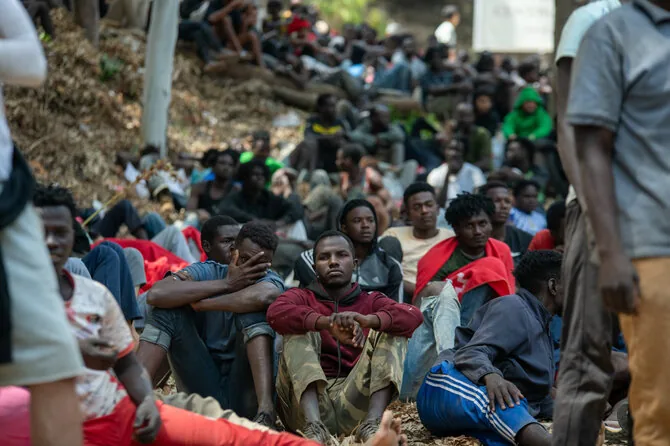
According to the Spanish Ministry of the Interior, Mohammed was one of about 50,000 people who crossed the border into the Spanish city early Thursday and Friday, a city with only 84,000 residents. This influx was more intense than at any time during the peak of the European migration crisis in 2015.
On Friday morning, images in the city embodied the extraordinary situation Europe had tried to avoid since the beginning of the mass migration era 11 years ago. It was the last time such masses of people surged into European-controlled territory, turning the continent’s politics upside down and prompting the rise of right-wing political forces opposed to immigrants.
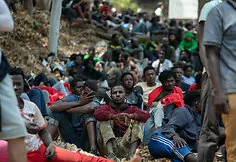
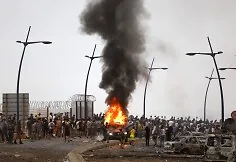
The city’s residents locked themselves in their homes. They locked their shops. Meanwhile, groups of young men with nowhere to go flooded Ceuta’s squares, avenues, apartment courtyards, observation decks, and basements.
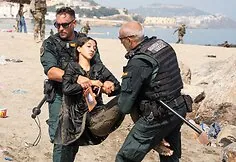

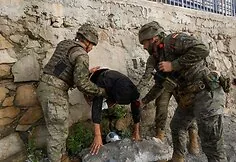
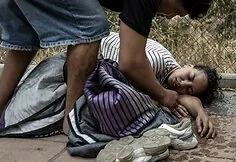
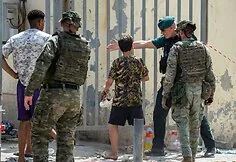
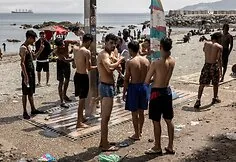
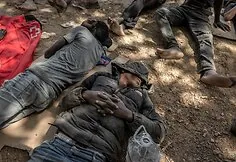
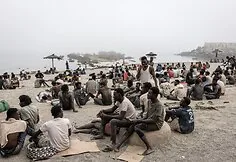
Some arrivals bathed while a Spanish Navy ship patrolled the waters, others waded through floating debris caught in the current—plastic bags and water bottles. Some Moroccans walked along the beach strewn with belongings of those who had come together: shoes, mobile phone cases, even a diving suit and an identity card issued in Casablanca were scattered among them.
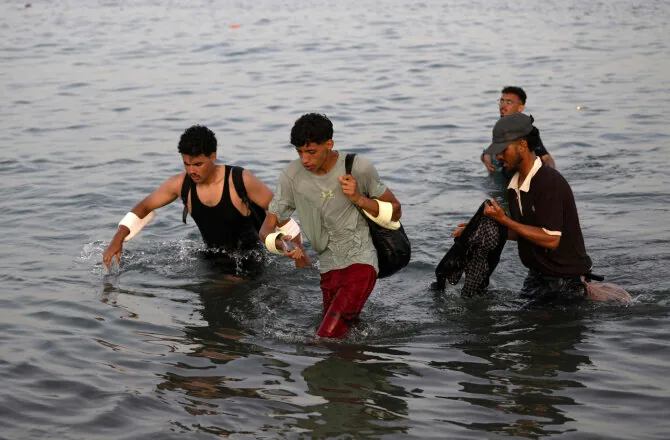
On Thursday, mobilized Spanish soldiers stood on nearby tanks. They watched migrants drinking water from beach showers, each shaped vertically like a surfboard and marked with slogans that had taken on an ironic twist: “Ceuta – where emotions lead.”
Nearby, amid the noise of patrolling helicopters, teenagers laughed, ready to try out the exercise equipment in the beach playground.
Mohammed stood bare-chested, wearing tight pink briefs, with a black shirt slung over his shoulder. After having to climb over rocks near the border, the soles of his feet were cut.
The journey, the man said, was pure disappointment. Like many others, he set out to find work but encountered soldiers and police who pushed him away.
“There is no water, no food, nowhere to sleep,” Mohammed said. “There is nothing.”
As migrants dispersed through the streets, locals hurried to hide in their homes. Shops and businesses did not open that morning.
68-year-old Francisco Perez, passing by the migrants, briefly went out to the street and hurriedly put his grandchildren into the car. He said his granddaughter asked why they couldn’t go to the beach and why there were “so many Moroccans” here. According to him, Ceuta’s residents were scared and angry at the Spanish government, which, he said, had abandoned them.
Spanish Prime Minister Pedro Sanchez tried to prevent such emotions and rushed to the exclave on Friday morning to show support for the residents and condemn the migrant influx as a “violation of Spain’s territorial integrity.”
Critics of right-wing views of P. Sanchez—both in Spain and across Europe and the world, including the White House—used this migrant crisis as an opportunity to condemn his pro-immigration policies.
This year, the Spanish government granted permission for more than 1 million migrants living illegally in the country to apply for legal residency status. His opponents claim this step helped attract even more migrants.
Videos showing migrants rushing into this small Spanish territory became a key argument for immigration opponents. Ceuta unexpectedly became an international symbol illustrating the dangers of uncontrolled illegal immigration.
In turn, P. Sanchez accused human traffickers of misleading migrants into believing it was easy to get asylum in Spain. According to the prime minister, despite his migrant-friendly policies, fewer migrants have tried to enter Spain illegally in recent years than some other European countries.
It is still unclear why such a mass of people arrived in Ceuta. Many Moroccans wandering around Ceuta on Friday speculated whether the border had been opened as part of some unknown Moroccan plan. This country has previously been accused of using migrant flows for political pressure.
Read more Unbeatable Argentine nut: Gaubas lost the semifinal in San Marino
“I don’t know why they let us through,” said 24-year-old Ajoub el-Arrotas, who also said he learned about the border opening from social media.
“Maybe they had some political reasons. They opened the border and let everyone through,” he speculated. “When political troubles arise, Morocco opens the gates and tells us to go.”
19-year-old Douae Tabit, who read about the possibility of crossing from Morocco to Spain on social media, said the news spread online like a virus and also spread rapidly by word of mouth, attracting people from all over Morocco.
The woman, fluent in English, French, and Spanish, previously worked as a nurse and photographer, so she spontaneously decided to take advantage of the opportunity.
After climbing over the fence and swimming to the Spanish shore, Douae admitted she expected a warmer welcome. According to her, no one had food, water, or a place to sleep. Still, she declared: “I will not go back.”
It seemed many did not even know exactly what they were doing in Ceuta.
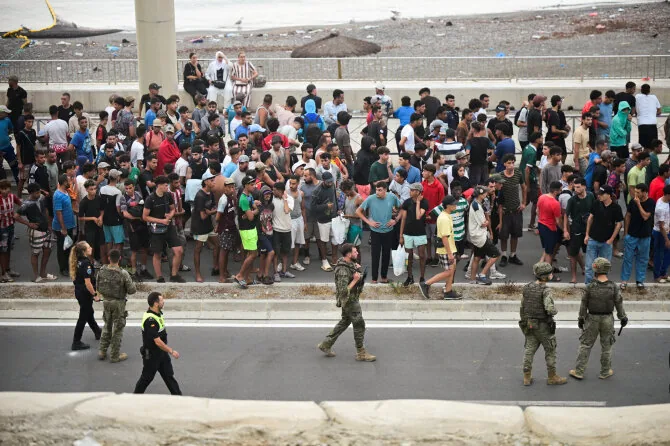
Young men, having taken off their outer clothes or wearing football shirts, marched barefoot, sometimes with only one sandal, as if participating in a procession without direction.
One teenager gently knocked on the gates of a closed food market, while others wandered around closed shopping centers, looking longingly at their doors.
As the afternoon approached and the scorching sun dispersed the clouds, the men had to seek shade wherever possible. One group gathered under a huge statue of Hercules near the port terminal. Others leaned against columns at a gas station or hid under abandoned empty tents set up for the local food market.
There were also those rummaging through trash containers looking for food or asking passersby for water. One woman fainted near the “Zara” clothing store.
15-year-old Ceuta resident Sulayman Ahmed, of Moroccan descent, admitted he could not believe Morocco was letting in such a large number of people.
“They need to allocate more resources to stop the flow of people,” the teenager noted, complaining that politicians, including P. Sanchez, appearing at the border is just “theater.”
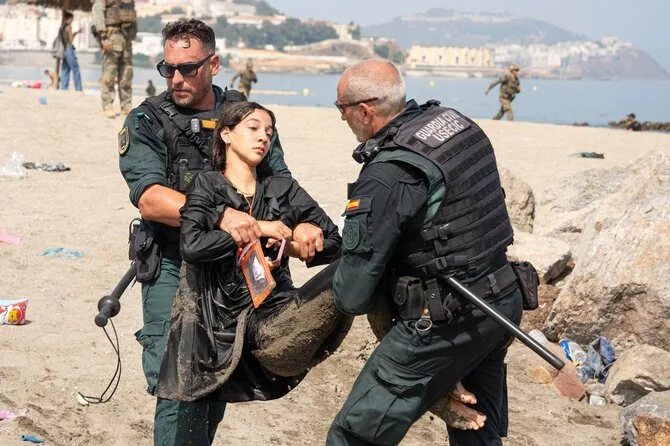
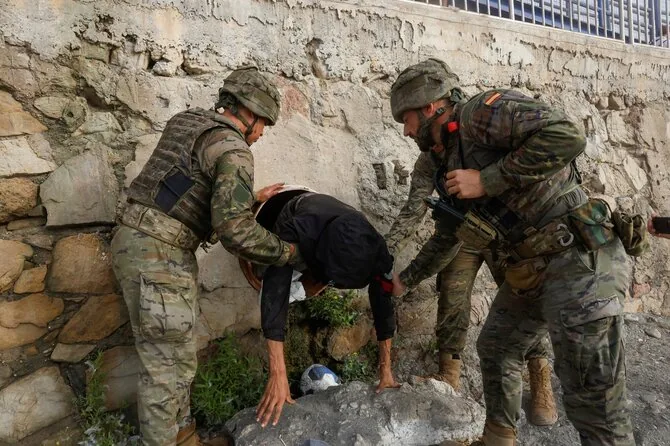
By midday, it became clear that many migrants were leaving Ceuta. Along the promenade, they gathered around Spanish soldiers who, connected to loudspeakers via mobile phones, broadcast messages in Arabic urging them to return home.
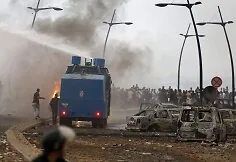
Other Spanish soldiers and police officers tried to enforce this by force, threatening migrants and waving sticks to push them back to the border. Groups of young Spaniards roamed the city, chasing and intimidating Moroccans who lagged behind others.
When individual arrivals were still wading through the water late at night, Moroccans were already being massively returned.
According to the Spanish Ministry of the Interior, by 6 p.m. local time, about 48,300 people had been returned across the border.
They had to cross a small beach stretching between the border fences of both countries. The sand was littered with clothes and plastic bags. Spanish soldiers shouted at migrants to leave Ceuta. Then they passed through iron gates with barbed wire and floodlights. They were back in Morocco.
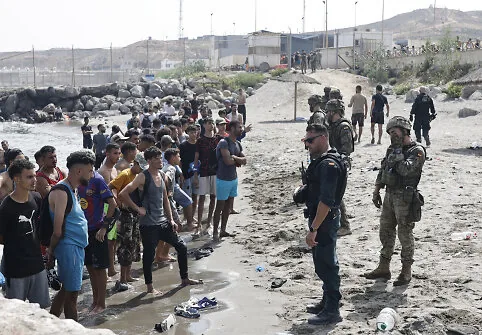
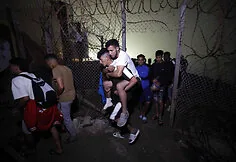
Mohammed moved along with the long line and felt disappointed by his adventure on the other side of the border.
“They had nothing for us,” he said. “They just shouted: ‘Get out of Spain!'”
Read more The rain will retreat, but the warmth will not decrease
This article was published in The New York Times.
© 2026 The New York Times Company