







According to the embassy, the “Kyiv terrorists” wanted to “scare Italians working in Russia and show them that they are also targeted and can become other victims of the perpetrators.”
Read more Taurimas Valys discussed investment opportunities in Lithuania with an Israeli defense company
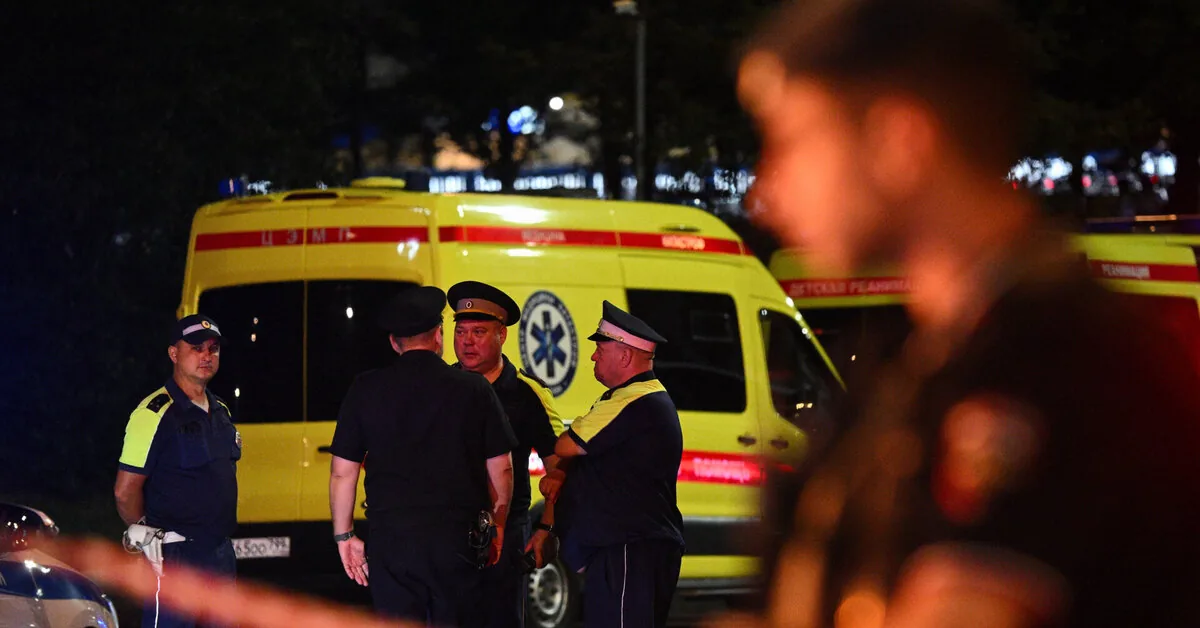
The embassy stated that five people were killed and 19 others injured in the attack carried out on Saturday evening at the “Balzi Rossi” restaurant, adding that the Italian chef and his staff were unharmed only due to the “vigilance and selfless dedication to their professional duty” of a Russian security guard.
Ukrainian officials have not yet commented.
The Russian National Anti-Terrorism Committee, which coordinates the activities of various security agencies, initially reported a lower death toll – that three people died in the bomb explosion. It was stated that a woman who brought the explosive device into the restaurant, the security guard who stopped her, and one guest inside were killed, and 21 others were injured.
The committee did not specify who the target was or name the organizer, only saying that the bomb exploded near the restaurant entrance.
Moscow Mayor Sergei Sobyanin called the explosion a “cruel act of terror” on Sunday but did not say who was responsible.
The mentioned luxury restaurant is located on the first floor of a multi-story residential building – one of the seven Moscow skyscrapers built during the Soviet dictator Joseph Stalin’s era.
The Russian Foreign Ministry did not respond to a request to comment on the embassy’s statement and did not explain the higher death toll. The ministry has not issued its own statement about the incident.
Several Russian media outlets claimed that the attack was aimed at a Russian general who was celebrating his birthday at the restaurant. Some reports say this officer is Colonel General Alexander Chaiko, recently appointed commander of the Russian Aerospace Forces. These claims have not been independently verified.
Read more Forest fires in Europe: tourists reminded about evacuation kit
Russian officials blamed Kyiv for a series of previous bombings and other attacks against high-ranking military personnel after Moscow sent troops to Ukraine in February 2022. This year, the Russian Federal Security Service announced that it would tighten protection for high-ranking military and government officials following the attacks.
In February, Lieutenant General Vladimir Alekseyev, deputy head of the military intelligence service GRU, was shot three times near one of Moscow’s apartment buildings but survived. Ukraine denied involvement.
In December, a car bomb in Moscow killed Lieutenant General Fanil Sarvarov, head of the Operational Planning Department of the Russian Armed Forces General Staff. Ukraine refrained from commenting at the time.
In April 2025, a car bomb blamed on Kyiv killed Lieutenant General Yaroslav Moskalyk, deputy head of the Main Operational Directorate of the Russian General Staff. Ukraine did not claim responsibility for the attack but hinted at its involvement.
In December 2024, a bomb hidden on a scooter killed Lieutenant General Igor Kirillov, who led the Russian military’s nuclear, biological, and chemical protection forces. This is one of the few attacks that Ukraine openly admitted to carrying out.
Among other known bombings in Russia, victims include Darya Dugina, daughter of influential nationalist Alexander Dugin, and Vladlen Tatarsky, a well-known pro-Kremlin war blogger. Kyiv denied involvement in the attack on D. Dugina and avoided commenting on the attack on V. Tatarsky.
Read more A popular nightclub is closing in this city: «This is not a trick»