Educational research increasingly emphasizes that children’s success depends not only on academic achievements. According to OECD data, social and emotional skills such as self-control, stress resilience, cooperation, and curiosity are associated with better learning outcomes, greater well-being, and more ambitious future plans.
Read more The price of life – two bottles of vodka
Therefore, summer can be a good opportunity to develop what school time does not always allow: self-awareness, self-confidence, and the ability to work with others.
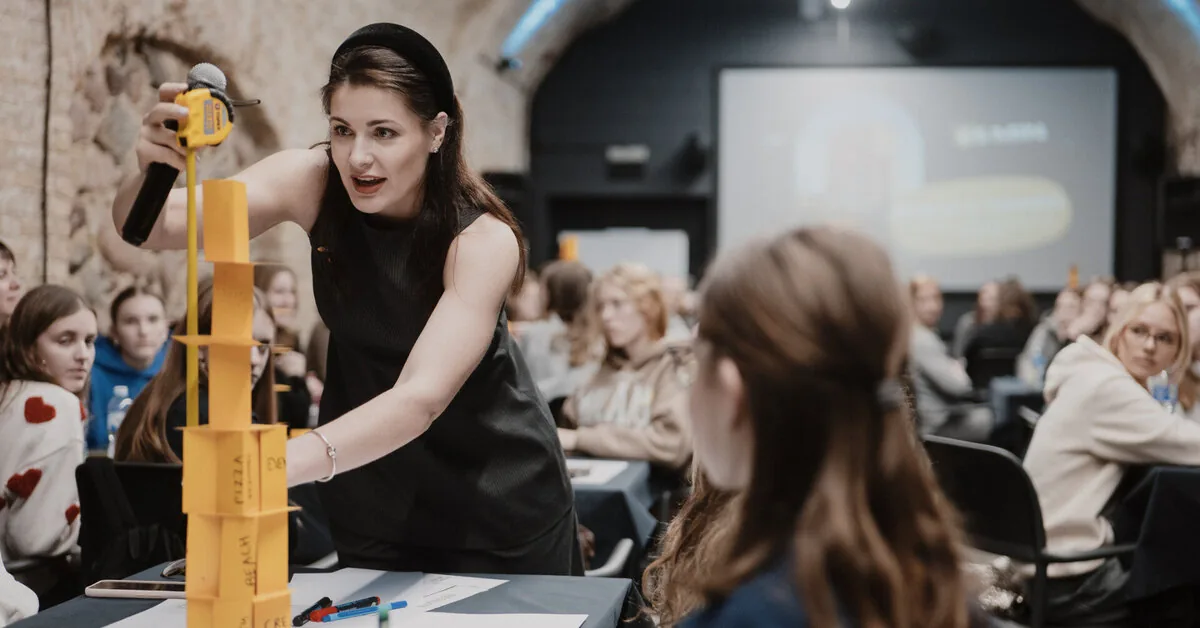
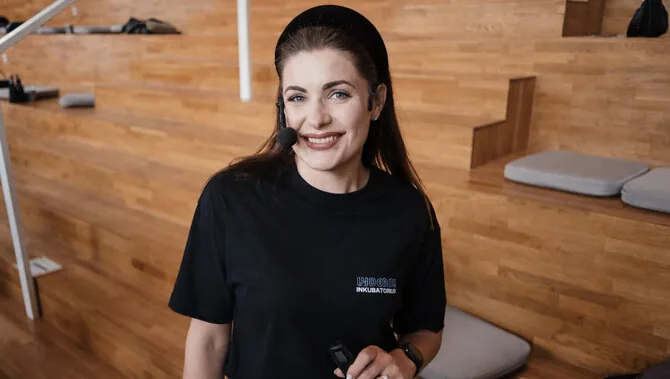
“It is very important for a child to experience environments where they are not judged only by grades, results, or mistakes. Sometimes the greatest growth begins when a child sees what they already do naturally well,” says Marija Šulskė, founder of the leadership development organization “Lyderių inkubatorius,” who has been creating educational and experiential programs for children and adolescents for over a decade, in a press release.
A child is not a project that needs constant fixing
Parents often want to help their child, so they naturally notice where the child still needs to try harder: to concentrate better, be braver, communicate more actively, trust themselves more. However, according to M. Šulskė, it is equally important to help the child see not only what needs to be “fixed” but also what is already strong.
“When a child recognizes their strengths, it is easier for them to understand how they function in a team, what gives them energy, where they can trust themselves, and how to express their thoughts more boldly. This is especially important in adolescence when self-esteem is still forming,” she says.
Working with youth, M. Šulskė recommends parents start with simple questions that the child can easily answer. Not as a test, but as a natural conversation.
Five questions that can help a child notice their strengths:
1. What are you good at?
This helps the child start with a simple observation, not from what they do wrong, but from what they already can do.
2. What do you like to do?
Children often find it easier to talk about activities than about their traits. Through favorite activities, curiosity, creativity, persistence, or communication skills can be noticed.
3. What do others often praise you for?
Sometimes others notice a child’s strengths earlier than the child themselves.
4. What seems easy to you, although it may be difficult for others?
This helps recognize abilities that the child may not consider special.
5. When was the last time you felt proud of yourself?
This question allows the child to recall a specific situation where they felt strong, brave, or independent.
“Such questions can open a deeper conversation. But questions alone are often not enough. For a child to truly begin to understand their strengths, they need a safe environment, experience, reflection, and the opportunity to try out those strengths in real life,” says M. Šulskė.
Why is it not enough just to tell a child ‘you can’?
According to Indrė Česūnienė, leadership and management consultant at “Triple O Consulting” and certified “CliftonStrengths” practitioner, it is important for a child not only to hear that they have strengths but also to understand how these manifest in real situations.
Read more As sports organizations open doors to Russia, Lithuania and other EU countries urge to stop funding

“We are at our best when we turn our innate talents into strengths. However, talent itself is not yet a strength. It needs to be noticed, understood, and learned to be applied in practice,” says I. Česūnienė.
She states that it is especially important for adolescents to gain clarity about themselves in simple, understandable language. Not with complicated concepts, but through specific questions: how do I think, how do I act in a team, how do I face challenges, where am I strong, and where can my strength become a challenge if I do not understand it.
This is exactly what the international “CliftonStrengths for Students” test is about. Its logic is simple but powerful: a child should not be judged only by what they lack. They can start with the question of where their natural potential lies.
“CliftonStrengths” is not a test that assigns a child to one type. It helps recognize natural patterns of thinking, feeling, and acting, divided into 34 strength themes. The student report not only shows strengths but also helps understand where they can be powerful, what to pay attention to, and how to apply them in studies, relationships, leadership, groups, and decision-making.
According to I. Česūnienė, this is where the real work begins. “It is not enough for a child to receive the result. If they see five strengths but do not understand how they manifest in everyday life, the report remains just a nice document. My goal is to help the child decode their potential: what it says about me, how it can help me, where I need to be more attentive, and how I can use my strengths to achieve goals,” she says.
Summer as a safe space to try oneself
According to M. Šulskė, a quality summer program should not be just an occupation or entertainment. It can become a kind of laboratory where a child learns to cooperate, make mistakes, reflect, take responsibility, and find their voice in a safe environment.
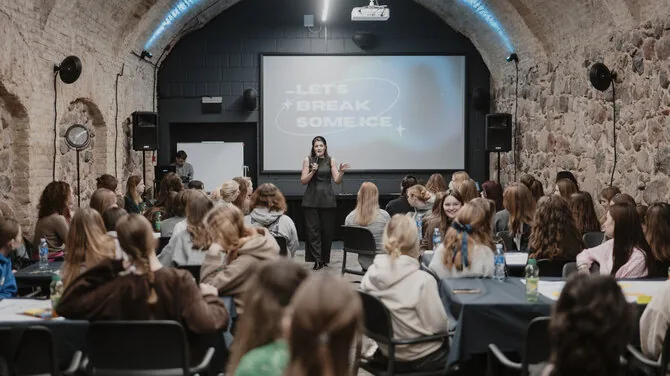
“Learning does not happen when a child just listens to a lecture about leadership. It happens when a child has real experience: agrees with a team, solves a challenge, sees their reactions, receives feedback, and tries again,” she says.
Therefore, experiential learning becomes increasingly important: activities where children learn through action, relationships, creativity, movement, team challenges, and reflection. Such experiences help develop not only self-confidence but also attention management, emotional resilience, creativity, and the ability to be with others.
This direction is continued by the leadership program organized by “Lyderių inkubatorius,” where youth will not only take the “CliftonStrengths for Students” test but also learn to empower their strengths practically with mentors. The program combines self-awareness, mentorship, reflection, team tasks, creative workshops, and experiential learning.
“It is important to us that strengths do not remain only in the report. The child must experience them: in a team, creativity, challenges, communication, situations that require courage. Only then does self-awareness become a real support,” says M. Šulskė.
Not just rest, but growth
Summer should not be another intense learning season. Children need rest, freedom, and play. However, rest can also be meaningful: helping to step away from screens, school pressure, constant comparison, and at the same time discover more self-confidence.
“Leadership for children is not about a title or being the loudest in the group. It begins with the ability to know oneself, dare to act, and take responsibility for one’s choices. If a child returns from summer not only rested but also more confident, that is already great growth,” says M. Šulskė.
Read more VAATC begins the takeover of the Vilnius waste sorting plant