






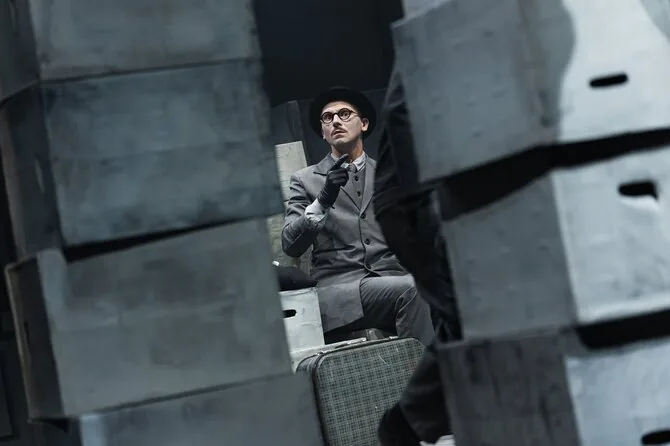
The story told by “The New Tenant” is very simple – a man moves into an apartment, and with him comes a multitude of his belongings. The creators of the play seem to have packed the entire burden of life – pleasant, oppressive, and increasingly heavy over time – into the countless boxes of the tenant.
Read more After a deadly summer – a plan on how to respond to extreme weather conditions
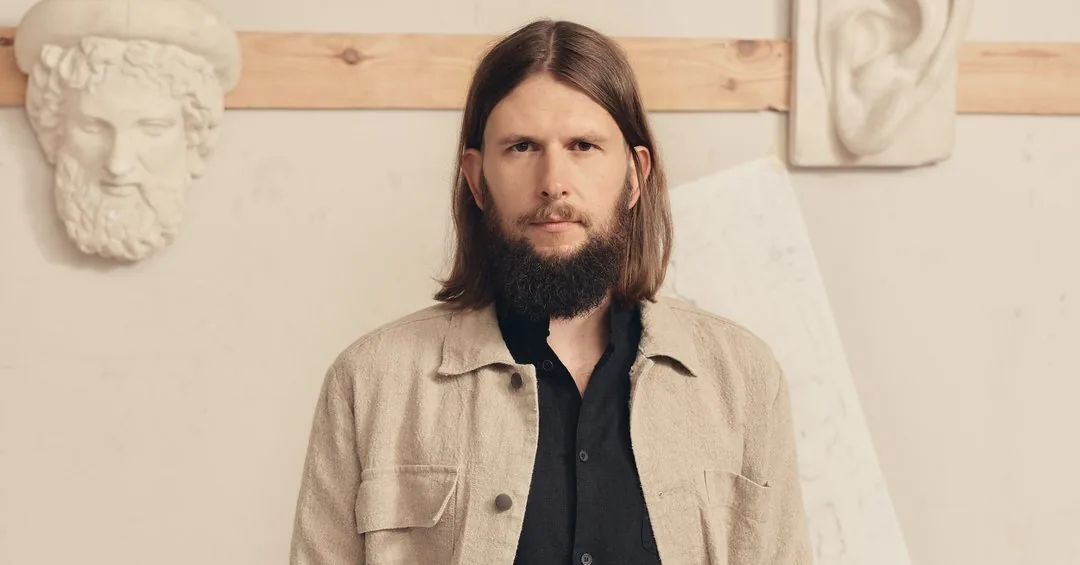
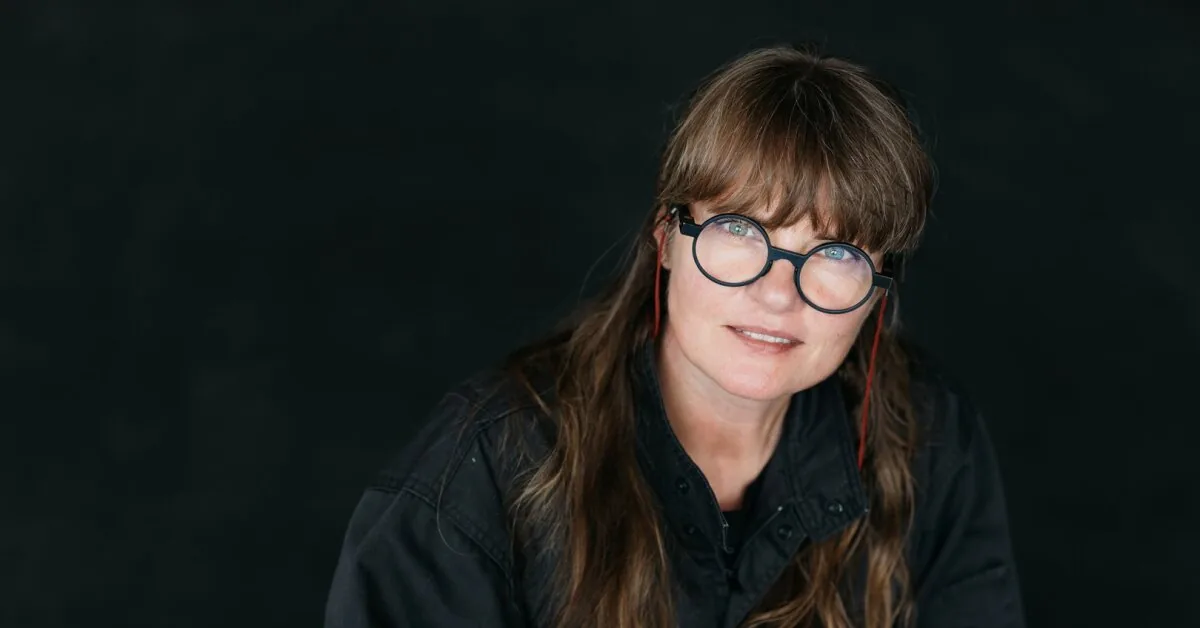
Invited for an interview, R. Valčik emphasized that the harmonious teamwork of the creative team was extremely important in creating the stage design for “The New Tenant,” as the scenography comes to life only through joint efforts with video projection artist Tomas Stonys and lighting designer Paulius Jakubėnas.
– Tell us, what kind of world did you have to create for this play, what makes it special?
– The director integrates everything very comprehensively in the play – he is very sensitive to sound, sensitive to visuals, broadly interested in art, music, theater, anthropology, etc., and E. Ionesco’s play offers a lot of space for interpretation. I am grateful to work under such circumstances. The most important thing for me is to respond to the director’s ideas, how he interprets the play. Žilvinas wanted to open the tenant’s boxes and see what is accumulated inside. That was very intriguing. The play can be divided into three parts – the first is a very respectful gesture to the author, in the second, as the boxes move, our interpretation enriched with circus elements begins; this part includes a lot of acrobatics, which turns into complex choreography, and finally, in the third part, the boxes open and various motifs, desires, memories, secrets fall out. It is quite a challenge to reveal all this on stage without overloading the theater with objects. I care a lot that the scenography is not monolithic or immovable; I want it to be quickly assembled and disassembled, not overly burdening the theater’s technical staff, but this time a compromise will be reached. I understand how difficult it is to service such plays – the discipline, preparation, and harmony it requires. Showing the play will require a lot of human resources and concentration – it contains a lot of video material, lighting, various installations, and it is very important to control everything precisely. We simplified and refined everything as much as possible, but so that the visual concentration needed for the play remains.
– Have you worked with E. Ionesco’s works before?
– I created scenography for Giedrius Kuprevičius’s opera based on E. Ionesco’s drama “The Lesson” with the Klaipėda Youth Theatre. From that process, I remember that the absurd genre allows for a lot of diverse imagination, for example, one character can be portrayed by four performers, four people can fit into one dress. Absurd plays allow the use of grotesque style, exaggeration, going through effect – working with them is very fun to stimulate the creative muscle and play. Psychological theater usually has a much clearer and more finished form. And exaggerated form can distract and even be excessive, overshadowing subtle emotional matters.
– You mentioned that teamwork is especially important in this play; can you explain this further, since nowadays many plays involve video projections, very important lighting, music?
– Speaking about “The New Tenant,” everything is incredibly intertwined here, almost impossible to separate. I create the surfaces, and Tomas Stonys prepares the projection on them. These surfaces must be precisely thought out and prepared – projections fall on the decorations and sometimes even dictate them. We have to work hand in hand; for example, Tomas cannot prepare the video until the decorations are made, and I cannot do some things until I know what the frame will look like and how much space it will need. It results in a very specific, collage-like work. The same goes for lighting designer Paulius Jakubėnas, whose lighting gives volume to the scenographic objects. We share sketches and drawings, decide together on sizes, materials, and textures. The peculiarity of collaboration can be compared to textiles – how many threads it contains. Participating in this process, in various technical laboratory searches, was very interesting to me.
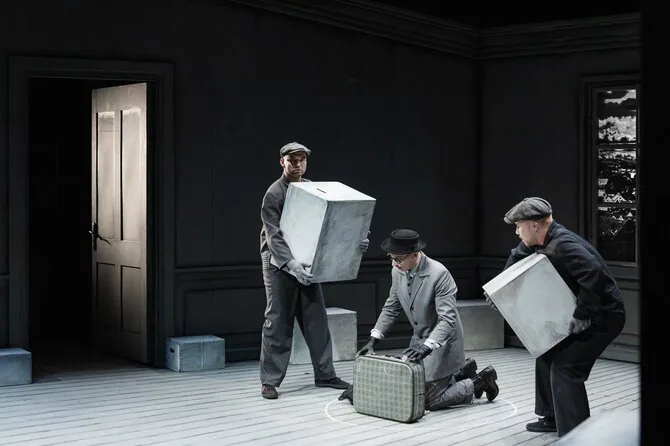
– From the photos of the play revealed so far, it is visible that the characters themselves merge with the objects, giving the impression that the scenography will be very active and definitely not illustrative in nature?
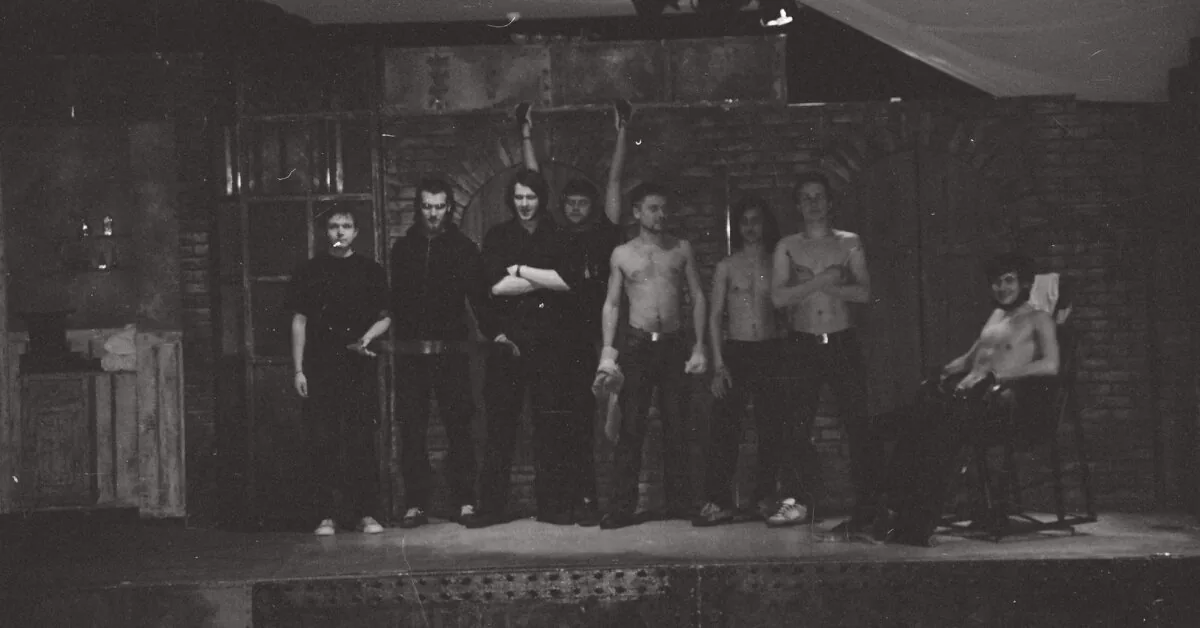
– I would even say that this time the scenography is more like a composition with a staging aspect than scenography as an organized space. Such a composite picture. An actor on stage can merge with an object, so on stage everyone becomes equal elements – in a group of figures, there is a living character and an inanimate object, a box, a doll. There is a play with scale – the actor becomes a mannequin or an object, and likewise, an object becomes the actor’s copy, replaced by a doll. The scale of space changes, playing with wide and close-up shots, for example, a large room suddenly shrinks dramatically. Many things in the play come from cinematography, dictated by projections, lighting, playing with montage principles, and using the aesthetics of silent, black-and-white cinema.
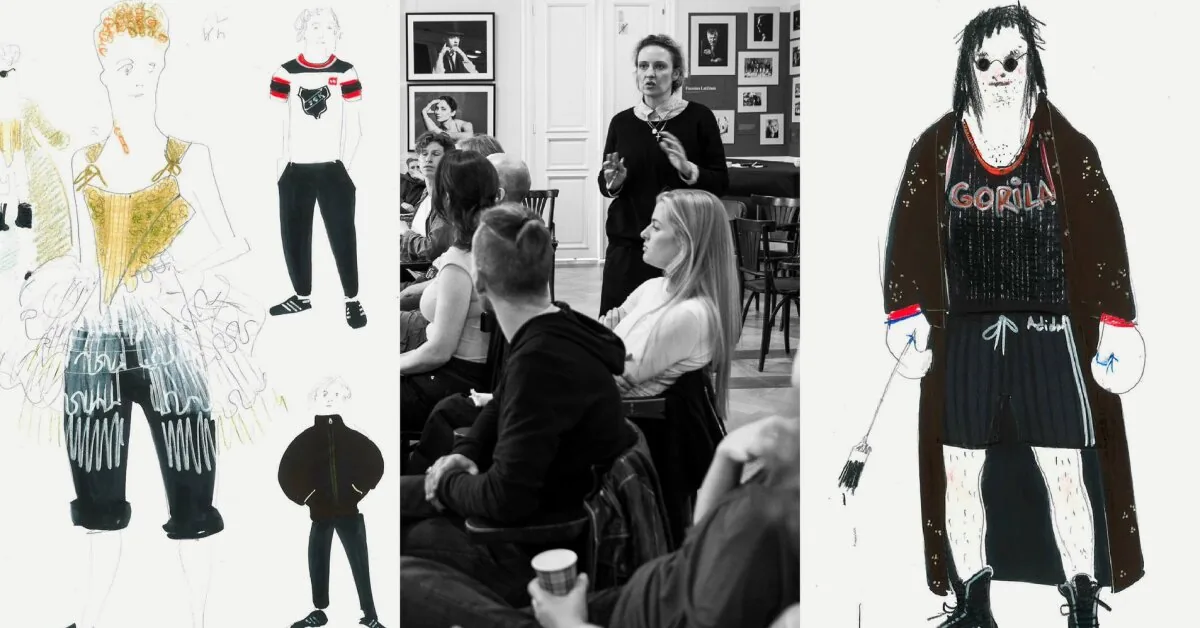
– The physical aspects of this play are very important, but you are also its costume designer, probably it couldn’t be otherwise in this type of work? What was important to encode with the costumes you created?
– Yes, everything is very connected; the character is part of the stage design, another element of the whole. It was important that the costumes did not refer to any specific era, like in paintings by René Magritte or Salvador Dalí, where people seem suspended in time, abstract. Watching the play, it will be hard to say what kind of costume or hat it is, but any references to space or time are erased. The characters are eternal, like the cycle of Samsara – they were, are, and will be. Just like the story of “The New Tenant” itself – the plot has a beginning and an end, but one can imagine it happening continuously, without pause. A kind of Groundhog Day. Also, the objects used are neutral; of course, there are certain shapes, like suitcases, but ours look as if drawn by a child – a box with a handle.
The only condition we had from the start was that all reality is black and white, gray, and the variety of colors appears only in the suitcases and boxes. Because of this, the tenant’s memories seem more real than the character himself.
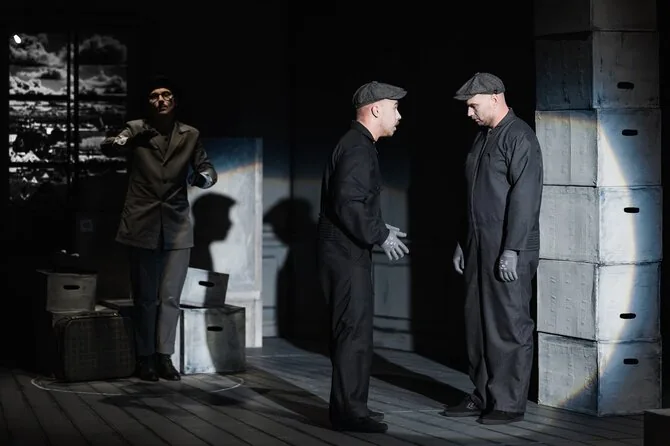
– You highlighted the cinematographic quality of “The New Tenant.” Some of the actors also mentioned that the audience will see images that can only be encountered on screen. In your opinion, what makes the fantastic world view on stage special compared to screen possibilities?
Read more Did Russia deliberately send a «Gerberos» drone to Lithuania? An expert suggests another version
– This play is very theatrical, theatrical in the literal sense – it creates an illusion, and that is our key, the very essence of theater. There is an actor on stage, but he is like a completely different person there – the character of the play. Looking at a certain configuration of objects and lighting, we believe that we see a reality that once existed or is otherwise possible. In theater, manipulation with objects, lighting, music creates the illusion of time, place, era, even emotional state. Theater is the art of illusion – a light object becomes heavy, a heavy one light, a big one small, and a small one big. When Philippe Genty’s theater visited Lithuania in 1996, I sat with my mouth open – I saw that they, like illusionists, put trick upon trick throughout the play, I realized they create the illusion with millisecond precision, but still, like a child, I believed what I saw and felt extraordinary sweetness. I still remember that strong feeling, the great pleasure of experiencing wonder, believing in incredible things. Children have this, and I think it is a very beautiful quality that would be good to keep as adults. So here, in “The New Tenant,” we take the opportunity to create an illusion, to give the audience a chance to feel a sense of wonder. It was very strange to me when the play “Alice in the Mirror Kingdom” was classified as a children’s play; I think it is suitable for everyone. We tend to associate playfulness with children, but it can also be in adult theater.
– This insight of yours seems important – a life lacking a sense of wonder and playfulness can become very dry.
– I believe that by preserving the sense of wonder, we soften, do not become rigid, have less anger. Everything inside us softens, and we become more empathetic and open. I think wonder is what opens and unlocks every person. So, theater in this case can be like a kind of therapy – people gather in the theater hall and experience a sense of wonder together.
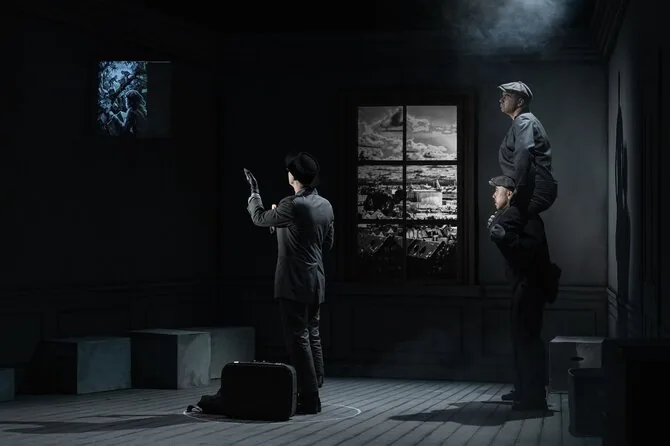
– Which of your thematic layers resonates most with this play?
– “The New Tenant” contains a lot of ambiguity. One perspective of seeing it is related to “what”: the action itself, when the increasing number of objects begins to overpower the person. Although there is no classic “man versus man” conflict, the conflict becomes “man versus the world of objects he created.” This conflict turns into trauma. This trauma can be related to parents, old age motifs, unfulfilled loves, unfulfilled dreams, various phobias, existential questions. But there is another perspective revealed through “how”: the way everything is conveyed – through object theater, which includes puppets and pantomime; through technology theater, which includes video scenography and new circus elements. There is a lot of playfulness in how everything happens. So watching the play, one can choose one or the other perspective – to think more deeply but also to laugh. Such multidimensionality and multilayeredness of the work allow for the emergence of meanings and interpretations.
– Finally, a very practical question, “The New Tenant” is a play about objects, telling about the objects that tend to dominate life; the play’s scenography is complex, with many objects and their combinations – this raises the question of sustainability in theater. Is this topic important to you, and how much is it reflected in this work?
– From my experience, I know how much remains with each play. I can already predict the load and scope. In this case, I asked to use old decorations wherever possible, so, for example, for the room decoration, we used panels from a decommissioned play’s decorations, cutting and repainting them. Similarly, we collected old suitcases from people, bought them for pennies in thrift stores, trying to buy as few new things as possible. The props used in the play were made economically, without using many new technologies – we used old classic papier-mâché techniques, fabric scraps from theater warehouses.
It is a huge gift to have a good team of craftsmen in the theater. I was assisted by people devoted to the theater, with golden hands, endless patience, and who do not count their time. Among them are the theater’s chief artist-decorator Daiva Dašenkovienė and the head of the production department and carpenter Gintautas Jokubauskas. The play required a lot of manual work, but with a great team, everything was possible. If the value of a play is measured by how much time and meticulous work is invested – then “The New Tenant” is a very valuable play.
People working in theater are special; if a tailor, carpenter, or other craftsman is needed here – they must be specific. It will not be an ordinary carpenter or an ordinary tailor. Here art meets craft, mastery. These people have an artistic vein – often things are constructed and shaped experimentally, much is done not according to rules but by searching.
Sustainability and ecology are very important to me, and I advocate that decorations be easily recyclable or disposable, so that leftovers like construction materials can be reused for other plays, but of course, good craftsmen are needed for that. Therefore, I believe that theater must focus on human resources and not let go of people with great experience.
The premiere of the play “The New Tenant” at Klaipėda Drama Theatre on September 18.
Director Žilvinas Vingelis, scenographer and costume designer Renata Valčik, composer Andrius Šiurys, video projection artist Tomas Stonys, circus choreographer Kęstas Matusevičius, lighting designer Paulius Jakubėnas, artist assistant Aistė Alksnytė, translated from French by Laima Rapšytė, director’s assistant Marius Pažereckas.
Starring Jonas Baranauskas, Kamilė Andriuškaitė, Karolis Norvilas, Liudas Vyšniauskas.