Daily expenses take up a larger share of Lithuanian residents’ budgets
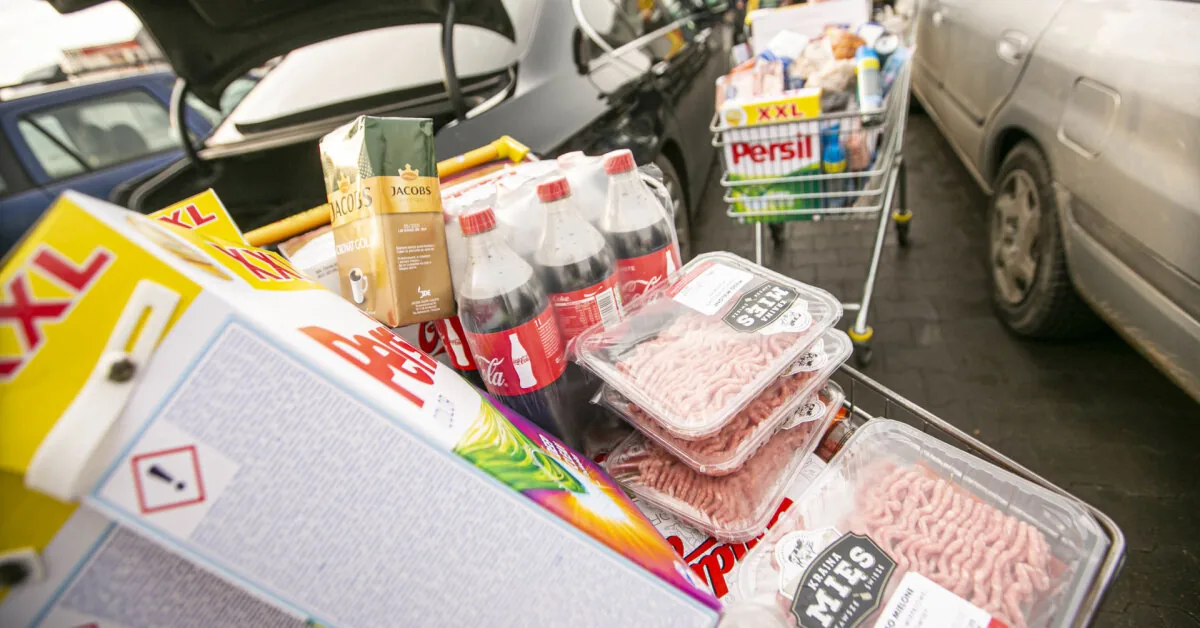
Additional pressure is created by the fact that a relatively large portion of Lithuanian residents’ budgets goes to expenses that are usually hard to avoid. According to the latest Eurostat data, Lithuanian households allocate 18.6% of all consumption expenditures to food and non-alcoholic beverages, while the EU average is 13.2 percent.
Read more It wasn’t 20 years: physically suffering Djokovic did not pass the first stage
Another 15.2% of Lithuanian household consumption expenditures go to transport – by this indicator, Lithuania is second in the EU after Slovenia. This means that food and transport alone in Lithuania account for almost 34% of consumption expenditures, compared to about 26% EU average.
This is especially felt in September, when expenses for children’s education or the start of studies are added to the usual food basket and commuting costs. This year’s “Norstat” survey shows that almost three-quarters of parents plan to allocate more than 100 euros for one child’s school supplies basket, and three out of ten expect to spend more than last year.
In September, savings are more often used
Analysis of “Bigbank” data from July–October 2024–2025 shows that in September the number of new savings deposits, compared to August, halved, and the average newly deposited amount was about 29% lower.
In the first half of September, clients were also more likely to withdraw money from savings deposits rather than add to their savings.
“Savings deposit money often serves as a daily financial reserve: a person directs part of their salary there, saving for vacations, a bigger purchase, or unforeseen expenses. In September, we see the opposite movement: less is deposited, and the accumulated money is used more actively. This quite clearly shows that some people use previously accumulated financial reserves for early autumn expenses,” says Ieva Rogozina, head of daily banking at “Bigbank”.
Read more INVL funds and „Tesonet“ allowed to acquire Northern Lyceum schools and kindergartens
However, the statistics for term deposits look completely different. Their number in September remains similar to August and even grows by a few percent, while the average newly deposited amount in September is about 43% higher.
This is explained by the fact that term deposits are usually allocated larger sums previously accumulated for bigger purchases (housing or car), so their short-term seasonal expenses do not affect them as strongly.
Financial September begins already in summer
It is also interesting that clients most often apply for consumer loans not in September, but already in summer. This suggests that financial pressure gradually increases: part of the bigger expenses is incurred while still on vacation, and in September, with a reduced free cash reserve, the “September hangover” begins.
Price increases also increase financial pressure. According to the State Data Agency, in July 2026 the annual inflation in Lithuania was 5.9%, pushed up by prices of transport, public catering, and holiday trips – expenses especially relevant in summer.
“Still, the biggest mistake is to consider September expenses unexpected. The school year, clubs, and studies are not a surprise. If a family anticipates that the start of autumn will cost, for example, 600 euros more than a usual month, it is much easier to accumulate this amount by setting aside 150 euros for four months than trying to find all 600 euros in September,” summarizes I. Rogozina.
Read more Estonia’s annual GDP growth rate slowed to 1.8% in the second quarter.