According to the magazine, since 2024, Chinese soldiers have been learning to use drones and conduct urban warfare at a Russian military training ground near Volgograd, which is regularly used by Russia’s 8th Army – one of Moscow’s main forces in operations in Eastern Ukraine.
Read more A driver in Klaipėda district who disobeyed the police drove into a ditch
For China, this is an opportunity to compensate for the lack of combat experience by learning from the lessons of modern warfare. The People’s Liberation Army of China has not participated in armed conflicts since a brief border clash with Vietnam in 1979, so Beijing seeks access to practical data on new methods of warfare.
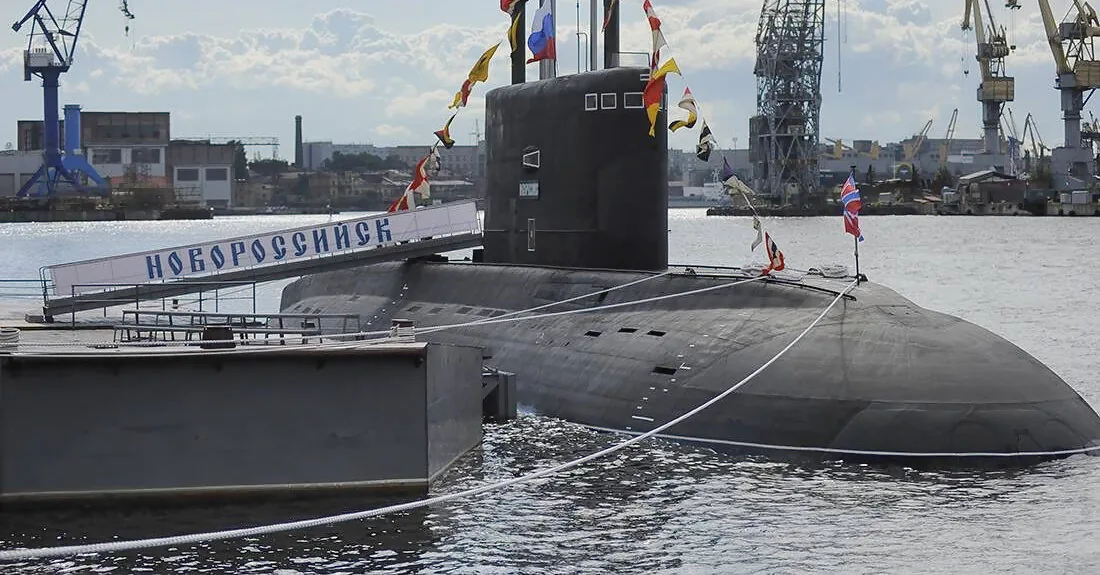
Low-noise nuclear submarines
As The Economist notes, China now has significant opportunities to acquire Russian military technologies that the Kremlin was previously reluctant to share.
US and European officials believe that this could involve the improvement of China’s anti-aircraft and anti-missile defense systems, as well as assistance in developing low-noise nuclear submarines. China considers such submarines one of the key elements in the event of a potential war over Taiwan, which, if the US intervened, could escalate into a broader conflict.
Military cooperation between Moscow and Beijing is also actively developing in the field of unmanned aerial vehicles. On July 6, the same day China first tested an intercontinental ballistic missile launched from a submarine, Russia and China began joint naval exercises off China’s eastern coast.
The maneuvers involved eight surface ships, two submarines, as well as naval and aerial drones. During the exercises, anti-submarine operations, air and missile defense drills were conducted, and actions using drone systems were also refined.
Read more The PLG group, managing „Bilietai.lt“, acquires one of Romania’s most famous platforms
China is interested in Russia’s naval experience in the Black Sea
According to The Economist magazine, these were the first joint Russian-Chinese naval exercises dedicated to both the use of drones and combating them. Beijing is particularly interested in Russia’s naval experience in the Black Sea, where Moscow is fighting Ukrainian naval drones.
Western attention is also particularly drawn to the cooperation between the two countries in the field of underwater technologies. US Naval Intelligence Director Rear Admiral Michael Brookes stated in Congress that by 2035, China could have about 80 submarines, half of which would be nuclear.
According to him, new models could feature significantly improved reactor design, sensor performance, weapon integration, and noise reduction technologies.
Meanwhile, Admiral Samuel Paparo, commander of the US Indo-Pacific Command, warned that Russia could potentially assist China specifically in submarine noise reduction technologies and other areas where Moscow maintains an advantage.