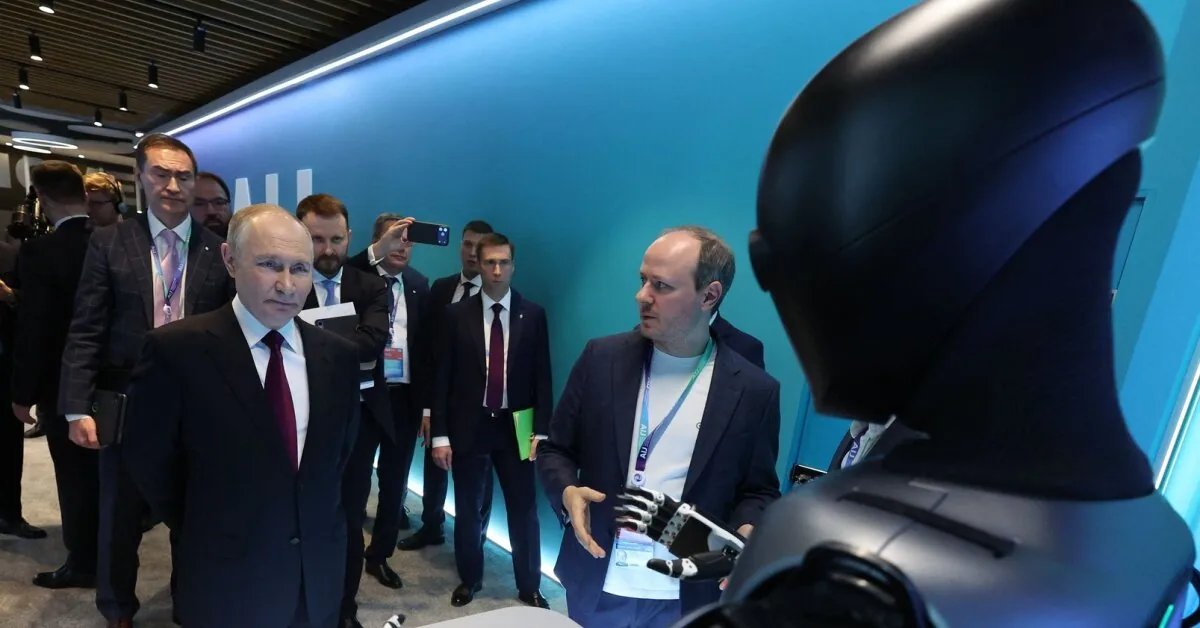
The publication reported that on September 1, V. Putin called these rumors “complete nonsense” and described them as an anti-Russia “information attack.”
Two days later, on September 3, at an economic forum in Vladivostok, the Kremlin leader stated that “there is not a single scenario today that would require mobilization.”
Distribution of summonses to military conscription offices
The publication asked its readers living in Russia if they noticed any signs of an upcoming mobilization. Most often, people mentioned receiving summonses from military commissariats.
“My nephew received a summons to come and verify data,” wrote a reader from the industrial city of Naberezhnye Chelny.
Another reader also reported receiving a summons instructing him to come and verify data.
“I received a summons instructing me to come and verify data. I am self-employed. What should I do?” he asked.
DW reports that people fear they may be called up for military service or lose the ability to freely leave the country.
Because of this, some individuals who received summonses try to leave Russia as quickly as possible before exit restrictions come into effect.
“One of my friends left Russia two months ago after receiving a summons from the military commissariat to come and verify data,” said one reader.
However, as the article states, not everyone considers emigration a realistic option in case of mobilization.
“Speaking about leaving is just fantasy. Where would we go and, most importantly, how would we finance it?” said one reader.
Forced transportation
It is noted that in June, reports emerged from Russia’s Penza region that men were being forcibly taken to military commissariats and forced to sign military service contracts.
According to local media, this practice became so widespread that residents held protests supporting their relatives and neighbors. Journalists covering this topic say such raids are still ongoing.
“People are detained, among other places, at the entrances to their apartment buildings. Often these are men who have consumed alcohol. Unknown people approach them or cars arrive – often vehicles provided by local authorities.
Men are simply grabbed and taken away, and later their families and neighbors hear nothing more about them. Sometimes it later turns out that they were taken to military units. There they are often held before being sent to the front,” DW was told by Elena Lemiasova, a journalist for the publication “Važnyje istorii” (“Important Stories”).
What consequences can a received summons have?
Lawyer Artiom Kliga explained that a summons issued “to verify data” does not necessarily mean that a person will be drafted into the army, mobilized, or sent to the front.
“These summonses only show that military commissariats have significantly improved the management of military records. If mobilization were to begin, such data would help authorities quickly call up the necessary people,” explained A. Kliga.
Russians also increasingly report receiving pre-issued mobilization orders. In peacetime, such orders do not oblige citizens to take any action. However, upon the announcement of mobilization, those who receive them would be required to report to their assigned military commissariat.
“They were issued both before the war [against Ukraine] and during it. But in the first half of 2026, the situation changed: it seems they began to be issued by the hundreds of thousands. We do not know the exact numbers because this information is classified. However, judging by social media posts and inquiries we and our colleagues have received, the increase was staggering – by tens of times,” Russian lawyer Timofey Vaskin told DW.
As the publication notes, the decree on partial mobilization announced in Russia in 2022 was never officially revoked and technically remains in effect.
Kremlin press secretary Dmitry Peskov has repeatedly called reports of a new wave of mobilization “fake news.”
However, critics point out that D. Peskov also denied reports about a possible mobilization that was rumored to start in 2022. Just eight days before the partial mobilization was announced, he stated: “At the moment, this issue is not being considered.”
Growing demand for mobilization readiness specialists
As of August 8, DW found several job postings on Russia’s job search platform “HeadHunter” looking for “mobilization readiness” specialists. In Moscow and the surrounding region, 40 such jobs were offered, and in Saint Petersburg – 13.
For example, some companies are looking for specialists responsible for ensuring that the organization has a mobilization plan and knows how to act if the state switches the economy to a war footing. Their duties would also include preparing the company for emergencies and civil defense measures, as well as assisting the organization in transitioning to a special operating mode in case of war.
The publication noted that such job postings were made by both private companies and government agencies.
UNIAN previously reported that the human rights project “Idite lesom” (“Go to the forest”) informed about the first recorded case in Russia where a reservist was prohibited from leaving the country by a military commissariat decision.
This concerns a 24-year-old resident of the Rostov region who completed mandatory military service in 2024 and was transferred to the reserve afterward. On September 2, he tried to fly abroad from Krasnodar but was detained for additional passport control.
Eventually, he was handed an official notice temporarily restricting his right to leave Russia. The issue of leaving the country became especially relevant after the electronic summons registry became fully operational in March.
It was also reported that former European Commission official Jacques Lafitte did not rule out in an article for “The Globalist” the possibility that Russia, due to the worsening situation of its troops in Ukraine, might prepare a dangerous provocation against NATO countries.
One possible target could be the Estonian city of Narva near the Russian border.
According to J. Lafitte, a new mobilization could have the greatest impact on the battlefield situation. However, at the same time, a large-scale draft could cause serious dissatisfaction within Russia itself and prompt even more people to leave the country.
For this reason, V. Putin needs a convenient pretext for mobilization, and the Kremlin may create such a pretext.