









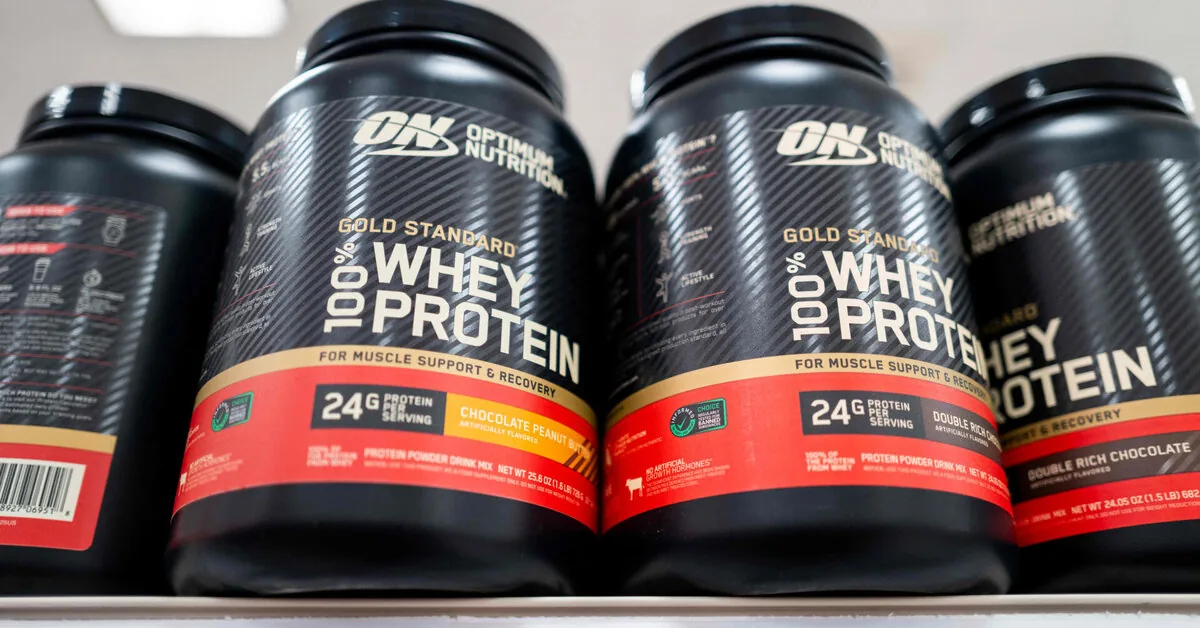
Previously, whey proteins were sold as powders that could be mixed into food or as protein bars. Now these products can be found on the shelves of US supermarkets in various products – from breakfast cereals and pretzels to instant noodles.
Read more Vilnius «Žalgiris» would face representatives from Poland or Sweden in the qualifiers final
This trend has already been picked up by some of the largest food manufacturers. For example, the snack giant Frito-Lay offers “Protein Nacho Cheese” flavored Doritos chips, and Starbucks has introduced a line of drinks with a “high protein content.”
“Seven years ago, many people consumed it before workouts, but now I think it has become completely normal for everyone,” 25-year-old Carly Rowcotsky told AFP.
The young woman lives an active lifestyle and consumes whey proteins to help her muscles recover after training.
“I don’t have much time to prepare food myself, so it’s just convenient to have some kind of dietary supplement,” she said.
Proteins, proteins, and more proteins
According to Chuck Nicholson, a management professor at Pennsylvania State University, several factors drive this protein popularity.
“Social networks really make many people think that proteins are a truly healthy alternative,” he said, pointing to nutrition trends where internet users try to maximize protein intake, often to excessive amounts.
Moreover, the demand for whey and other protein supplements in the US is “strongly driven by GLP-related drugs and nutritional advice that people receive,” he added. Users of weight loss drugs, including Wegovy and Ozempic, are advised to increase protein intake in their diet to preserve muscle mass.
The protein craze is even reflected in the US government’s dietary guidelines, which were updated in March and increased the recommended daily protein dose from 0.8 grams per kilogram of body weight to 1.2–1.6 grams per kilogram.
“Proteins and healthy fats are essential, and previous dietary guidelines wrongly discouraged their consumption,” said Health Secretary Robert F. Kennedy Jr. earlier this year.
More whey, more cheese
However, this surge in demand for whey proteins poses additional challenges for the dairy industry. Since whey is a refined product obtained during cheese production, “there are certain production capacity limitations – both in terms of how much milk cows produce, the available cheese production capacity, and the capacity needed to produce those whey products,” explained Ch. Nicholson.
Read more After the tragedy in Nida, specialists remind: the most common causes of drowning remain unchanged
Additionally, whey sold in consumer products requires specialized, expensive equipment to filter it into protein concentrates and isolates.
“For a long time, whey was actually hardly used,” said Ch. Nicholson. “In some cases, it was used as animal feed or simply discarded.”
The dairy industry anticipated this growing trend. Michael Dykes, CEO of the International Dairy Foods Association, said that “dairy companies have invested $13 billion in new production capacity, technologies, and supply chain optimization” to meet demand.
White gold
Joshua White, an expert at dairy marketing company T.C. Jacoby & Co., said that despite increased whey production capacity, “the market still demands more.”
As a result, prices have jumped. Industry data shows that prices have risen about 40% in recent months, with the biggest price surge recorded for high-concentration whey proteins, whose price jumped 150%. As a domino effect, these higher prices increased product profitability for cheese manufacturers and encouraged them to produce more liquid whey.
“Sometimes people say: you know, I make money from whey, and cheese production helps me cover the costs,” said Ch. Nicholson.
This may be an oversimplified view, he added, but “it is certainly true that currently the profit from whey, compared to the profit from cheese, is higher.”
Meanwhile, dairy industry expert Kathleen Noble Wolfley warned that cheese production in the United States still exceeds whey production.
“Are we going to start making cheese because of whey? I always think about it this way – the tail wags the dog, not the dog wags the tail. But I would say that now we are probably closer to that scenario than we were five years ago,” she noted.
Read more After the influx of migrants to Ceuta, the EC chief calls for unified action in border security