



Officials feared that these closely monitored gatherings could escalate into unrest following violent incidents there last Sunday.
Read more Anger and unanswered questions: what lies behind Prince Harry and Meghan Markle’s return
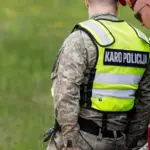
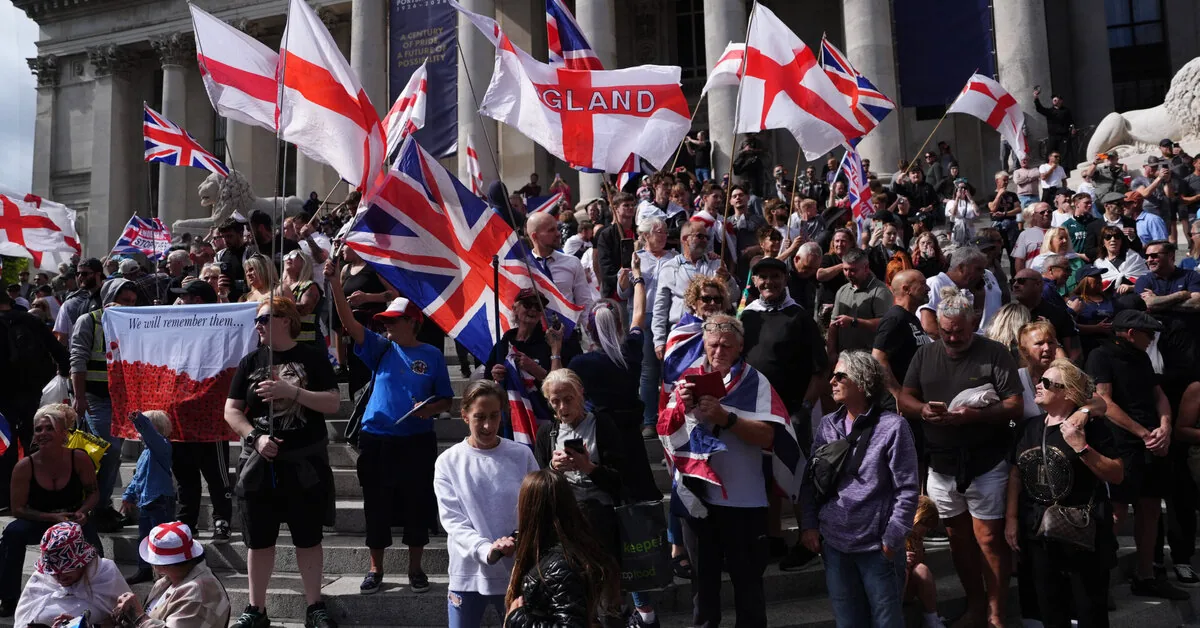
Immigration opponents calling themselves “Patriots” and members of the “Stand Up to Racism” organization gathered around 12 p.m. (2 p.m. Lithuanian time). Police announced a ban on wearing face-covering masks before the events.
Officials did not allow the two sides to approach each other when, after separate marches through parts of the port city, they gathered on different sides of the central square.
Tensions rose after clashes with police six days earlier involving immigration opponents – many of whom wore black clothes and masks – near where asylum seekers arrived by small boats crossing the English Channel from France.
According to the police, service vehicles were damaged, and several officers were injured. The government condemned these events as “hooliganism.”
The day before, hundreds of mask-wearing protesters gathered in Dover, further east, briefly blocking access to the busy Channel port to protest migrant arrivals and drew criticism from political leaders.
“We are taking action,” retired Colin O’Malley told AFP, participating in Saturday’s anti-immigration protest where participants waved UK and England flags.
“We are sending a message to the government (…) illegal immigration has become unmanageable and it must stop,” he said.
The annual arrival of tens of thousands of migrants by small boats has become a highly sensitive issue in the UK, constantly exploited by far-right forces to fuel growing hostility towards immigration.
Those gathered at the “Stand Up to Racism” rally chanted “refugees are welcome here” and other slogans.
Participant John Woods told AFP that they “show that the far right does not control this city.”
“The vast majority of people oppose racism, oppose far-right hooligan marches through our city (and) welcome refugees,” he added.
Hampshire police, responsible for Portsmouth, announced on Friday that they banned masks during Saturday’s protests to “reduce the potential for violence, intimidation, and crime.”
The institution said this step was taken following “recent incidents of violence and intimidation carried out by a minority seeking to disrupt peaceful protest.”
Political leaders criticized last weekend’s unrest in Portsmouth and Dover, blaming far-right agitators. Home Secretary Shabana Mahmood met with police chiefs on Thursday to ensure officers are prepared for possible future incidents.