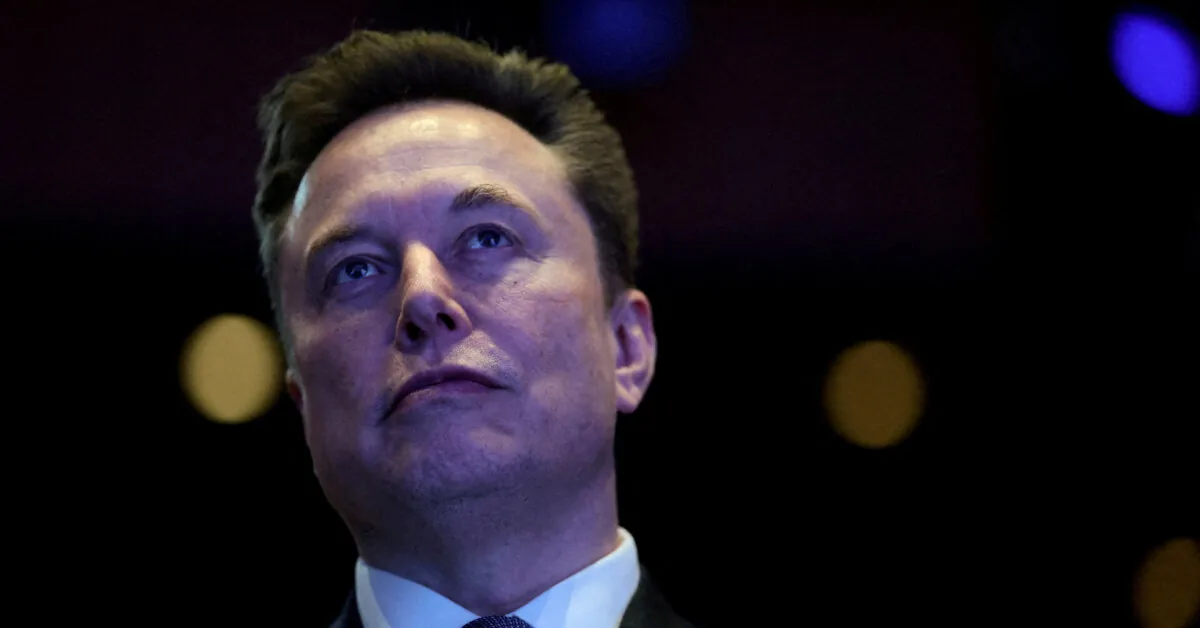
In an interview with The Economist, E. Musk stated that the front line has essentially remained unchanged over the past two or three years. He criticized diplomatic efforts focused on the complete withdrawal of the Russian army, claiming that such a scenario is highly unlikely.
“Many are under illusions when they say that Russia must completely withdraw its troops. This is unrealistic. I sincerely believe that some kind of peace agreement is needed. This must be approached pragmatically,” E. Musk said.
He added that the agreement must take into account the current reality on the battlefield and expressed concern that further continuation of the conflict, based on the premise of a complete withdrawal of forces, would only claim more lives.
Starlink Smuggling
Commenting on the use of Starlink by Russian forces, E. Musk confirmed that SpaceX has never sold terminals directly to Russia. Instead, the devices were obtained through smuggling networks.
“They obtained terminals ordered through Ukraine and then smuggled them into Eastern Ukraine. In some cases, they were used to carry out attacks,” E. Musk explained.
Reports indicate that Russian forces began using “grey” Starlink terminals on the front line as early as 2023. By early 2026, Russian units began integrating terminals into drones to ensure real-time control and bypass Ukrainian air defense systems.
To combat illegal use, E. Musk stated that SpaceX has collaborated with the Ukrainian government to implement a “whitelist” of approved and authorized terminals.
Read more Is your stomach on strike after summer feasts? A doctor identified the warning signs
However, he acknowledged that this measure had a negative impact on some civilian users in Ukraine who lost connectivity for work or studies because their specific devices were not included in the approved list.
Russia’s Local Satellite Alternative
The “Rassvet” project, conceived as a local Starlink alternative, recently reached a new milestone – the second batch of satellites was launched, bringing the total number in orbit to approximately 40.
Although the newly launched satellites have not yet reached their operational positions, Russia will need to launch hundreds more devices for the system to effectively provide military command, control, and communication.
The project is supported by substantial federal funding; commercial services are expected to begin by 2027, and the network is planned to expand to over 900 satellites by 2035.
Western and Ukrainian analysts warn that the “Rassvet” network will provide Russian forces with important military capabilities, ensuring secure communication and command and control capabilities independent of foreign systems such as Starlink.
Read more A place in Klaipėda broke all stereotypes: kebabs – with truffle sauce, cold beet soup – with meat