





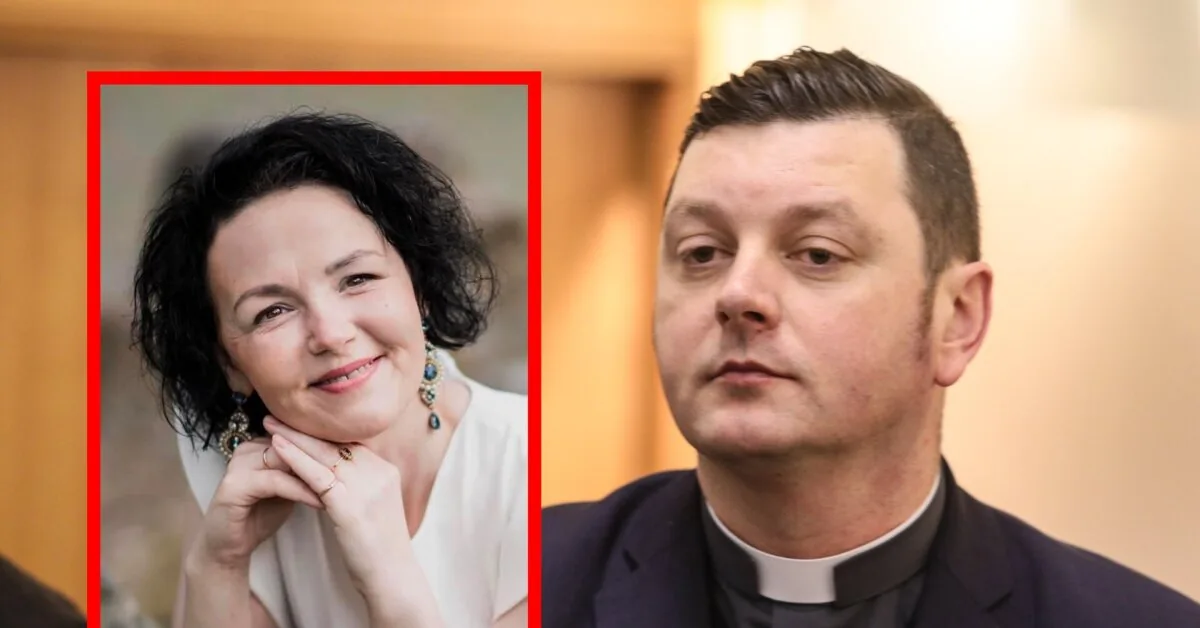
On the social network “Facebook,” a sensitive letter about the memory of Ingrida was also shared by priest Rytis Baltrušaitis.
Read more Potato season has started: how not to be fooled when buying «Lithuanian» potatoes
“Marijampolė, 2026 05 31
Homily for the funeral of a particularly close friend Ingrida, whom a large number of people knew as teacher Ingrida.
The last day of spring. A time when the air smells of freshly blooming flowers, when the petals of apple, cherry, and plum blossoms caught by the wind swirl like a blizzard. A blizzard in which it is good to be, one that makes you want to admire, hold your breath in amazement, and recognize that throughout all creation the Lord – the Creator – is smiling. Indeed – smiling.
The blizzard of petals and the last day of spring indicate that the time of fruit ripening – summer – is approaching.
Today the entire Catholic world respectfully says: “Glory to God – the Father, the Son, and the Holy Spirit.” In saying this, we worship the Most Holy Trinity, whose feast we celebrate this last Sunday of spring.
The feast of the Most Holy Trinity differs from all other liturgical year celebrations. On other feasts, we commemorate events in the history of God and humanity, as if retracing the flow of history. Today, on the feast of the Most Holy Trinity, we do not commemorate an event, what God has done for us, but honor the source of everything – God Himself. It is a feast of joy for God Himself.
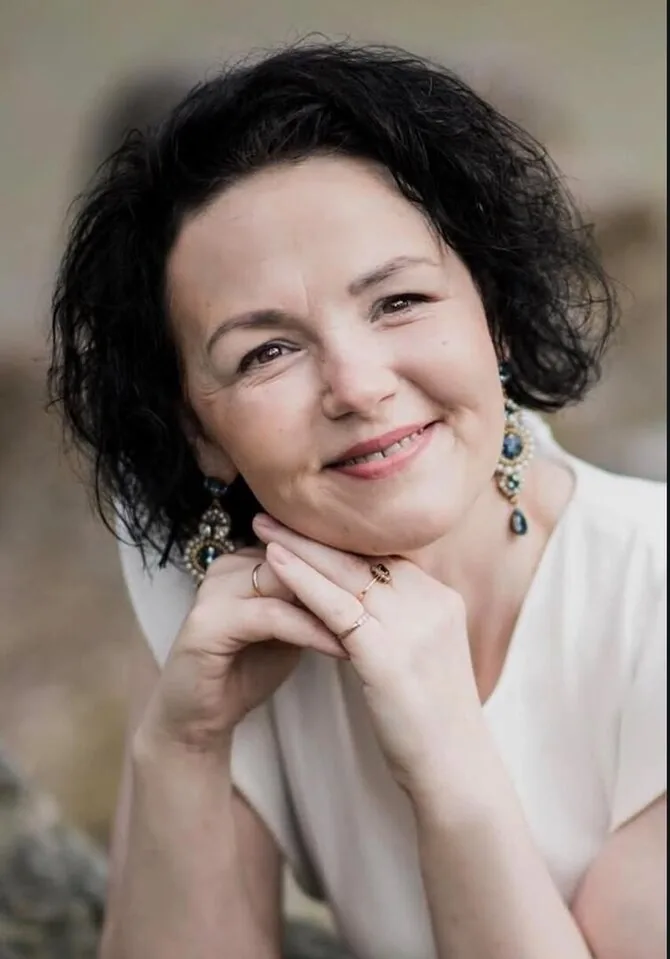
Thank you, God, for Your beauty, for Your existence. We rejoice that God exists, that He knows us, and that we know Him. Just as the beauty of mountains, the majestic sea, a blooming tree delights us and we do not want to exchange it for anything, so God is joy – the joy of seeing that He exists. And to give thanks.
The Most Holy Trinity is a great mystery, to which we approach and into which we are drawn and involved – as much as God wills. And He wants us to dive into His depth; He does not play hide and seek, does not mislead or fool us. He, God, understanding that our inner safeguards can bear the divine burden only as much as they are capable, and no more, allows Himself to be known and found – gradually. God is a mystery. Man is created in His image, so he is also a mystery. And when we say that we know ourselves or another very well – completely – let us remain modest, because we only know partially.
Ingrida’s life is also a mystery. And why we are with Ingrida today in this way – participating in her funeral – is a mystery. What is God’s thought, what is God’s plan, who could stand and answer? We could reason, share insights, but still – it would be only partial understanding. Why God immersed her in the river of suffering – remains a mystery, by the way – a redemptive mystery cooperating with God.
Ingrida allowed herself to be known. She, like God, did not hide behind a veil of vanity: she let people know about her, she told, shared, and through this simply attracted to fellowship, which does not fade, does not mold like bread left for a long time. Wherever she touched – a connection, a relationship was born, contact was immediately established. Therefore, it is not surprising at all that today the basilica practically cannot accommodate all those with whom Ingrida had met for a longer or just a moment.
The funeral Eucharist – the crown of Christian life – the pinnacle. Here the reflection of Baptism is clearly felt, because we see live and real how once again, physically and spiritually, one plunges into the mystery of death and resurrection – Baptism. Here, at the living Bread – Christ, one goes understanding that Eternity is fullness in Christ.
We are here, in the Marijampolė basilica, not because we are burying a famous teacher, not because her husband is the director of the Marijonų gymnasium, not because this family is somehow special and all doors open for them. No. We are here because this was Ingrida’s church: here she most often celebrated the meeting with God, here she read readings and accompanied children prepared for First Communion, creating for them a life event that remains. We are here because here is Blessed Jurgis Matulaitis, with whom Ingrida had a very close spiritual connection. No matter how much I tried, that her saint would be St. Karolis Akutis, waiting for us in Alytus and Assisi, she thanked for the efforts and clearly said: “Very good with Karolis, but I am with Blessed Jurgis.” In her hands was also a picture with the image of the blessed. And you know, standing by Ingrida’s coffin I said: “But can you imagine, she is now with Blessed Jurgis. She is with him. I am a little envious of Ingrida already.”
Ingrida remained a teacher throughout all six years of illness – six years, which is incredible when stage four was announced. I want to be understood correctly, but these six years were a time of grace, because God did so much through Ingrida, taught us so much.
There are some things she taught, but the essential one – to live. To live fully, completely, abundantly, and not to shut oneself in a little room with drawn curtains, to cry and pity oneself and demand sympathy for how poor I am, how unhappy, my life is falling apart, I am such a Catholic, and God is like this to me. Nothing like that. Ingrida lived during illness, created life, polished the gemstone of life and, instead of accepting our sympathy, strengthened us and told us not to hang our heads. Exhausted by illness, she burst with life, the desire to do what she could in the present time, and to do it maximally: I buy a ticket to the ballet – take one for us too, I go to the sea – guests are waiting – we will be there. I will pass by – drop in, we will chat on the terrace. And always like that. She did not spare herself, had received much from the Lord, but also shared generously – sometimes it seemed she gave even more than she had received, more than human strength could manage or be able to.
Indeed, as Blessed Jurgis Matulaitis said – she burned like a candle on God’s altar, on the altar of life – caring for others, not looking after herself – the altar. The wax of her life’s candle melted, but the light did not disappear, the light remained and it is so bright, because even while sick she taught us to pray, to trust God, and to live – to enjoy every moment, whether you are full of strength climbing to the summit, or accompanied by grandchildren able to cross only a room and say that today I walked so much like never before in life.
I must mention how passionate Ingrida’s devotion to her family was: how patiently she shaped Saulius, how meticulously she cared for every step of her daughters, sometimes it seemed, can people independently breathe the desired amount of oxygen? And today it is obvious that this was done with love and what Ingrida put into her family nest – did not disappear anywhere, that it falls into the soil of the hearts of Ingrida’s close people – bears fruit – and the fruit of prayer, which we could verify during the wake, when the daughters, stroking their mother’s hands, hair, sang hymns, prayed for their mother, who was the first prayer teacher in the home Church.
And if someone needs proof of what it means “and I swear to always be faithful to You, whether happiness accompanies, or trouble presses, whether health holds, or illness seizes, I will love and honor You all my life” – just look at Saulius, this holy man who served his wife with love, whom Ingrida threw quite a bit towards holiness on her journey of illness.
May 31 – in the liturgy is also the day of the Visitation of the Blessed Virgin Mary to Elizabeth, when Mary hurries to serve her pregnant relative. This evangelical reality sounds especially meaningful today – burying Ingrida, who also always hurried to serve – in joy and in sorrow.
God, today Ingrida rushes to You. This is the great and endless visitation in God’s house – His Heart. Thank you for giving her to us, that she came through mother Rūta and always flourished. Thank you for everything You did through her for us. Thank you for this great teacher of life.
I know, God, that she will not rest even in eternity, she will nag You about our affairs continuing the journey of life. Yes, God, she is like that – an apostle of Love, but I ask You – give her the mandatory days off in Heaven, so that sometimes she can just sit on a little cloud and swing her legs enjoying the bloom.
Some may say that Baltrušaitis has already taken Andriuškienė straight to Heaven – like a saint. Yes – to me she is a saint. And if God sharpens the pen and gives the ink of wisdom – a written story about this saint will appear. I promise!
Friend priest Rytis
p.s. If anyone would like to share this text – you are kindly welcome. If anyone would like to publish part of it, please do not distort the text and wisely present the context,” – priest Rytis wrote sensitively.
We remind that the loss was reported by the “Marijampolės Plius” portal, and under the post, comments from moved people poured in. Ingrida was truly a beloved primary school teacher.
“Sad news… This morning, beloved and respected teacher of Marijampolė Marijonų Gymnasium Ingrida Andriuškienė passed away. The loss was announced on social media by her husband, the gymnasium director Saulius Andriuška.
Sincere condolences to the family, relatives, and those who knew Ingrida.
Rest in peace, Teacher,” the announcement reads.
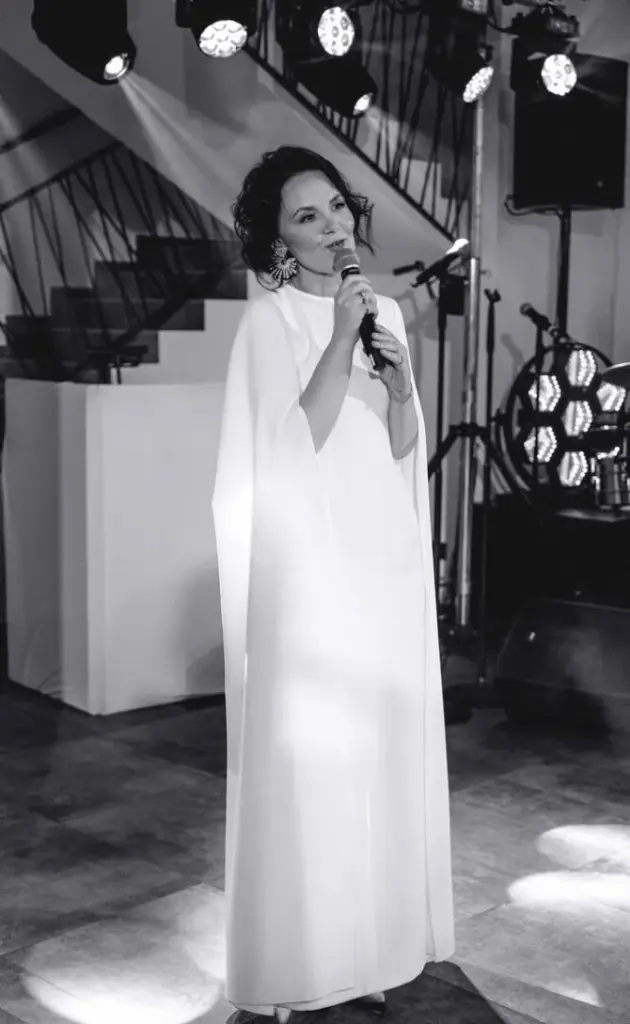
The woman died after a serious illness, which both she and her husband Saulius mentioned several times in their social media posts. They raised three daughters, one of whom participated in the “Great Choir Battle”.
She was also the author of Lithuanian language exercise notebooks “Grammar Exercises.” This teaching aid was widely used by primary school teachers throughout Lithuania.
Read more Oligarchs «whispered» to Vladimir Putin: transferred billions of euros
I. Andriuškienė died at the age of 48.