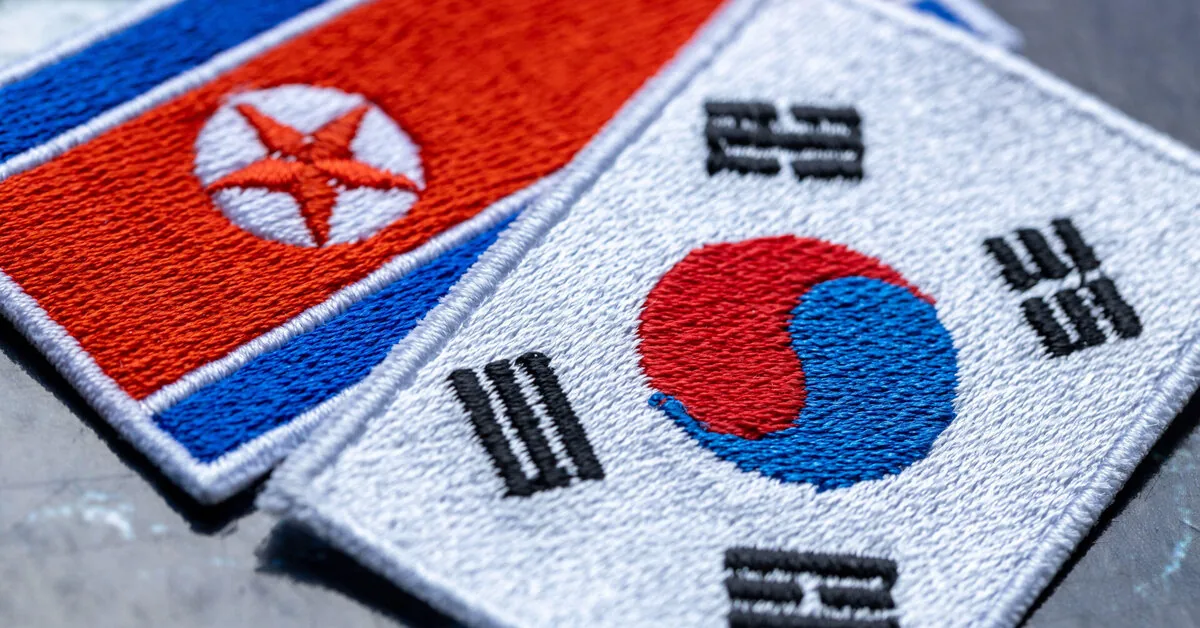
This is another peaceful gesture from Seoul to Pyongyang.
President Lee Jae-myung (Li Džemjungas) began to change his predecessor’s strict stance when he took power in Seoul in June 2025, offering unconditional talks to nuclear-armed Pyongyang.
Read more Linas Linkevičius. It’s hard to believe that Rubio missed Lavrov’s fairy tales
The reclusive North Korean leadership has not yet responded to his repeated offers. But on Thursday, at a meeting with local journalists, Chung Dong-young said that South Korea had shifted its priorities from disarmament and focused on stopping the development of Pyongyang’s nuclear activities.
“The government has essentially abandoned the previous administration’s ‘denuclearization first’ approach and its demand for the prior dismantling of North Korea’s nuclear program,” he said, according to a transcript of the meeting seen by AFP news agency.
The long-term goal of denuclearization remains unchanged, but the administration’s focus will be on stopping new developments, the minister said.
“The immediate priority is to stop this,” he said. “Every hour, North Korea continues to expand and improve its nuclear program.”
Pyongyang is subject to extensive sanctions over its nuclear program. It is believed to possess dozens of warheads.
Read more Vilnius «Rytas» targets Panama national team forward
South Korea has not had nuclear weapons on its territory since 1991, when its main military ally, the US, withdrew its stockpiles.
North Korea has repeatedly declared itself an “irreversible” nuclear state after the 2019 summit between leader Kim Jong Un (Kim Čen Uno) and US President Donald Trump (Donaldo Trampo) failed over the scope of denuclearization and sanctions relief.
Earlier this month, Pyongyang pledged to strengthen its nuclear forces “both qualitatively and quantitatively.”
The South Korean president previously said that freezing Pyongyang’s nuclear capabilities at their current level, by stopping new production and preventing the import of nuclear materials, would itself be a victory.
The two Koreas are technically still at war, as their 1950-1953 conflict ended in an armistice, not a peace treaty.
Read more In Vilnius – accident right next to the hospital, driver injured, traffic jams stretched